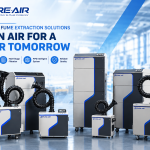
Large manufacturing facilities running multi-station welding lines or continuous thermal cutting tables often rely on centralized ventilation setups. Centralized configurations connect multiple capture hoods, robotic enclosures, and process stations to a single high-capacity collector housed outside the main workspace. Selecting an effective air purifier for industrial use involves evaluating how fixed ductwork distributes suction across expanding production halls.
Centralized extraction units handle heavy particulate loads continuously across high-duty multi-shift schedules. Routing airborne contaminants through dedicated ductwork minimizes localized dust re-entrainment near worker assembly stations. Evaluating centralized system engineering helps facility planners balance long-term operational efficiency against fixed plant footprint requirements.

Flexible Operations via Mobile and At-Source Extraction Equipment
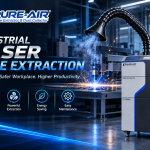
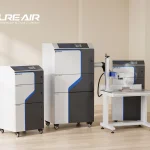
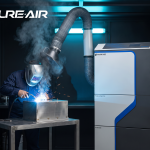
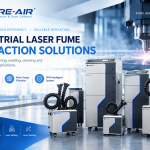
Dynamic job shops, prototype labs, and manufacturing cells with changing production layouts benefit significantly from mobile filtration units. Portable units feature compact footprints, castors, and flexible extraction arms that position capture hoods right at emission points. Deploying mobile extraction systems allows operators to handle short-run welding, grinding, or laser marking tasks without installing permanent ductwork.
Mobile units discharge purified air back into the immediate work environment after multi-stage filtration, reducing building heating and cooling energy losses. Flexible arms allow technicians to adjust hood placement quickly when switching between workpieces.
Initial Capital Expenditure and Setup Cost Evaluation
Upfront financial investment represents a key differentiator when choosing between centralized and mobile extraction configurations. Centralized systems require significant capital outlay for large collector cabinets, heavy-duty blowers, variable frequency drives, and extensive duct installation. Additional expenses arise from structural floor supports, outdoor foundation pads, and electrical utility integration.
Mobile extraction units require far lower upfront capital, allowing growing businesses to scale air purification capacity incrementally. Purchasing single-station collectors aligns initial investment directly with active machinery deployment. Working with reliable fume collector manufacturers helps plant managers evaluate total initial expenditures against long-term operational goals.
Ongoing Maintenance Routines and Servicing Requirements
Maintenance protocols vary drastically between centralized duct networks and localized mobile collectors. Centralized systems consolidate filter replacements into one main collector housing, simplifying routine cartridge changes for maintenance crews. However, periodic inspection and manual cleaning of internal duct runs are necessary to help prevent particulate buildup and duct fire hazards.
Mobile units require individual filter monitoring and cartridge replacement for each active cabinet across the shop floor. Neglecting filter changes on individual portable units reduces localized suction velocity quickly. Equipment series like our D-i Series incorporate clear pressure monitoring to simplify routine filter servicing across multiple mobile stations.
Workflow Flexibility and Plant Reconfiguration Dynamics
Fixed ductwork inside centralized networks limits machine cell movement and floor layout modifications over time. Moving a welding table or laser cutter connected to a centralized main duct requires redesigning pipe runs and recalibrating system pressure drops. Reconfiguring centralized duct layouts often causes temporary production downtime across adjacent workstations.
Mobile extraction hardware provides great flexibility when factory floors undergo layout updates or machine rearrangements. Facilities can relocate portable collectors instantly alongside moving production tools without disrupting overall plant ventilation. Portable systems like our PA-FS300 model offer versatile, flexible extraction for evolving process lines.
Strategic Selection Criteria for Manufacturing Facilities
Choosing between centralized and mobile air cleaning solutions depends on evaluating specific plant operational parameters. Facility managers must calculate total active workstations, daily operating hours, floor space availability, and long-term facility expansion plans. High-density, fixed production lines favor centralized extraction, while flexible, low-volume assembly bays suit mobile units better.
Assessing specific material process types also dictates whether specialized chemical adsorption or high-capacity HEPA filtration is necessary. Combining centralized systems for high-duty process lines with mobile units for isolated repair cells creates a balanced air quality strategy. Experienced fume collector manufacturers evaluate these operational variables to recommend appropriate equipment configurations.
Integrating Digital Monitoring Platform Infrastructure Across Fleet Assets
Modern industrial air purification relies on digital telemetry to track equipment health across both centralized and mobile assets. Deploying an advanced air purifier for industrial use equipped with smart sensors allows maintenance teams to track filter status continuously. Digital visibility helps prevent sudden airflow drops that compromise workplace safety during critical processing shifts.
Our team developed the PIPS platform to monitor factory air quality and machine telemetry globally across diverse industrial operations. Digital platforms consolidate differential pressure logs, operating hours, and alarm histories into unified maintenance dashboards. Real-time fleet tracking ensures that both mobile units and centralized systems maintain calibrated capture performance.
Layout-Oriented Extraction System Selection & Hybrid Deployment Strategy
No single exhaust layout can satisfy all manufacturing production modes. Centralized duct-type exhaust excels in continuous high-load fixed workshops with unified maintenance demands, while portable mobile fume extractors shine for variable production layouts and low upfront budget control.
Cost structure, layout adjustability, daily operation intensity and pollutant characteristics jointly decide the final configuration scheme, and the hybrid layout combining two structures becomes the most cost-effective solution for most comprehensive processing plants.
We at PURE-AIR provide targeted layout planning services for industrial workshops. We conduct on-site working condition surveys to match centralized duct design, mobile unit configuration or hybrid exhaust schemes, paired with whole-plant digital monitoring deployment to achieve long-term stable workshop air quality compliance control.