Relying on open doors or wall fans to disperse thermal processing fumes creates a false sense of security in manufacturing facilities. Passive cross-ventilation merely dilutes thermal plumes, spreading harmful particulates into neighboring work areas rather than capturing them. At PURE-AIR, we study fluid dynamics to show how natural drafts fail to pull toxic smoke away from operator breathing zones.
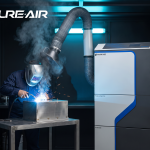
Uncontrolled air currents push sub-micron aerosols back into processing bays, where fine dust settles on delicate equipment and floors. Industrial thermal cutting generates buoyant plumes that rise rapidly before spreading laterally across rafters. Deploying a dedicated dust and fume extraction system directly at emission sources captures high-temperature smoke before cross-drafts disperse pollutants throughout the plant.

HEPA Filters Are Not Universal Solutions for All Emissions
Online forums often promote HEPA media as a solution for every industrial air quality issue. While mechanical HEPA H14 filters trap sub-micron particulate matter effectively, they cannot capture gas-phase chemical compounds or volatile organic vapors. Expecting a mechanical filter to remove toxic gases leads to rapid indoor air quality deterioration.
Gaseous byproducts from laser cutting, chemical etching, or solvent washing pass through microscopic filter pores largely unhindered. Effective air purification requires combining mechanical particle trapping with chemical adsorption media. Utilizing an air purifier for industries configured with dedicated activated carbon modules neutralizes volatile organic vapors along with physical smoke.
Absence of Odor Does Not Equal Air Safety
Assuming workplace air is safe simply because no pungent smells linger misjudges invisible chemical hazards. Many dangerous airborne compounds, including carbon monoxide and specific fine metallic oxides, remain completely odorless to human perception. Relying strictly on olfactory senses exposes operators to unseen toxic risks over long processing shifts.
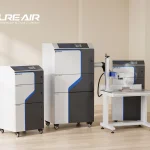
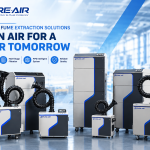
Furthermore, olfactory fatigue desensitizes workers to persistent chemical odors within minutes of exposure. Dangerous sub-micron particles remain suspended in breathing zones long after noticeable smells dissipate. Systems like our PA-D1600 series utilize multi-layer filtration to catch both visible smoke and invisible gaseous contaminants regardless of odor levels.
Filter Media Thickness Alone Does Not Determine Performance
A widespread myth claims that thicker filter media automatically delivers superior air purification results. In reality, excessively thick or poorly designed filter beds create extreme airflow resistance, overburdening exhaust blowers without improving particle capture efficiency. Filtration performance relies on media structure, surface area, and electrostatically charged synthetic fibers rather than raw thickness.
Dense, uncalibrated filter media starves suction hoods of required capture velocity, allowing thermal fumes to escape around machine enclosures. Well-engineered pleated cartridges maximize surface area within compact dimensions, keeping pressure drops low during high-volume operations. At PURE-AIR, we match filter media porosity to specific particle distributions to preserve suction efficiency.
Key Process Parameters Required for Proper System Sizing
Selecting appropriate purification hardware requires precise evaluation of operational variables rather than guessing filter sizes. Facility managers must calculate total processing width, laser output power, substrate material composition, and daily operating hours before selecting equipment. Matching extraction capacity to actual pollutant generation rates prevents premature filter clogging and equipment strain.
High-power lasers cutting thick organic materials generate dense aerosol loads that require higher static pressure blowers. Conversely, light etching on technical ceramics yields lower particulate volumes but requires specialized chemical adsorption for volatile gases. Evaluating these exact parameters allows our technical team to configure a durable dust and fume extraction system tailored to plant operations.
Multi-Stage Media Engineering for Effective Airborne Protection
Comprehensive extraction hardware relies on progressive filtration stages to maximize internal element service life. Primary pre-filters catch coarse dust and spark embers, shielding downstream media from mechanical damage and surface blinding. Intermediate cartridges then drop out fine aerosol droplets and condensed smoke particles efficiently.
Final polishing stages pass airstreams through HEPA H14 media and treated activated carbon beds before recirculating air back into the shop. Equipment lines like our D-i Series incorporate this sequential media arrangement to keep internal static pressure stable. Layered filter beds prevent fine particulate loading from restricting overall exhaust volume.
Integrating Smart Sensors for Real-Time System Monitoring
Modern air purification equipment moves beyond manual pressure gauges by incorporating intelligent digital controls. Featuring a colorful touch screen that displays all key parameters in real time, operators monitor static pressure differential, blower frequency, and filter health without stopping production lines. Clear visual feedback helps technicians identify filter loading before airflow drops below safety thresholds.
Connected monitoring platforms track particulate concentrations and operational hours continuously to predict maintenance intervals accurately. Automated pulse-jet cleaning systems fire compressed air blasts to clear surface dust whenever pressure drops increase. Equipment like an air purifier for industries equipped with smart controls maintains steady capture performance across demanding multi-shift operations.
Customizing Extraction Systems for Dynamic Factory Workflows
Manufacturing environments present unique spatial constraints, machine configurations, and material processing combinations. Standard off-the-shelf units often fail to provide adequate capture velocity across wide processing beds or robotic cells. Customizing hood geometry, duct routing, and spark arrestor placements helps ensure that extraction hardware operates smoothly alongside primary production tools.
Configuring units with optional EX-certified components, corrosion-resistant housings, or mobile bases adapts hardware to specialized process needs. Systems like our PA-D500 and PA-D350 series offer flexible modular options for precision electronics and photovoltaic manufacturing lines. Tailoring system layouts protects workers while maintaining smooth material handling workflows.
Conclusion
Overcoming common misconceptions about industrial ventilation requires evaluating physical capture mechanics, gas adsorption principles, and precise process parameters. Deploying a specialized dust and fume extraction system with multi-stage filtration protects personnel from both visible particulates and invisible gas hazards. Through engineered hardware solutions and technical consultations at PURE-AIR, manufacturing facilities maintain safe, compliant work environments using a reliable air purifier for industries.