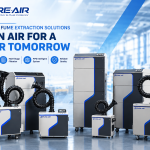
Smart manufacturing initiatives are transforming traditional environmental control equipment into intelligent, data-driven systems. Integrating digital connectivity into fume extraction technology empowers plant managers to monitor air purity metrics in real time across complex facility layouts. At PURE-AIR, our engineering team builds connected hardware architectures that help facilities optimize workplace safety and energy efficiency.
Modern factory networks require seamless communication between processing machinery and auxiliary air handling infrastructure. Sensors embedded within collection chambers track static pressure differentials, airflow speeds, and internal temperatures continuously. Replacing manual inspection logs with automated digital tracking helps industrial plants maintain strict indoor air quality compliance.

Real-Time Visual Interface and Machine Operations Control
Interactive visual displays alter how factory personnel interact with environmental equipment on the plant floor. Featuring a colorful touch screen that displays all key parameters in real time, modern extraction hardware allows technicians to verify filter health, fan speeds, and system status at a glance. Intuitive visual prompts guide operators through daily routine checks without requiring technical manuals.
Direct visual control reduces operational errors and speeds up diagnostic checks during active production shifts. On-screen alerts notify workers immediately when pressure thresholds shift or maintenance becomes necessary. Equipment series like our Intelligent Purification System incorporate these user-friendly interfaces to enhance workplace safety and operational control.
IoT Infrastructure and Connected Hardware Networks
Internet of Things architecture connects isolated extraction units into a unified plant management network. Wireless sensors capture operational data points continuously, transmitting airflow statistics and motor telemetry to central plant databases. This connected ecosystem gives facility managers complete oversight over air quality across multiple manufacturing bays.
Integrating smart air handling hardware with factory supervisory systems enables synchronized machine operation. Extraction fans adjust speed automatically based on signals from active CNC cutters, robotic welders, or laser markers. Automated synchronization conserves electricity and minimizes component wear during idle production periods.
Predictive Maintenance and Data-Driven Component Life Cycles
Static maintenance schedules based on fixed calendar intervals often lead to premature filter replacements or unexpected system downtime. Predictive maintenance algorithms evaluate actual operating hours, particulate loading rates, and differential pressure trends to calculate true filter life. Tracking real-time performance data helps maintenance crews schedule component changes during planned plant shutdowns
Early identification of motor vibration or airflow restriction prevents catastrophic blower failures before costly breakdowns occur. Smart diagnostics identify minor performance drifts, prompting proactive care rather than reactive repairs. This data-driven strategy preserves extraction capacity while extending internal filter longevity across demanding production schedules.
Cloud Dashboards and Multi-Facility Environmental Monitoring
Centralized cloud platforms consolidate operational metrics from multiple extraction units across geographically distributed manufacturing plants. Facility directors evaluate plant air quality, power consumption, and equipment uptime through unified dashboard displays. Remote visibility helps multi-site enterprises enforce uniform safety standards across all operating locations.
Historical performance trends stored in cloud databases simplify environmental regulatory compliance auditing. Environmental health and safety officers export verified operational logs directly from dashboard reports without conducting manual facility audits. Cloud integration ensures continuous compliance visibility across high-volume production networks.
Remote Technical Assistance and Streamlined Diagnostics
Digital connectivity allows technical specialists to assess extraction system health without traveling to distant factory floors. Remote diagnostic tools scan system logs, error codes, and sensor readings to troubleshoot operational anomalies instantly. Faster remote diagnostics reduce equipment downtime and lower field service expenditure.
Over-the-air firmware updates deploy improved control algorithms and safety features directly to machine hardware. Remote technical assistance ensures that industrial fume extraction systems operate with the latest software enhancements throughout their service life. At PURE-AIR, we utilize remote diagnostics to help clients keep clean air systems running smoothly.
AI Optimization and Dynamic Fan Performance Tuning
Artificial intelligence algorithms evaluate historical operational patterns to optimize blower speed and energy consumption dynamically. Machine learning models analyze real-time particulate density and duct pressure to adjust fan speed continuously, matching suction power directly to active fume generation levels. Dynamic tuning reduces unnecessary power draw during light processing tasks.
Self-learning control loops adapt blower performance automatically as filter media loads over extended shifts. AI algorithms adjust motor frequency to compensate for gradual static pressure increases, maintaining constant transport velocity inside exhaust ducts. Automated power regulation lowers operating costs while maintaining consistent airborne contaminant capture.
System Integration Across High-Throughput Industrial Lines
Deploying intelligent industrial fume extraction systems across automated assembly bays requires modular control hardware that interfaces cleanly with third-party robotics. Standardized industrial communication protocols allow extraction units to exchange operational data with programmable logic controllers reliably. Interconnected machinery builds a responsive manufacturing environment focused on worker protection and energy efficiency.
Integrated hardware architectures support reliable, continuous extraction across laser processing, electronic assembly, and heavy joining operations. The combination of advanced fume extraction technology and intelligent control software keeps modern manufacturing facilities safe and compliant. Specialized setups like our Intelligent Purification System line provide the flexible connectivity needed for automated factory floors.
Conclusion
Transitioning to intelligent environmental control systems equips modern factories with predictive maintenance capabilities, remote monitoring tools, and energy-optimized performance. Utilizing connected industrial fume extraction systems featuring interactive touch screens and cloud telemetry allows facilities to manage workplace air quality proactively. Incorporating these digital innovations through our engineering solutions at PURE-AIR helps industrial partners maintain clean, safe, and efficient manufacturing operations across evolving fume extraction technology applications.