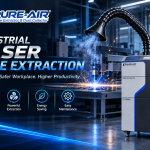
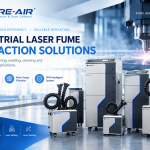
Controlling hazardous particulates in modern manufacturing requires capturing airborne contaminants before they disperse into the surrounding workspace. Localized source capture relies on suction hoods, flexible arms, or direct machine enclosures positioned immediately adjacent to thermal or mechanical emission points. Integrating a dedicated industrial air purifier right at the source minimizes welding smoke, cutting vapor, and grinding dust from mixing with general shop air.
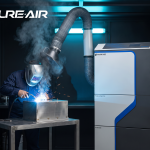
High static pressure blowers create targeted air velocity vectors that draw heavy particulate streams directly into filtration ducts. By isolating fumes before thermal plumes expand, localized extraction minimizes required airflow volumes while maintaining high collection rates. For that, we design targeted extraction hoods that maintain consistent capture velocities without interfering with manual worker movements or automated machinery pathways.

Working Mechanics of Ambient Air Filtration Systems
Facilities with widespread, shifting emission points often rely on general air turnover rather than localized hoods. Ambient air filtration operates by continuously drawing contaminated room air into high-capacity intake grilles distributed across elevated plant zones. A centralized industrial air purifier system recirculates filtered air back into the building, gradually reducing overall particulate concentrations throughout the entire facility volume.
These systems utilize push-pull air circulation patterns created by strategic blower placements to move airborne plumes toward collection units. Clean air jets push floating dust toward return ducts, preventing stagnant pockets of polluted air from accumulating near ceiling rafters. This continuous dilution method manages background aerosol buildup across large manufacturing bays where localized hood positioning proves impractical.
The approach is well-suited for facilities with low-to-moderate emission rates and high ceiling clearances, but it is less effective for capturing heavy fume concentrations at the source. Ambient systems should be viewed as a complement to, rather than a replacement for, local extraction at high-intensity workstations.
Advantages and Limitations of Point-of-Origin Capture
Direct source extraction delivers significant energy efficiency benefits by treating lower total volumes of contaminated air at higher contaminant concentrations. Lower airflow requirements mean smaller duct sizes, reduced fan horsepower, and minimal heating or cooling loss when recirculating purified air. Capturing fumes before worker breathing zones are breached provides immediate protection during intense metal processing operations.
Operational hurdles exist when relying exclusively on localized extraction devices across dynamic production environments. Workers must constantly adjust suction arms as welding torches shift along large weldments, creating potential compliance gaps if hoods are placed incorrectly. Furthermore, overhead cranes and moving gantry systems can collide with flexible extraction arms, restricting physical accessibility in heavy industrial assembly spaces.
Evaluating Benefits and Trade-Offs of General Ambient Units
Ambient purification designs remove operator intervention requirements, delivering continuous airborne dust reduction regardless of worker positioning or machine movement. Installing a ceiling-mounted industrial air purifier keeps floor space completely clear for forklift traffic, material staging, and overhead crane operations. This approach collects background haze generated by scattered, secondary emission sources throughout expansive production halls.
General ambient filtering requires larger total air volume turnover to achieve acceptable air cleanliness standards across large building volumes. Operating high-capacity fans continuously increases energy consumption compared to targeted local exhaust units. Ambient filtration also allows contaminants to pass through operator breathing zones before fumes eventually migrate toward elevated extraction grilles.
Facility Conditions Best Suited for Localized Extraction
Fixed workstations handling high-volume thermal cutting, automated soldering, or manual bench grinding benefit immensely from source capture setups. At PURE-AIR, we recommend localized hood placement whenever emissions originate from predictable, stationary production cells. Stationary manufacturing lines allow suction nozzles to remain fixed in optimal positions, capturing toxic aerosols before dispersal occurs.
Processes generating highly hazardous metal fumes, such as hexavalent chromium, zinc oxides, or toxic chemical vapors, call for immediate containment at origin points. Deploying compact units like our extraction system right beside active weld joints traps dangerous compounds before workers inhale them. Preventing toxic chemical migration protects neighboring assembly workers across shared facility floors.
Operational Scenarios Demanding Ambient Air Purification
Large structural steel fabrication, heavy vehicle frame assembly, and unpredictable multi-point welding lines present severe challenges for fixed extraction hoods. When massive workpieces prevent physical placement of flexible capture arms, an ambient industrial air purifier system offers the most practical air quality management strategy. General air turnover cleans shop air continuously without restricting worker mobility around large assemblies.
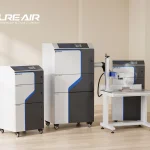
Facilities generating multi-directional dust clouds from overhead grinding, mobile welding carts, or material transfer stations benefit from ambient air turnover. Modular systems like our PA-DS400 ambient unit create consistent air currents that sweep floating particulate toward multi-stage filtration banks. Combining general ambient units with localized capture provides comprehensive air quality coverage across complex industrial operations.
Conclusion
Selecting between localized source capture and ambient air cleaning depends on process stability, workpiece geometry, and particulate toxicity. Deploying a specialized industrial air purifier directly at high-emission workstations isolates heavy pollutants before thermal plumes expand. At PURE-AIR, we integrate targeted capture units with centralized industrial air purifier system layouts to maintain safe, clean manufacturing environments across diverse production challenges.