Soldering is a fundamental process in many manufacturing and repair settings, creating permanent electrical connections. Yet, the visible smoke that rises from the soldering iron is more than a minor nuisance; it is a direct indicator of airborne contaminants being released. At PURE-AIR, our extensive work in industrial air purification, including specialized systems for adjacent processes, provides a relevant perspective on this issue. The question is not about inconvenience, but about addressing a measurable byproduct that can affect workshop conditions and personnel.
The Composition of Soldering Fumes
The smoke generated during soldering contains a mixture of particulate matter and gases. The particulates are primarily metallic oxides and flux residues, which are often sub-micron in size. The gaseous components can include various organic compounds released from the flux as it activates. Without control, these elements disperse into the immediate atmosphere. The operational principle behind a laser fume extractor, designed to capture ultrafine particles at their source, is conceptually aligned with the need in soldering applications. Effective capture requires understanding this contaminant profile to select appropriate filtration.
Impacts on Operations and Air Quality
Allowing these fumes to accumulate has several concrete effects. Over time, the fine particulate can settle on sensitive electronic components and precision tools, potentially leading to quality issues. More critically, from an environmental health and safety standpoint, prolonged exposure to these airborne substances in an enclosed space is a recognized concern. Implementing a dedicated extraction strategy, much like the focused approach used in laser fume extraction, directly mitigates these risks. It transforms the workshop environment by removing contaminants at the point of generation, protecting both the integrity of the work and the ambient air.
Selecting an Appropriate Extraction Strategy
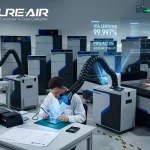
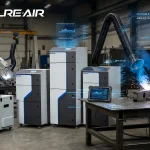
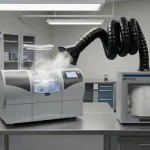
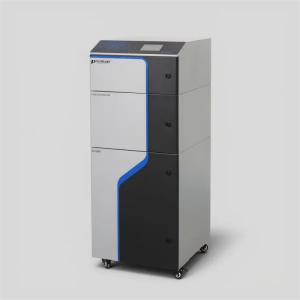
The necessity of extraction is clear; the method defines its effectiveness. For soldering stations, this often involves a source-capture system. A well-designed extractor uses a capture arm placed close to the soldering point, paired with a fan that generates sufficient airflow to pull in fumes before they disperse. The filtration stack must then be capable of retaining both the particulate and gaseous elements. Our engineering in other precision areas, such as systems for a laser fume extractor, informs the importance of matching the filter media—such as HEPA and activated carbon—to the specific contaminants, ensuring the extracted air is properly cleansed before recirculation or exhaust.
In summary, integrating fume extraction for soldering is a demonstrated step toward maintaining a controlled and responsible production environment. It addresses a tangible byproduct with measurable impacts. The technical approach shares important principles with other precision extraction fields, including laser fume extraction, where at-source capture and targeted filtration are paramount. For operations where soldering is a key activity, a dedicated laser fume extractor may not be the exact tool, but the underlying requirement for effective, reliable air purification is equally applicable. We view such environmental management not as an added feature, but as an integral component of professional, sustainable workshop practice.