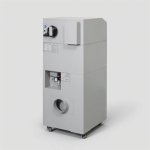
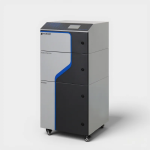
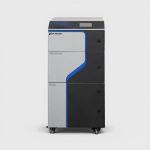
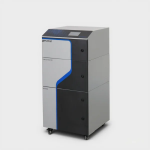
A frequent question we encounter at PURE-AIR centers on the capabilities of filtration. Many ask if a standalone HEPA air purifier industrial units are sufficient for handling chemical smells and vapors. The answer requires a clear look at the science of filtration. While a cornerstone of air cleaning, standard HEPA filtration has a specific function that differs from the needs of gas-phase pollutants. Effective management of chemical fumes relies on integrated fume extraction technology that understands and addresses this distinction.
The HEPA Filter’s Defined Mechanism: Particle Capture
To assess effectiveness, we must first define what HEPA filters do. The term HEPA stands for High-Efficiency Particulate Air. As a HEPA air purifier industrial component, its design targets particulate matter. This includes dust, smoke, mist, and other aerosols—solid or liquid particles suspended in the air. The dense, fibrous mat of a HEPA filter mechanically captures these microscopic particles with high efficiency. For visible smoke or fine dust generated in processes like machining or powder handling, this filtration is fundamentally effective. This particle-capturing ability is a critical first stage in many of our engineered solutions.
The Challenge Posed by Chemical Fumes and Gases
Chemical smells and fumes, however, often exist as gaseous molecules, not particulate aerosols. Volatile Organic Compounds (VOCs), solvents, and acid vapors are molecular in size, orders of magnitude smaller than what a HEPA filter is designed to trap. A HEPA air purifier industrial unit alone will allow these gaseous molecules to pass directly through the filter media. This is not a failure of the HEPA standard, but a reflection of its specific physical purpose. Addressing these pollutants requires a different approach within the broader spectrum of fume extraction technology, typically involving adsorption via materials like activated carbon or chemical scrubbers tailored to the specific contaminant.
Integration Through Intelligent System Design
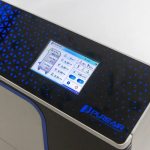
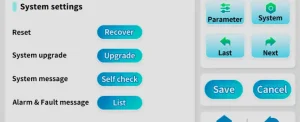
At PURE-AIR, our approach is built on integration, not reliance on a single filter type. We design systems where advanced fume extraction technology creates a holistic response. This means capturing the pollutant at its source and guiding it through a multi-stage filtration pathway. A HEPA air purifier industrial stage may be included to remove any particulate byproducts, but it is paired with specialized gas-phase filters. Furthermore, our focus includes verification. Systems equipped with real-time sensors for parameters like VOCs or specific gases provide factual data on air quality after purification, confirming the system’s overall effectiveness against the complete pollutant profile, both particulate and gaseous.
We believe in precise solutions based on the nature of the hazard. A HEPA air purifier industrial component is exceptionally effective for its intended purpose—particulate removal. For chemical fumes and odors, however, a more comprehensive strategy is necessary. Success lies in specifying fume extraction technology that correctly identifies the pollutants present and combines the appropriate filtration stages to manage them. It is this principle of integrated, sensor-informed design that allows for reliable air quality management in complex industrial environments.