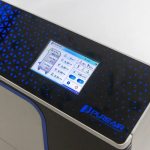
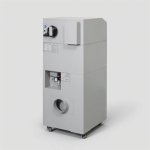
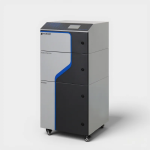
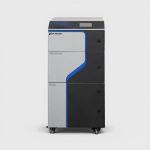
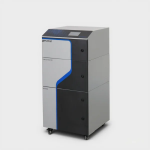
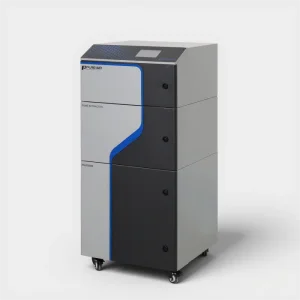
A discussion about industrial laser processes must address the specific air quality concerns they create. While all laser marking generates some airborne byproduct, the application of UV lasers introduces a distinct set of challenges that require focused attention. Understanding the composition of these emissions is the first step in implementing effective dust and fume extraction for UV laser marking machine systems. We at PURE-AIR approach this by examining the process mechanics to design appropriate countermeasures, ensuring our laser marking fume extractor solutions are matched to the actual contaminant profile.
The Composition of UV Laser-Generated Contaminants
The unique fumes from UV laser marking arise from the interaction of high-energy, short-wavelength light with material surfaces. This process often involves photochemical ablation, which can produce an extremely fine particulate plume. These particles are typically sub-micron in size, making them prone to lingering in the air and potentially bypassing standard filtration. Additionally, depending on the substrate being marked—such as certain plastics, coatings, or specialized composites—the process can decompose materials into various molecular byproducts. This combination of ultrafine particulate and potential chemical aerosols forms the primary target for any dedicated dust and fume extraction for uv laser marking machine.
Why Standard Extraction May Be Insufficient
General ventilation or basic filtration often fails to manage these specific byproducts effectively. The fine nature of the particulate demands high-efficiency filtration media to achieve capture. Furthermore, if chemical aerosols or vapors are present, they require an additional stage of gas-phase filtration, such as activated carbon or other specialized media. A system designed without this specificity may allow contaminants to circulate, leading to residue accumulation on optics, lenses, and the workpiece itself, which can impair marking quality. This is why a purpose-engineered laser marking fume extractor becomes a critical component, as it is configured to handle the precise particulate size and chemical nature of the emissions.
Implications for System Performance and Facility Safety
Inadequate management of these fumes carries several consequences. Beyond the potential for equipment fouling, there is a clear consideration for the operational atmosphere. Airborne ultrafine particles can affect the consistency of the laser’s path and may settle in unwanted areas. From an environmental health perspective, ensuring these byproducts are contained and filtered supports a safer workspace. Effective dust and fume extraction for UV laser marking machine systems, therefore, serve a dual purpose: protecting the precision of the manufacturing process and contributing to comprehensive facility safety protocols. The selection of a laser marking fume extractor should be guided by its demonstrated capability in this specific application area.
The airborne byproducts from UV laser marking present a distinct filtration challenge, characterized by ultrafine particulate and possible chemical decomposition. Addressing this effectively moves beyond general air movement to a focus on targeted capture and specialized filtration stages. In developing our solutions, we consider these specific emission profiles to ensure our systems provide the necessary level of control. For operations utilizing this technology, implementing a dedicated extraction system is a measured step toward maintaining process integrity, protecting capital equipment, and overseeing the quality of the industrial environment.