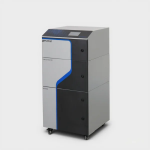
Within automotive facilities, the need for air purification is universal, but the nature of airborne contaminants dictates fundamentally different solutions. At PURE-AIR, our engineering for automotive manufacturing welding fume extraction and other processes reveals that a paint shop and a machining area present distinct challenges. Selecting appropriate dust collectors for automotive plant environments is not a matter of scale alone, but of precise adaptation to the specific physical and chemical nature of the pollutants. The systems deployed must be engineered to match the unique profile of each production zone.
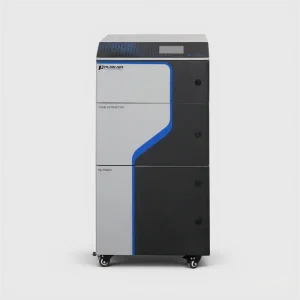
Contaminant Profile and Filtration Demands
The primary difference originates in the substance being collected. Paint booth operations generate overspray particulates—wet, often sticky polymers and solvents that can quickly clog standard filter media. These environments may also involve flammable solvent vapors. Conversely, mechanical assembly or machining areas typically produce dry, abrasive particulates like metal dust, grinding fines, or welding smoke from automotive manufacturing welding fume extraction. A dust collectors for automotive plant paint shop must therefore handle adhesive loads and potential flammability, often requiring specialized filter coatings and containment designs. In machining zones, the focus shifts to managing abrasive wear on the system and capturing fine, dry metallic dust efficiently.
System Design and Airflow Dynamics
This variance in contaminant type directly influences system architecture. For paint overspray, collectors frequently employ a staged approach. Initial capture might use dry paper or non-stick polyester filters to agglomerate the wet material, sometimes followed by secondary filtration. Airflow must be consistent but calculated to manage volatile organic compounds. For machining and welding areas, including those requiring automotive manufacturing welding fume extraction, the design prioritizes robust ductwork to handle abrasive streams and filtration stages like cartridge collectors or cyclones that manage high volumes of dry dust. The airflow requirements are tailored to capture fumes at the source, such as at welding stations or CNC machines, preventing dispersion.
Compliance and Operational Considerations
The operational and regulatory context further separates these applications. Paint shop emissions are often subject to stringent environmental regulations regarding volatile organic compound (VOC) content and particulate discharge. A dust collectors for automotive plant paint area must therefore integrate with a broader environmental management system, possibly incorporating gas-phase filtration. In mechanical areas, while worker safety standards for particulate exposure are critical, the emphasis for the dust collectors for automotive plant might lean more toward fire and explosion mitigation when handling certain metal dusts, influencing choices in system construction, ductwork, and explosion venting.
In essence, the distinction between paint shop and mechanical area dust collection is a clear example of applied industrial science. One environment deals with complex chemistries and adhesion; the other confronts abrasion and fine particulates from processes like automotive manufacturing welding fume extraction. As designers of these systems, we approach each not with a standard template, but as a unique equation of contaminant behavior, airflow, and operational safety. The correct dust collectors for automotive plant must be specified from this foundational understanding, ensuring that the solution for the paint booth is as purpose-built as the one for the welding line, each contributing to the overarching goal of a protected and productive facility.