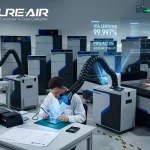
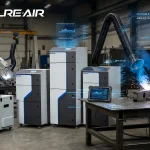
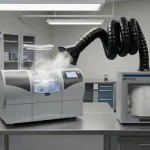
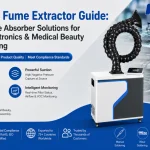
Increasingly complex PCB assembly steps create environments where fumes, VOCs, and fine particulates can appear at different intensities and viscosities. In our daily work at PURE-AIR, we often see how selecting the correct purification setup transforms the stability of an entire production line. During these discussions, the functions of fume extraction for electronics and industrial applications and a reliable air purifier in PCB assembly and manufacturing become central to consistent product quality and operator comfort.
Matching Suction Technology to Each PCB Stage
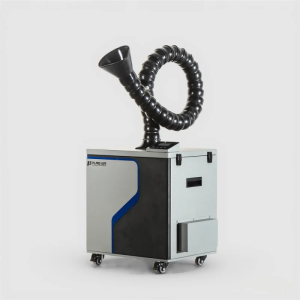
When we support customers evaluating systems, suction behavior is always one of the first elements we examine. Our Standard models use fixed high-volume suction, making them suitable for stable, predictable soldering or routine rework areas. For coating or gluing zones, fumes become thicker and more resistant, so our Premium units—with dynamic pressure that responds to viscous emissions—deliver stronger capture performance. Across both categories, the focus is the same: allowing fume extraction for electronics and industrial applications to function smoothly without disrupting throughput.
Considering Chemical Output and VOC Behavior
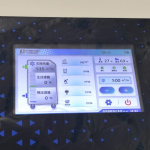
Gluing, potting, and conformal coating processes produce VOC levels that may fluctuate dramatically within minutes. To deal with that variability, we differentiate between two monitoring configurations. The Standard versions track essential airflow metrics, giving teams consistent visibility during stable tasks. When VOC behavior is irregular or requires documentation, our Premium models apply real-time VOC analytics to identify shifts instantly. This level of insight supports a safer line layout while reinforcing the function of an air purifier in PCB assembly and manufacturing, especially in areas where coating agents and solvents accumulate.
System Configuration for Process Efficiency and Operator Well-Being
We also assess how each system aligns with the physical structure of a PCB line. Capture distance, filtration layers, and fume routing all influence long-term efficiency. In practice, well-structured installations allow fume extraction for electronics and industrial applications to keep airborne pollutants away from critical components while helping teams maintain consistent workmanship. When integrated correctly, an air purifier in PCB assembly and manufacturing becomes more than an add-on—it becomes part of a stable workflow that supports every production stage.
Conclusion
At PURE-AIR, we design each solution to match the differing challenges across PCB assembly processes. By evaluating suction behavior, chemical output, and system configuration, teams gain a clear path to selecting equipment that protects product integrity and operator well-being. Through this approach, our purification systems continue to support dependable performance across diverse industrial electronics environments.