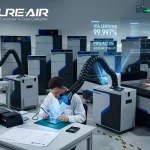
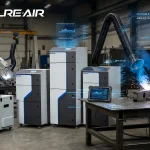
Industrial processes often generate a complex mixture of airborne contaminants, posing a significant challenge for maintaining air quality and safety. Within sectors, where operations may involve powder handling and solvent use, the simultaneous presence of dust and fumes is common. This reality necessitates a clear approach to air purification, moving beyond a single device to a coordinated strategy. We see the integrated use of dust collectors and fume extractors as fundamental to this strategy. Understanding how these two types of equipment function both independently and in concert is key to implementing an effective dust and fume extraction system that protects personnel, processes, and the facility itself.

Distinct Mechanisms for Different Contaminants
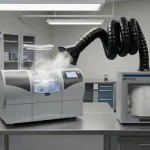
The collaboration begins by acknowledging the different physical properties of dust and fumes, which require separate capture mechanisms. Dust collectors are primarily designed to handle particulate matter. They operate by drawing contaminated air through a series of filters, typically starting with pre-filters for larger particles and progressing to high-efficiency cartridge filters for fine dust. The solid particles are trapped within the filter media. Fume extractors, in contrast, are engineered to capture gaseous pollutants and volatile organic compounds. They commonly employ activated carbon filters or other chemical adsorbents, which work at a molecular level to trap vapor molecules. A true dust and fume extraction system must incorporate both technologies to address the full spectrum of airborne risks.
Integration into a Cohesive Extraction Strategy
For dust collectors and fume extractors to work together effectively, they must be part of a planned layout and airflow design. In many industrial environments, this does not mean two entirely separate units operating in isolation. Instead, it can involve a single, multi-stage dust and fume extraction system. In such a configuration, the air stream first passes through the particulate collection stage. This is a critical sequence, as it removes dust that would otherwise prematurely clog and reduce the efficacy of the subsequent chemical filtration stage. This staged approach ensures each component performs its specific function without interference, maximizing the lifespan of all filters and the reliability of the entire system.
The Importance of Unified Control and Monitoring
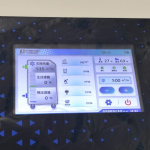
The operational synergy between collection and extraction is managed through intelligent system controls. For operators, managing two separate systems can be inefficient. An integrated dust and fume extraction system provides a centralized point of command. For instance, the PURE-AIR Intelligent Purification System features a colorful touch screen that displays all key parameters in real time. This allows for simultaneous monitoring of pressure drops across dust filters and the status of fume adsorption stages. Furthermore, with automatic air volume compensation, the system utilizes advanced sensors and AI algorithms to maintain consistent airflow. This ensures both the dust collectors and fume extractors within the unified system receive the correct air volume for optimal performance, even as filters load during operation.
In summary, dust collectors and fume extractors work together not as independent units, but as complementary components within a systematic approach to industrial air quality. Their collaboration is rooted in sequential filtration—removing particulates first to protect chemical filtration media—all governed by unified intelligence. For environments like manufacturing, where contaminant profiles are mixed, this integrated methodology is not just convenient but essential. A well-designed dust and fume extraction system functions as a coordinated defense, ensuring comprehensive protection through the specialized, yet harmonious, operation of its core technologies.