Questions regarding the removal of volatile organic compounds, or VOCs, from air are frequent, and the answers require precision. In industrial and manufacturing contexts, VOCs represent a category of gaseous chemical emissions that standard filtration methods cannot address. We at PURE-AIR approach this by clarifying that while many air cleaning devices capture particulates, effective VOC abatement demands specialized technology. The solution lies not in a general air purifier, but in engineered fume extraction products specifically designed with adsorption-based filtration. This distinction is critical when evaluating the capability of an industrial VOC air purifier to manage the complex chemical byproducts found in settings such as printing or manufacturing.
The Science of VOC Adsorption in Filtration
To understand how VOCs are removed, one must look to the principle of adsorption, where gas molecules adhere to the surface of a solid medium. This is the function of activated carbon filters, a core component in dedicated fume extraction products. Unlike a mesh that traps particles, activated carbon possesses a vast network of microscopic pores that chemically and physically capture VOC molecules as air passes through. The efficiency of this process depends on the type of carbon, its pore structure, and the weight of media present. An effective industrial VOC air purifier is engineered with a substantial carbon stage, calculated to handle specific VOC concentrations and types, ensuring contaminants are retained and not released back into the workspace.
Integration into Multi-Stage Industrial Systems
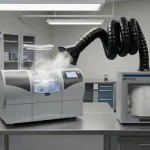
In practical application, VOC removal is rarely a standalone task. Industrial processes often generate particulate matter alongside chemical fumes. Therefore, a capable system must employ sequential, multi-stage filtration. For example, in printing environments, our fume extraction products are engineered to first capture ink mists or dust via a pre-filter, protecting the subsequent main filtration stages. The air then moves through the activated carbon bed for VOC adsorption, and finally through a HEPA H14 filter for ultra-fine particulate removal. This layered approach within an industrial VOC air purifier ensures comprehensive air cleaning, where each stage performs its dedicated function without compromise, addressing the complete contaminant profile of the operation.
Monitoring and Adaptation for Sustained Performance
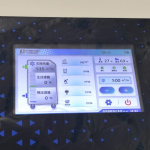
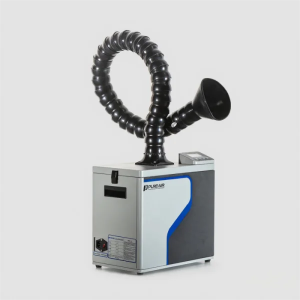
The performance of VOC adsorption is not static; it requires oversight. As carbon filters become saturated, their efficiency declines. Advanced fume extraction products incorporate monitoring to address this. Real-time VOC and PM2.5 monitoring via a touchscreen provides operators with immediate air quality data, allowing for proactive maintenance. Furthermore, intelligent features like auto-adjust suction ensure the system responds to varying production conditions, maintaining optimal airflow across the filter stages. This level of control is what defines a modern industrial VOC air purifier, transforming it from a passive filter into an active, responsive component of the industrial safety infrastructure.
In summary, air purifiers can address VOCs, but only when they are specifically designed as industrial-grade systems centered on adsorption technology. The process relies on targeted fume extraction products built with substantial activated carbon filtration and integrated into a broader multi-stage architecture. For sectors like digital printing, where chemical emissions are a constant factor, relying on this specialized engineering is necessary. A true industrial VOC air purifier provides a measurable, controlled, and adaptive solution for ensuring that airborne chemical hazards are effectively and consistently managed.