When it comes to tackling VOCs (volatile organic compounds) in industrial settings, companies need reliable solutions that can effectively manage air quality. At PURE-AIR, we specialize in fume extraction products designed to capture and neutralize harmful fumes and particles. Specifically, when comparing activated carbon filtration and photocatalytic oxidation (PCO) for industrial VOC air purifiers, it’s important to understand how these two technologies differ in effectiveness and application. In this article, we’ll break down the advantages of activated carbon filtration over PCO in fume extraction systems, focusing on key aspects like efficiency, application scope, and overall cost-effectiveness. Whether you’re working with inkjet & UV printing or screen & offset printing, understanding the right technology for your needs is crucial for maintaining a safe and productive work environment.
Activated Carbon Filtration: Efficient and Versatile for VOC Removal
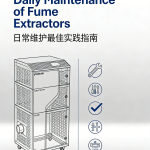
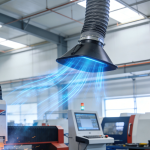
Activated carbon filtration is one of the most widely used methods for removing VOCs in industrial applications. Its ability to capture a broad range of harmful gases—such as solvent vapors, ozone, and acrylate monomers—makes it highly effective. The PURE-AIR industrial VOC air purifiers equipped with triple-phase filtration combine HEPA filters to capture particles as small as 0.3μm, while activated carbon neutralizes volatile compounds.
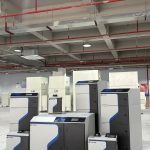
This technology is known for its versatility. It works across various printing environments, from large format digital printing to inkjet & UV printing. For industries where VOCs are a constant concern, activated carbon’s high adsorption capacity provides ongoing protection and ensures the air stays clean.
Photocatalytic Oxidation: Limited Applications and Higher Maintenance
Photocatalytic oxidation (PCO) is another technology that can help reduce VOCs. It uses a catalyst, usually titanium dioxide, activated by UV light to break down VOC molecules into less harmful substances. While PCO offers benefits in terms of its ability to neutralize organic compounds, its use in fume extraction products is often limited by factors like high operational costs, potential byproduct formation, and the need for frequent maintenance.
At PURE-AIR, we have found that industrial VOC air purifiers equipped with activated carbon filtration offer more consistent and reliable results. The ongoing upkeep required for PCO systems can be a challenge, especially in high-demand environments like screen & offset printing, where fast turnaround times are essential.
Cost-Effectiveness and Operational Efficiency with Activated Carbon
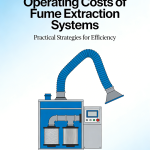
Another key advantage of activated carbon filtration is its cost-effectiveness. PURE-AIR’s fume extraction products designed for industrial environments offer significant operational savings. Companies can expect 40-50% in cost reductions, especially when it comes to maintenance and filter replacements. The heavy-duty casters integrated into our systems allow for quick repositioning—less than 30 seconds—enhancing workflow efficiency.
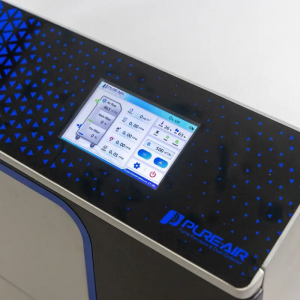
Activated carbon also requires less frequent monitoring compared to PCO systems, providing both time and financial savings. The smart monitoring feature in our products tracks filter life and sends maintenance reminders, which ensures your industrial VOC air purifier is always functioning optimally.
Conclusion
In the ongoing battle against VOCs, activated carbon filtration offers significant advantages over photocatalytic oxidation, particularly in industrial settings. The PURE-AIR fume extraction products are specifically engineered to meet the demands of industries like inkjet & UV printing and screen & offset printing, where efficiency and reliability are critical. With technologies such as triple-phase filtration, smart monitoring, and industrial mobility, our products provide long-lasting performance at a fraction of the cost of alternative systems.