HOW LONG DO VOC FUMES LAST?
INTRODUCTION
Volatile Organic Compounds (VOCs) are a major concern in modern industrial production environments. They are released from processes involving solvents, coatings, inks, adhesives, cleaning agents, and many forms of thermal or chemical manufacturing. For industries focused on compliance, safety, and productivity, understanding how long VOC fumes last is essential for effective air management and planning an efficient industrial VOC removal strategy.
In most industrial settings, VOC fumes do not simply disappear quickly. Instead, they can persist in the air for hours, days, or even longer depending on ventilation, temperature, chemical composition, and workspace design. This persistence makes industrial VOC removal not only a compliance requirement but also a long-term operational necessity.
This article explains how long VOC fumes last, what affects their duration, and how modern industrial VOC removal systems help manufacturers maintain safe and efficient production environments.
What Are VOC Fumes and Why They Matter?
Volatile Organic Compounds are carbon-based chemicals that easily evaporate at room temperature. Common examples include benzene, formaldehyde, toluene, and xylene. In industrial environments, these compounds are often released as byproducts of manufacturing processes.
Sources in Industrial Production
VOCs are commonly generated in:
- Laser processing and cutting operations
- Electronics manufacturing and PCB assembly
- Printing and inkjet production
- Metal processing and welding-related operations
- 3D printing and additive manufacturing
- Food and pharmaceutical production equipment cleaning and packaging
Because these industries operate continuously, VOC emissions can accumulate quickly without proper industrial VOC removal systems in place.
Why VOCs Are a Serious Concern
VOC exposure is not only a comfort issue but a health and regulatory concern. Prolonged exposure can lead to:
- Respiratory irritation
- Headaches and dizziness
- Long-term occupational health risks
- Non-compliance with environmental regulations
For this reason, effective industrial VOC removal is critical for both worker protection and operational approval.
How Long Do VOC Fumes Last?
The duration of VOC fumes is not fixed and depends on ventilation, production conditions, and air treatment levels. In some well-ventilated environments, VOCs may dissipate within a few hours, especially lighter compounds. However, without dedicated industrial VOC removal, residual VOCs can still remain at low concentrations.
In enclosed or semi-ventilated workshops, VOCs often persist for several days. Materials such as coatings, inks, and adhesives may continue releasing emissions after production, making continuous industrial VOC removal necessary.
In poorly controlled industrial environments, VOCs can accumulate in equipment, surfaces, and ventilation systems. This can lead to long-term persistence lasting weeks or more until effective industrial VOC removal systems are applied.
Factors That Affect VOC Fume Duration
The duration of VOC fumes depends on several environmental and operational factors that also determine the required level of industrial VOC removal.
Ventilation and air exchange rate are key. Strong airflow can reduce VOC concentration, but without dedicated industrial VOC removal, pollutants may only be diluted and recirculated rather than fully removed.
Temperature and humidity also influence VOC behavior. Higher temperatures increase evaporation, while humidity affects how VOCs spread and settle. Effective industrial VOC removal systems must adapt to these changing conditions.
Different VOC compounds behave differently. Light VOCs dissipate faster, while heavier ones remain longer in the air and on surfaces, requiring more advanced industrial VOC removal solutions.
Production intensity is another factor. High-volume manufacturing generates continuous emissions, making real-time industrial VOC removal necessary for stable air quality..
Industrial Environments and Associated Risks
Industrial environments present unique challenges because VOC emissions are continuous and often concentrated. Without proper control, these fumes can impact not only human health but also equipment performance and product quality.
1.Worker Health and Safety
Exposure to VOCs in industrial settings increases the risk of chronic respiratory issues and reduced cognitive performance. Effective industrial VOC removal reduces these risks significantly.
2.Equipment Aging and Maintenance Costs
VOC accumulation can accelerate corrosion and contamination of machinery components. By implementing proper industrial VOC removal, companies can reduce maintenance costs and extend equipment lifespan.
3.Production Efficiency and Yield
Air contamination can negatively affect sensitive production processes, especially in electronics, printing, and precision manufacturing. Stable industrial VOC removal improves yield consistency and product quality.
Role of Industrial VOC Removal Systems
Modern industrial facilities rely on advanced air purification systems to manage VOC emissions effectively. These systems are designed not just to dilute air pollutants but to actively capture and neutralize harmful compounds.
Core Functions of Industrial VOC Removal
A professional industrial VOC removal system typically provides:
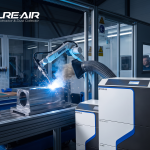
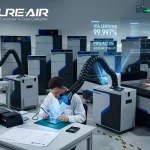
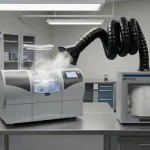
- Capture of airborne VOC molecules at the source
- Filtration and adsorption of chemical compounds
- Continuous purification during production cycles
- Compliance support for environmental standards
Technologies Used in Industrial VOC Removal
Common technologies include:
- Activated carbon adsorption
- Multi-stage filtration systems
- Catalytic oxidation
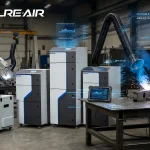
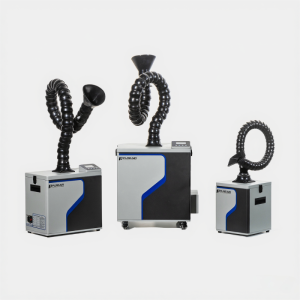
- High-efficiency fume extraction units
These technologies work together to ensure complete industrial VOC removal in demanding production environments.
PURE AIR Solutions for Industrial VOC Removal
As an experienced provider in industrial air purification, PURE AIR focuses on delivering reliable and efficient solutions for VOC, dust, and fume control across multiple industries.
With over 14 years of industry experience, PURE AIR integrates self-developed core components and strict quality control processes to ensure high-performance industrial VOC removal systems. Their production facility and engineering support allow them to serve industries such as laser processing, electronics manufacturing, printing, 3D printing, and metal processing.
Key Advantages of PURE AIR Systems
- Fast delivery for standard models (3–7 days)
- CE, ISO, and patent certifications
- 15-step quality inspection process
- Strong after-sales technical support
- Stable factory production capacity
These advantages make PURE AIR a practical choice for companies seeking reliable industrial VOC removal solutions that support compliance, safety, and productivity.
Conclusion: Managing VOC Duration with Effective Removal Systems
VOC fumes can last anywhere from a few hours to several days or even longer depending on environmental conditions and industrial processes. Without proper control, these emissions accumulate and create long-term risks for health, compliance, and production quality.
The most effective way to control VOC persistence is through professional industrial VOC removal systems that continuously capture and neutralize emissions at the source. Passive ventilation alone is not sufficient for modern manufacturing demands.
For manufacturers seeking stable and compliant air quality solutions, investing in advanced industrial VOC removal technology is no longer optional—it is essential.
If you are planning to upgrade your air purification system or want tailored solutions for your production line, you can learn more from PURE AIR or contact us to discuss the right industrial VOC removal solution for your facility.