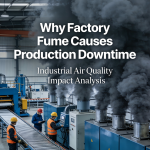
During the lithium battery production process, multiple steps generate smoke, harmful gases, and odors.
1. Electrode Preparation (Cathode/Anode)
Pollutants:
Dust: Nano-sized particles of cathode materials (lithium cobalt oxide, lithium iron phosphate, ternary materials) and anode materials (graphite, silicon carbon).
VOCs: Organic waste gases generated by the volatilization of NMP (N-methylpyrrolidone, the cathode slurry solvent).
Odors: Residual solvent and a burning smell during high-temperature drying.
2. Coating and Drying
Pollutants:
VOCs: Volatile gases from NMP or water-based solvents (such as PVDF binder).
Particles: Material splashing caused by uneven coating.
3. Electrode Rolling and Slitting
Pollutants:
Metal dust: Micron-sized metal debris generated by slitting aluminum/copper foil.
Oil mist: Aerosols formed by the volatilization of lubricating oil from the roller press.
4. Cell Assembly (Winding/Lamination)
Pollutants:
Dust: Plastic particles from separator cutting, metal fume from tab welding.
5. Electrolyte Filling (Electrolyte Filling)
Pollutants:
Harmful Gases: Hydrogen fluoride (HF) and carbonate-based VOCs emitted from the electrolyte (including LiPF₆ and DMC/EC/EMC solvents).
Odor: The pungent odor of the electrolyte solvent.
6. Formation and Aging
Pollutants:
Gas Emissions: CO, CO₂, trace amounts of HF, and electrolyte decomposition products (such as methyl formate) generated during initial charge and discharge.
Odor: Residual organic solvent evaporation.
7. Battery Packaging and Testing
Pollutants:
Welding Fumes: Metal particles from laser welding during aluminum-plastic film packaging.
VOCs: Benzene compounds released during the curing of packaging adhesives (such as epoxy resins).