Why Fume Extractors Are Essential for Laser Marking in Packaging Production Lines
Laser marking has become a practical solution for adding batch numbers, product codes, dates, barcodes, and other traceability information to packaging. It offers fast, permanent marking without physical contact with the package.
However, the marking process can also generate smoke, fine particles, volatile organic compounds (VOCs), and odors, depending on the packaging material and laser technology used. For this reason, a laser marking fume extractor is an important part of a well-designed packaging production line.
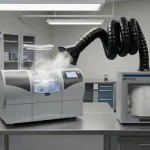
A suitable laser marking fume extractor captures contaminants close to the marking point and filters them before they spread through the production area. This helps protect operators, maintain cleaner equipment, and support consistent production conditions.
What Happens During Laser Marking on Packaging?
Laser marking works by applying concentrated laser energy to a selected surface. Depending on the material and process settings, the laser may remove, vaporize, discolor, or modify a surface layer.
Packaging production can involve many different substrates, including cartons, plastics, PET, PC, coated materials, and other packaging components. PURE AIR identifies plastics, cartons, PET, PC, PCB, and other materials among the applications for its laser marking and coding fume extraction systems.
Laser Marking Generates More Than Visible Smoke
The visible plume is only part of the problem. Thermal processing can produce very fine airborne particles and chemical vapors. The exact composition depends on the substrate, coatings, additives, laser type, and marking parameters.
This means production managers should not evaluate extraction requirements only by how much smoke can be seen. A production line may still need a laser marking fume extractor even when the visible plume appears small.
Packaging Materials Require Appropriate Filtration
Different materials can produce different contaminants. Plastics and coated packaging, for example, may release odors and VOCs during laser processing. Fine particulate matter can also be generated when the laser interacts with the material surface.
A properly selected extraction system therefore needs more than strong airflow. It should combine appropriate particle filtration with gas and odor treatment when the application requires it.
Why Is a Laser Marking Fume Extractor Essential?
Installing a laser marking fume extractor provides several practical benefits for packaging production lines. The main objective is source capture: removing contaminants before they disperse into the surrounding workspace.
It Helps Control Operator Exposure
Operators may work near laser marking stations for extended periods. If fumes and fine particles are allowed to accumulate, workers can be exposed to airborne contaminants generated by the marking process.
A laser marking fume extractor draws contaminated air away from the marking point and passes it through filtration stages. This can reduce the concentration of airborne particles and odors around the production station.
Fume extraction should be considered part of the overall safety design rather than a replacement for other laser safety controls.
It Keeps Production Areas Cleaner
Uncontrolled laser smoke can settle on nearby surfaces, machine components, conveyors, sensors, and other production equipment. Over time, this can increase cleaning requirements and contribute to an untidy production environment.
Source extraction helps control the movement of smoke and fine particles. In a packaging line where multiple processes operate continuously, keeping contaminants close to their point of generation can be particularly useful.
It Supports Marking and Equipment Stability
Laser marking equipment depends on stable operating conditions. Smoke and particulate contamination can affect optical components and surrounding equipment if extraction is inadequate.
Industrial laser systems commonly use fume extraction to help keep the laser area and production line clean. For example, laser marking equipment suppliers note that extraction can help prevent smoke and particulate debris from affecting the laser lens and code quality.
A laser marking fume extractor therefore contributes not only to workplace air quality but also to equipment maintenance and production reliability.
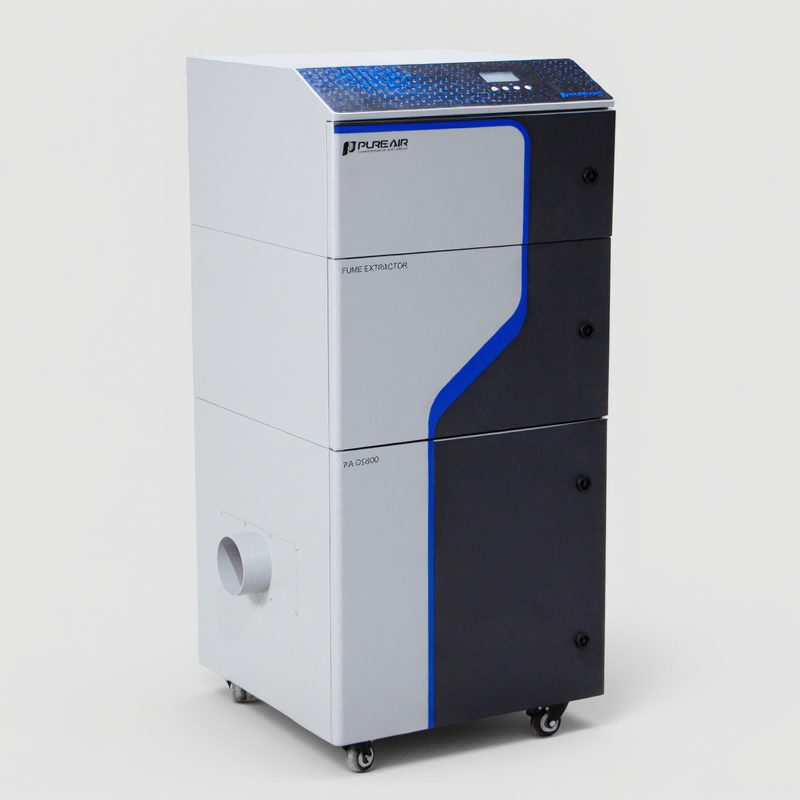
What Should Packaging Manufacturers Look for in a Fume Extractor?
Not every extraction system is suitable for every packaging line. The correct selection should consider the material, laser process, production speed, installation method, and required filtration. The following parameters can help packaging manufacturers compare suitable systems before requesting a quotation.
| Parameter | What to Check | PURE AIR Laser Marking Range* |
| Airflow | Whether the airflow is sufficient for effective source capture at the marking point | 250–2,400 m³/h |
| Negative pressure | Whether the extractor can maintain effective suction through the connection and capture setup | 2,800–10,000 Pa |
| Filtration | Whether the system combines particle filtration with gas and odor treatment where required | H14 HEPA + treated activated carbon on applicable models |
| Particle filtration efficiency | Whether the HEPA stage is suitable for fine particulate generated by the process | H14: 99.99% at 0.3 μm |
| Noise level | Whether operating noise is suitable for the production environment | <60 to <68 dBA, depending on model |
| Inlet size | Whether the connection size matches the extraction hose or ducting | 50–200 mm, depending on model |
| Installation footprint | Whether the unit can fit within the available production-line space | Model-dependent; compact single-station and larger production-line units are available |
*The figures above are published specifications for PURE AIR’s laser marking and coding fume extraction range. Actual selection should be based on the packaging material, laser process, contaminant profile, capture arrangement, and production-line configuration.
Airflow and Negative Pressure
The extractor needs enough airflow and suction to capture the plume effectively at the source. Packaging lines may operate at high speeds, so extraction performance should match the actual marking process rather than be selected only by machine size.
PURE AIR’s laser marking and coding range includes systems with different airflow and pressure levels, from compact units for individual stations to higher-capacity models designed for production-line applications.
Multi-Stage Filtration
A laser marking fume extractor should use filtration appropriate to the contaminants being generated.
PURE AIR’s laser marking systems use combinations of pre-filtration, HEPA filtration, and treated activated carbon. Its states that the H14 HEPA stage is rated at 99.99% efficiency for 0.3-micron particles, while activated carbon is used for VOCs, chemical vapors, and odors.
The actual filter configuration should still be selected according to the material and process. A higher specification is not automatically the right specification if the contaminant profile has not been evaluated.
Compact Integration With the Production Line
Packaging factories often have limited floor space. The extraction system therefore needs to fit around conveyors, coding equipment, inspection stations, and other machinery.
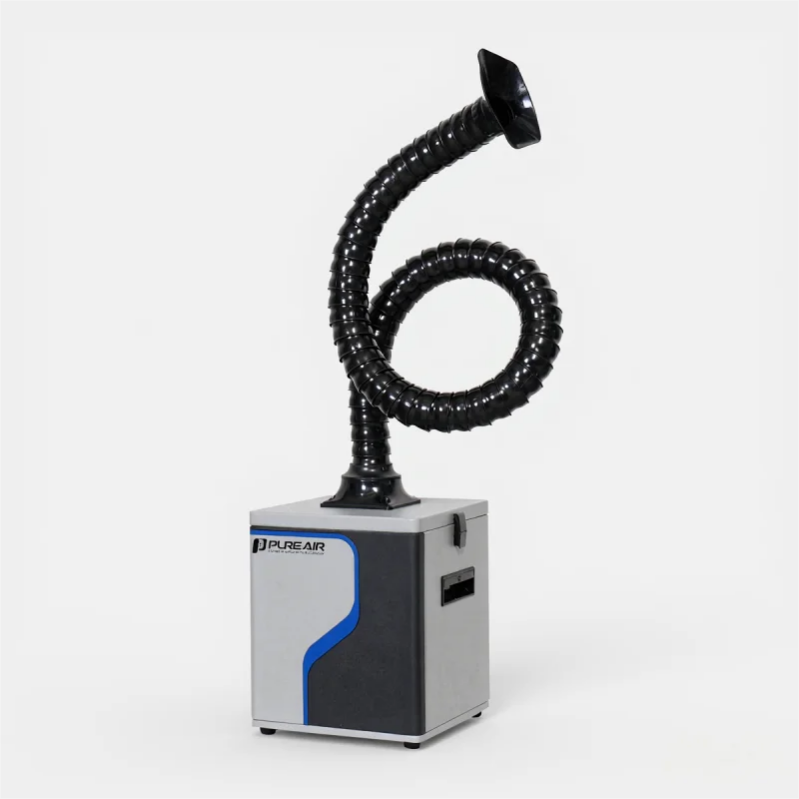
A compact laser marking fume extractor can be positioned close to the marking system, helping reduce unnecessary ducting and maintain an organized production layout. For automated lines, integration with the marking equipment and production controls can also simplify operation.
Filter Monitoring and Maintenance
Filters eventually become loaded with contaminants. As resistance increases, airflow can decrease if maintenance is neglected.
For this reason, buyers should consider filter-life monitoring, maintenance access, replacement procedures, and operating costs when comparing extraction systems. PURE AIR’s DS and DS-i laser extraction ranges are designed for production applications, with model-specific configurations for airflow, pressure, filtration, and installation requirements.
How Should a Fume Extractor Be Integrated Into a Packaging Line?
Effective extraction depends on installation as well as equipment selection.
The extraction inlet should be positioned as close as practical to the laser marking point without interfering with the product, laser path, sensors, or conveyor movement. The goal is to capture the plume before it disperses.
For automated packaging lines, manufacturers should also consider:
- Conveyor speed and product spacing
- Laser marking position
- Packaging material and surface treatment
- Required airflow
- Filter capacity
- Noise level
- Available installation space
- Electrical requirements
- Maintenance access
- Control or automation interfaces
PURE AIR lists both single-station and product-line working formats for its laser marking and coding extraction systems, illustrating why extraction capacity should be matched to the actual production configuration.
Why Source Extraction Is Better Than Relying Only on General Ventilation
General factory ventilation has an important role, but it does not necessarily replace source extraction.
Once laser-generated contaminants have dispersed into the room, a much larger volume of air must be treated to control their concentration. Source capture works differently: it removes contaminated air near the point where it is generated.
For packaging manufacturers, this approach can provide more targeted control. It can also reduce the amount of laser-generated contamination that reaches surrounding machinery and the wider production area.
A laser marking fume extractor should therefore be considered alongside the factory’s broader ventilation and air-quality strategy.
How PURE AIR Supports Laser Marking Applications
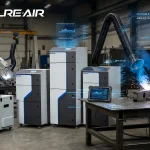
PURE AIR provides industrial fume extraction systems for laser marking and coding applications across sectors such as automotive, electronics, PCB, semiconductor, food, and pharmaceutical manufacturing. Its laser marking product range includes compact single-station systems as well as larger models for production-line applications.
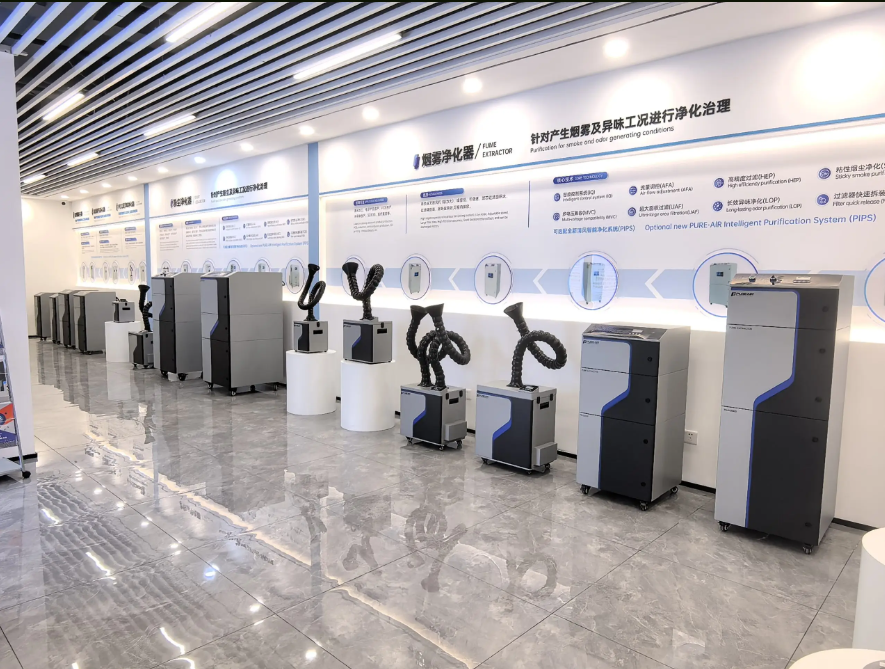
The company’s laser marking extraction systems are designed around different airflow capacities, pressure requirements, filtration configurations, and installation conditions. This allows manufacturers to select a system according to the actual marking process instead of applying one extractor specification to every application.
For packaging producers, the key consideration is not simply whether an extractor can remove visible smoke. The more important question is whether the laser marking fume extractor can provide reliable source capture and appropriate filtration for the specific packaging material and production conditions.
Conclusion
Laser marking improves packaging traceability and supports fast, non-contact product identification, but the process can generate fine particles, fumes, VOCs, and odors. Without effective extraction, these contaminants can affect workplace air quality, equipment cleanliness, and production conditions.
A properly selected laser marking fume extractor captures contaminants at the source, combines suitable filtration with adequate airflow, and integrates with the packaging production line. When choosing a system, manufacturers should evaluate the packaging substrate, laser type, marking speed, contaminant profile, extraction capacity, filter configuration, maintenance requirements, and installation space.
For high-volume packaging production, fume extraction should not be treated as an optional accessory. It is an important part of building a cleaner, more controlled, and more reliable laser marking process. Manufacturers that need application-specific guidance can contact us to discuss a suitable extraction solution.