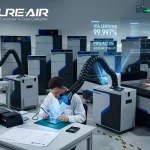
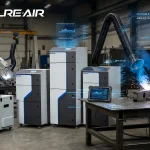
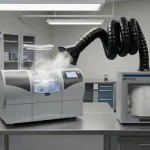
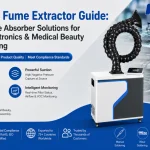
In our 3D printing facilities, we quickly realized that 3D printer fume and ultrafine particulate emissions are more than just a nuisance—they pose real risks to both employee health and equipment longevity. That’s why we rely on a 3D printer fume extractor as an essential part of our safety strategy. From desktop FDM printers to industrial SLM/DMLS lines, hazardous aerosols, VOCs, and fine powders are constantly generated. Without effective capture and filtration, these emissions can infiltrate the air, affecting sensitive electronics, reducing print accuracy, and creating long-term occupational hazards. Our team at PURE-AIR has developed systems that tackle these challenges while keeping the workflow seamless.
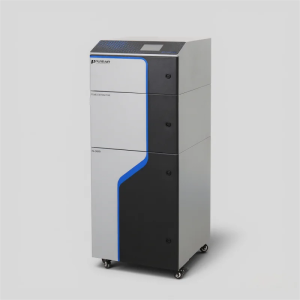
Resin/SLA/DLP Printing
Resin-based printing, such as SLA and DLP, releases volatile organic compounds and photoinitiator fumes that can irritate the skin, eyes, and respiratory system. To address this, we equip our workshops with PURE-AIR extractors featuring multi-stage filtration. The pre-filter captures large resin particles, HEPA H13 filters trap ultrafine dust, and activated carbon layers neutralize VOCs. This approach ensures that even the smallest harmful compounds are removed, allowing our teams to work safely without compromising print quality.
Metal Sintering (SLM/DMLS)
Metal additive manufacturing introduces an entirely different set of challenges. Nano metal powders and inert gas byproducts create airborne hazards that are highly flammable and toxic if inhaled. That’s why we integrate EX-certified, explosion-proof 3D printer fume extraction systems into our SLM/DMLS lines. These units feature reactive metal safety technology, spark-resistant filtration, and sub-second capture of metal fumes. Adaptive suction, synchronized with print bed temperatures, ensures consistent performance and reduces energy consumption during less intensive phases.
Powder-Based Printing (SLS/MJF)
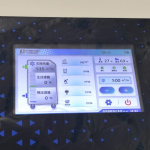
Powder-based processes such as SLS and MJF produce ultrafine polymer or ceramic particles that can remain suspended in the air, increasing inhalation risk and contaminating surfaces. We deploy 3D printer fume extractors combined with ambient ventilation, cyclone separators, and anti-static ducting. Modular design and mobility allow us to position units close to powder handling stations, while real-time monitoring of PM0.3 and VOC levels ensures the system maintains optimal filtration without interrupting production.
Conclusion
At PURE-AIR, we understand that controlling emissions in additive manufacturing isn’t just about regulatory compliance—it’s about protecting our people, equipment, and brand reputation. By using 3D printer fume extraction technologies and strategically implementing 3D printer fume extractors for every type of printing process, we create cleaner, safer, and more productive workshop environments. Our hybrid approach, combining smart filtration, adaptive airflow, and modular mobility, ensures that hazardous particulates and gases are managed effectively across all workflows. In doing so, we not only safeguard health and improve print quality but also help electronics and industrial 3D printing shops maintain compliance and operational excellence worldwide.