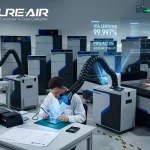
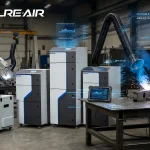
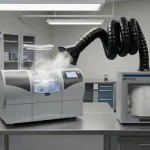
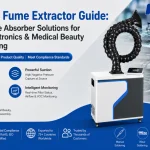
In modern manufacturing and industrial fabrication, operational efficiency can never come at the expense of worker safety and environmental compliance. Processes such as welding, laser cutting, plasma cutting, and chemical processing generate hazardous airborne contaminants, including toxic metal fumes, ultrafine particulate matter, and volatile organic compounds (VOCs).
To protect operators and maintain sustainable facilities, industrial workshop managers must invest in certified equipment. Two benchmarks stand out globally for guaranteeing quality, reliability, and safety: CE Certification and ISO 9001 Compliance. This article explores how meeting these rigorous standards in industrial fume collection safeguards your workforce and elevates your entire operation.
Understanding the Regulatory Framework
Navigating international standards can be complex, but understanding what CE and ISO 9001 represent is vital for industrial procurement and facility management.
- What is CE Certification?
The CE mark (Conformité Européenne) indicates that a product has been assessed by the manufacturer to meet high safety, health, and environmental protection requirements within the European Economic Area (EEA). For industrial fume extractors and ventilation systems, CE compliance ensures that electrical components, mechanical structures, filtration efficiency, and noise emission levels comply with strict European directives (such as the Machinery Directive and Low Voltage Directive).
- What is ISO 9001 Certification?
While CE certifies the product, ISO 9001 certifies the quality management system (QMS) of the organization manufacturing it. An ISO 9001-certified manufacturer demonstrates a consistent ability to provide products and services that meet customer and regulatory requirements. It ensures rigorous traceability, standardized manufacturing processes, continuous improvement, and stringent pre-shipment quality control.
Why CE and ISO 9001 Matter in Laser Fume Extractor?
Fume extraction is not merely a housekeeping task; it is a critical engineering control designed to prevent occupational illnesses like metal fume fever, chronic bronchitis, and occupational asthma. Implementing certified systems offers distinct advantages:
- Guaranteed Filtration Performance: CE-certified units equipped with high-efficiency particulate air (HEPA) or high-efficiency nanofiber filters ensure high capture rates for sub-micron particles, protecting operator respiratory health.
- Electrical and Mechanical Safety: Industrial environments involve heavy usage and harsh conditions. CE compliance guarantees robust enclosure designs, proper grounding, thermal overload protection, and spark arrestors to mitigate fire risks.
- Reliability and Reduced Downtime: Purchasing from an ISO 9001-certified supplier minimizes the risk of equipment failure. Standardized manufacturing means components fit precisely, replacement parts are readily available, and equipment longevity is maximized.
Key Features of Compliant Fume Extraction Systems
When selecting an industrial fume collection system that meets CE and ISO 9001 benchmarks, look for the following engineering features:
- Multi-Stage Filtration Architecture: Systems should incorporate spark traps for fire safety, primary coarse filters for large debris, and secondary HEPA/ULPA or activated carbon filters for hazardous gases and fine dust.
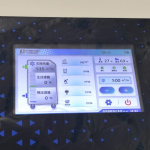
- Automated Cleaning Mechanisms: Pulse-jet cleaning systems controlled by differential pressure sensors extend filter lifespan and maintain consistent airflow without manual intervention.
- Ergonomic Capture Hoods & Articulated Arms: Flexibility is key to capturing fumes at the source (source extraction) before they disperse into the ambient workshop air.
- Low Noise Operation: Compliance standards also govern workplace ergonomics, ensuring that extraction units operate within safe decibel limits to prevent noise-induced hearing loss.
Best Practices for Workshop Safety and Maintenance
Investing in a certified fume collection system is the first step. Maintaining its efficacy requires a proactive workshop safety protocol:
- Routine Air Quality Monitoring: Periodically test ambient air to ensure particulate counts and gas concentrations remain well below Occupational Safety and Health Administration (OSHA) and local regulatory thresholds.
- Scheduled Filter Replacements: Follow manufacturer guidelines for changing filters. A saturated filter drastically reduces airflow efficiency and compromises workspace safety.
- Operator Training: Ensure that welding and fabrication personnel understand how to position extraction arms correctly—typically within 30 centimeters of the arc or cutting source for optimal capture velocity.
Conclusion
Integrating CE-certified and ISO 9001-compliant industrial fume collection systems into your workshop is a strategic investment in both human capital and regulatory resilience. By prioritizing equipment built under strict quality management frameworks, facility managers can eliminate hazardous airborne pollutants, protect workers from long-term health risks, and foster a culture of uncompromising safety and operational excellence.
Are you looking for a professional manufacturer of fume extractor and dust collector with CE certification or ISO 9001 accreditation? Contact our technical support team via the PURE-AIR Facebook page to get air filtration solutions that meet these certification standards!