

PURE-AIR

LASER PROCEESING FUMES, DUSTS & ODOR PURIFICATION

—

What’s Really in Laser Fumes?

Laser processing does not produce just “smoke.” Depending on the material and the process, the air around your machine carries three very different kinds of contaminants, and each needs a different filtration stage.


CONTAMINANT TYPE / 01

VOCs & Odor

Acrylic, plastics, leather and coated materials vaporize under the beam and release volatile organic compounds and strong odors.

CONTAMINANT TYPE / 02

Particulates & Sticky Tar

Wood, paper, acrylic and leather produce fine soot and condensed tar-like residue.

CONTAMINANT TYPE / 03

Metal Particles & Coating Decomposition Products

Cutting, marking, welding and cleaning of metals generate fine metal fume.

—

 Beyond Health: What Laser Fumes Do to Your Production

Protecting operators is essential, but laser fumes also hit your output. Left uncontrolled, they show up as machine wear, scrap and downtime.

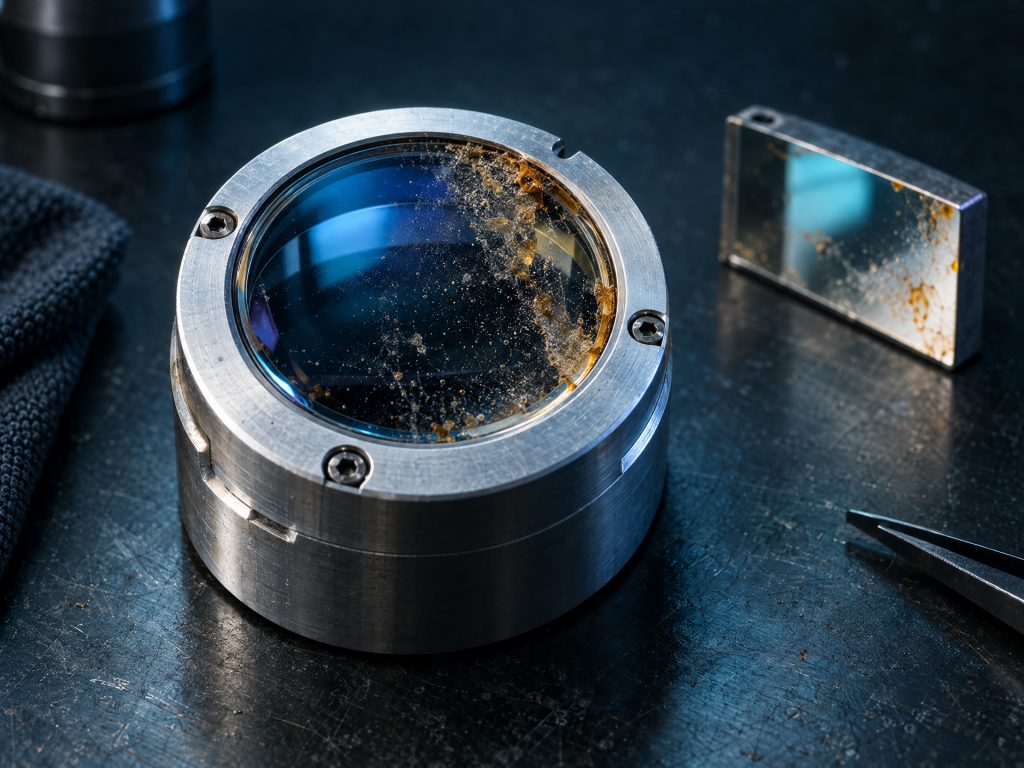
Optics contamination

Tar and dust deposit on lenses and mirrors, reducing effective beam power, making marking and cutting results less consistent, and forcing more frequent cleaning or replacement.

Faster machine aging

Residue and corrosive gases attack guide rails, sensors and electronics, shortening service life.
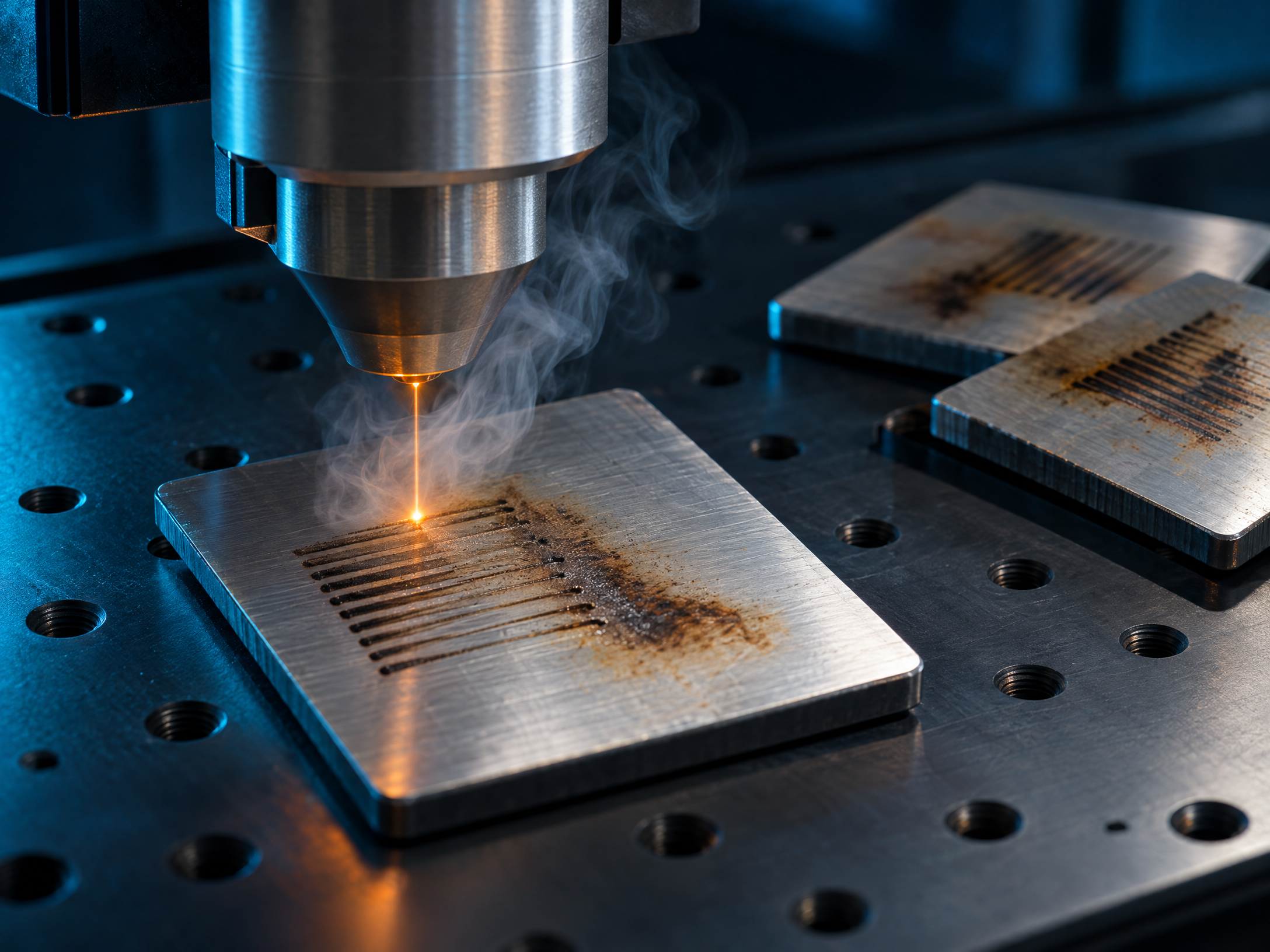
Lower precision, more rework

Smoke lingering in the beam path and on the workpiece leads to burn marks, uneven engraving depth and rejected parts.
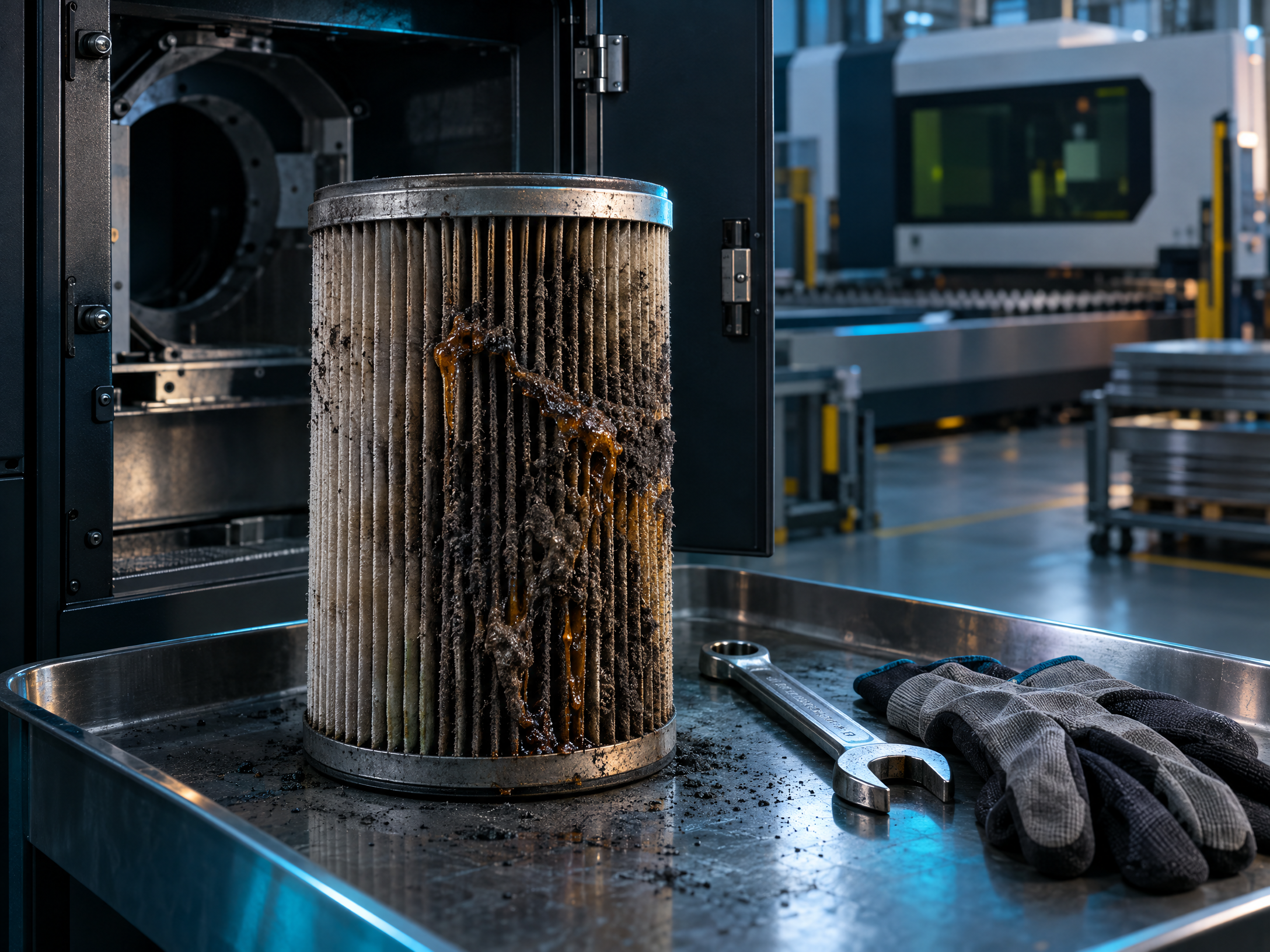
Filter clogging and downtime

Filters not matched to the contaminant lose suction fast. Every unplanned filter change stops the line.
—

Laser Fume Extraction by Process

Choose the extraction system by process, not just by machine size. Each process below shows the contaminant profile and the PURE-AIR configuration built for it.


REAL  APPLICATION · LASER  MARKING

Laser Marking Fume Extractor

Fiber, UV and CO₂ marking generate fine fumes and particles that settle on optics and marked parts. A source-capture extractor keeps the marking area clear, protecting both your operators and the legibility of your marks.

  • Source capture right at the marking zone
  • Compact footprint for installation next to the machine or inside a production line
  • Multi-stage filtration for particles and odor
  • CE-certified,with optional explosion-proof configurations and ultra-quiet operation

REAL  APPLICATION · LASER  CUTTING

Laser Cutting & Engraving Fume Extraction

Cutting and engraving acrylic, plastic, leather, wood and metal creates heavy smoke, tar, dust and harmful gases. PURE-AIR systems combine a 9600Pa high-negative-pressure brushless fan with three-stage filtration to remove them at the source and allow safe indoor discharge.

  • 9600Pa high-negative-pressure brushless fan for strong capture at the source
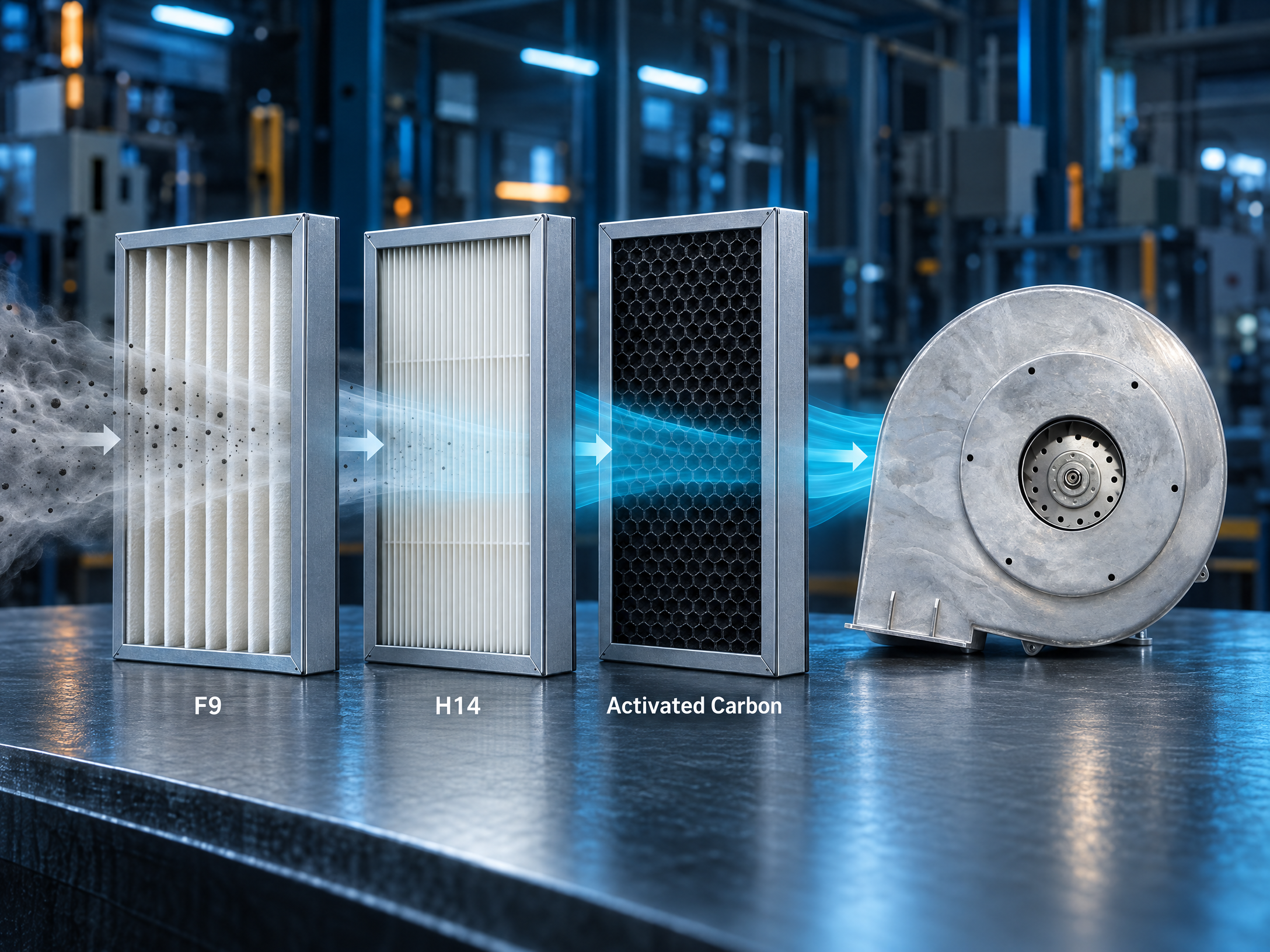
  • Three-stage filtration: pre-filter, HEPA-grade filter, activated carbon
  • 99% purification efficiency for 0.3-micron particles
  • CE-certified,with optional explosion-proof configurations and ultra-quiet operation

REAL  APPLICATION · LASER  WELDING

Laser Welding, Cleaning & Cladding Fume Extraction

Welding, cleaning and cladding produce dense metal fume and coating residues, including sticky zinc and chromium fumes that quickly foul ordinary filters. PURE-AIR combines vortex-core pressurization with nano-level dense filtration and automatic pulse cleaning, designed for production-line installation.

  • 10KPa vortex-core pressurization for high dust loads
  • 99% interception of 0.3-micron heavy-metal fume
  • Automatic pulse cleaning to reduce manual filter maintenance

—

Why PURE-AIR for Laser Fume Extraction

Built for industrial duty

High-pressure brushless fans and multi-stage filtration designed for continuous production.
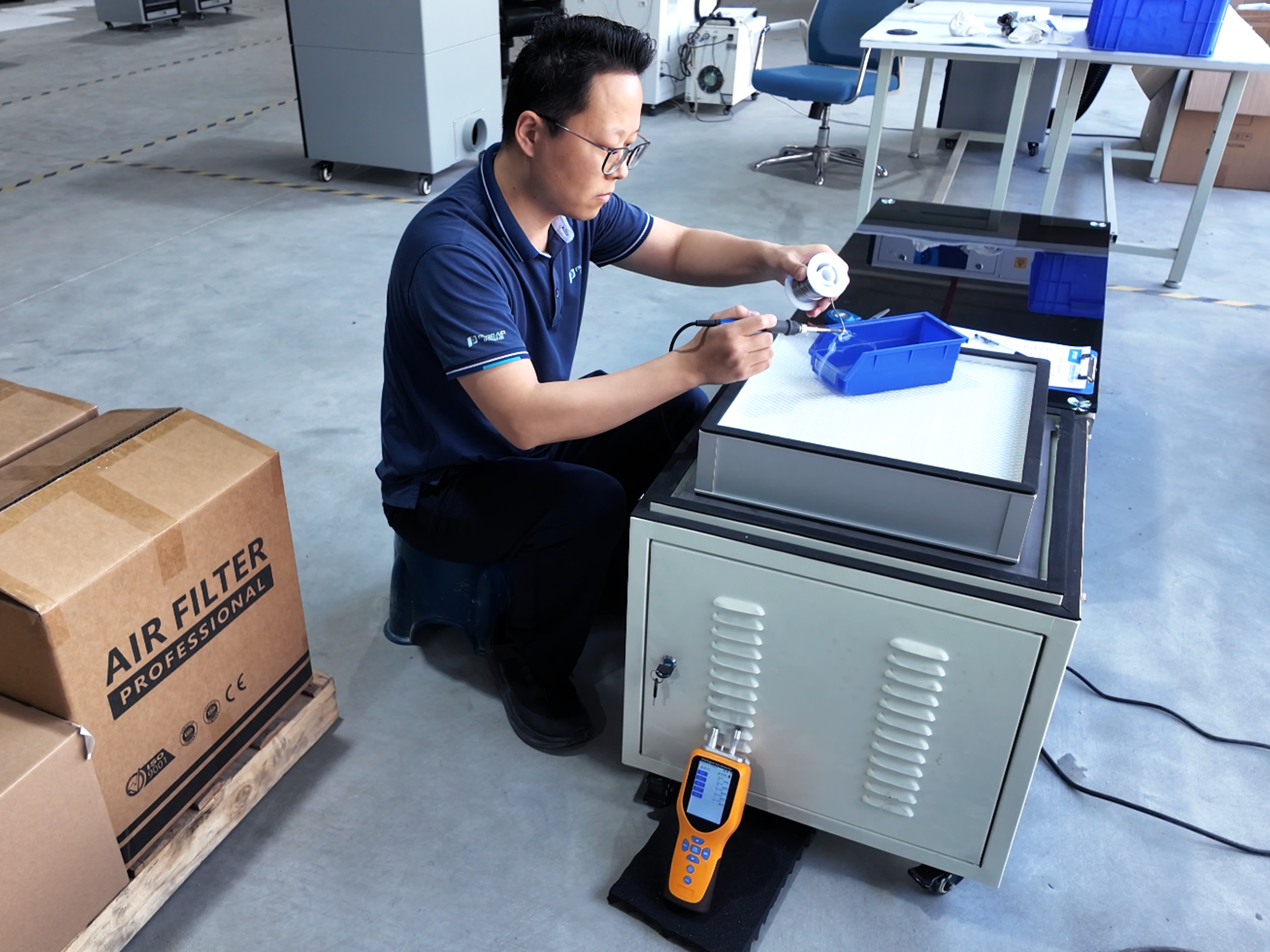
Verified filtration

Filtration performance backed by test reports.
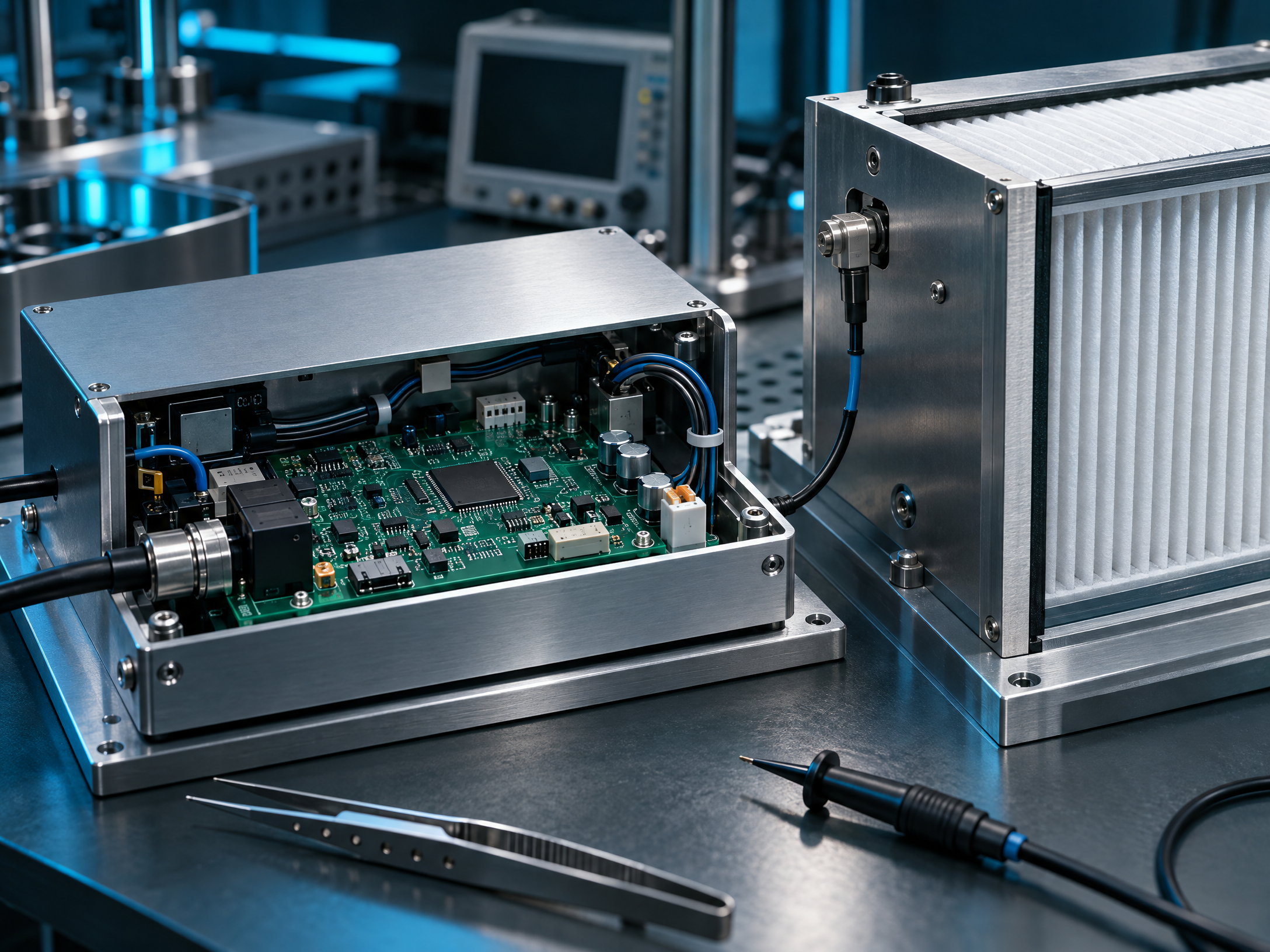
Technology depth

In-house filtration and control technology.
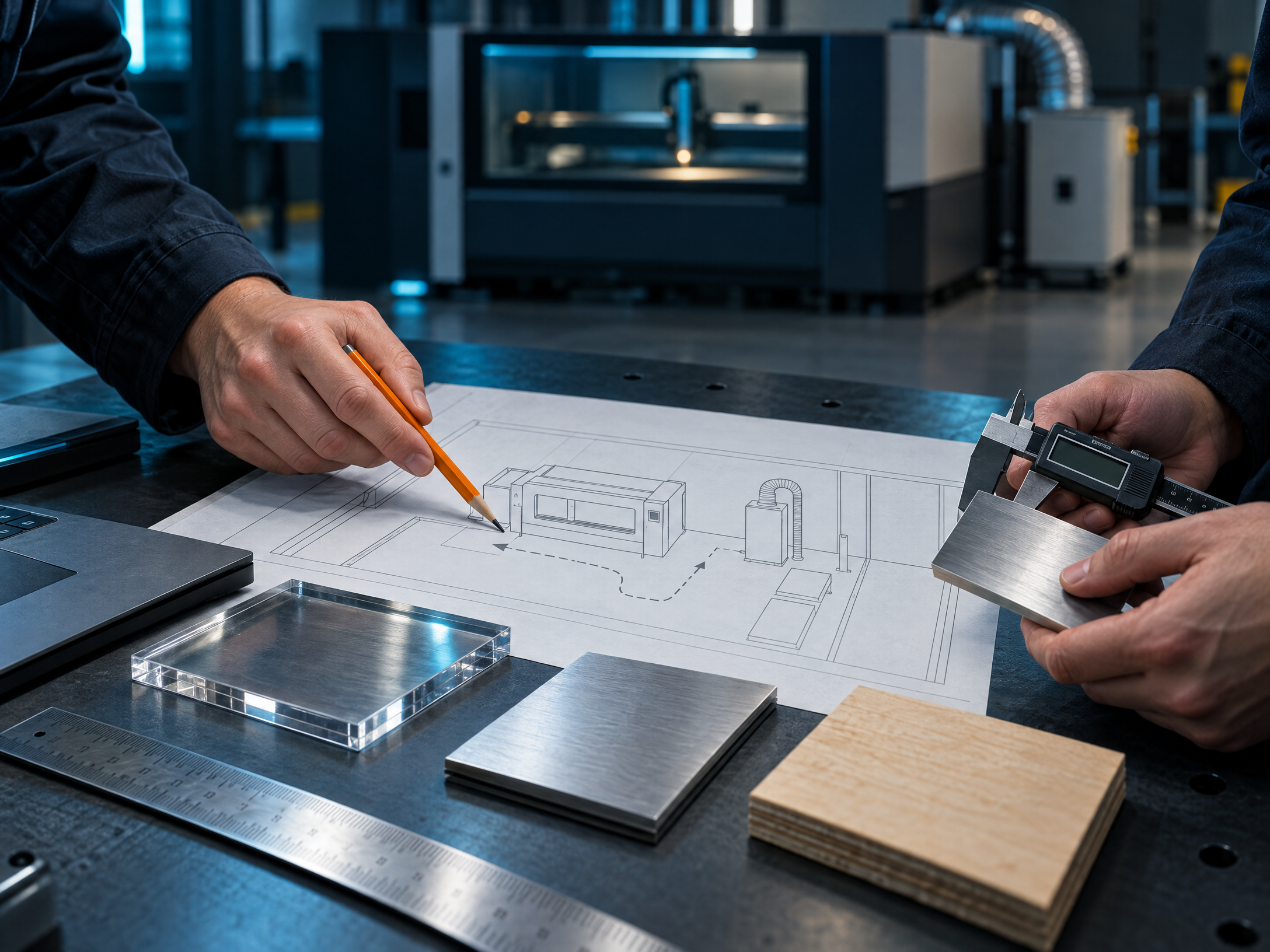
Application support

We help match the system to your laser, material and layout.

—

Frequently Asked Questions

A laser fume extractor captures the smoke, particles and gases produced during laser marking, cutting, engraving, welding or cleaning, filters them, and either returns clean air to the workshop or discharges it safely.

No. They usually contain fine particles and sticky tar, gas-phase VOCs and odors, and, when processing metals or coated materials, metal particles and coating decomposition products. Each needs a different filtration stage.

Usually not. A dust collector handles dry particles but does not remove VOCs and odors. A laser fume extraction system combines pre-filtration, HEPA-grade filtration and activated carbon.

Yes. Removing tar, dust and corrosive gases at the source reduces deposits on lenses, mirrors, rails and sensors, which helps keep processing quality consistent and reduces cleaning and downtime.

Start with the laser type and power, the materials processed, daily running hours and number of stations. Send us these details for a recommendation