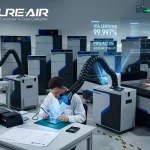
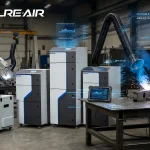
Industrial laser applications present a distinct air quality challenge. The process generates a concentrated plume of ultrafine particulates and gaseous byproducts that can compromise safety and precision. When we at PURE-AIR examine the question of effectiveness for a laser fume extractor, we assess it against three critical benchmarks: the completeness of source capture, the thoroughness of filtration, and the sustainability of performance. A truly effective laser fume extraction strategy addresses all these facets in unison to ensure a controlled and clean operational environment.
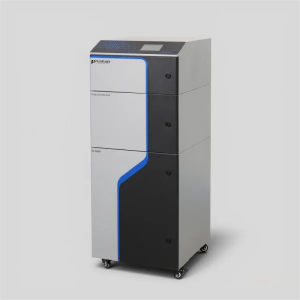
The First Benchmark: Precision in Source Capture
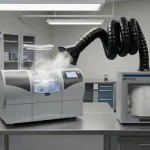
Effectiveness begins at the emission point. A laser fume extractor must provide immediate and precise capture of contaminants as they are produced. This requires adaptable suction capabilities that can be matched to the specific laser process, whether it is high-power cutting or delicate micro-etching. Ineffective capture allows fumes to disperse into the workspace, undermining the entire system’s purpose. Our approach to laser fume extraction prioritizes this initial containment, utilizing designs that ensure the pollutant stream is efficiently drawn into the system before it can affect ambient air quality or settle on sensitive equipment.
The Second Benchmark: Completeness of Filtration
Capturing fumes is only the first step; neutralizing them is the core task. The varied nature of laser byproducts—from fine metal vapors to organic residues—demands a multi-stage filtration approach. A proficient laser fume extractor will integrate particulate filtration, such as HEPA media, to remove solid particles. For gaseous pollutants and odors, an additional stage, like activated carbon or other chemical filters, is necessary. This layered filtration is what transforms a simple exhaust fan into a complete purification system. The integration of both stages is a fundamental aspect of comprehensive laser fume extraction, ensuring the air released meets stringent cleanliness standards.
The Third Benchmark: Consistency Through Operational Design
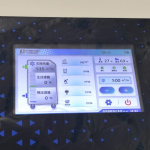
Long-term effectiveness is measured by reliable performance over months and years. Systems with static operation can waste energy and suffer from declining efficiency. More advanced laser fume extraction units incorporate operational intelligence. Features like IoT-driven sensors allow the laser fume extractor to automatically adjust its airflow based on real-time demand, maintaining performance while managing energy use. Furthermore, a design that facilitates straightforward maintenance, such as tool-free filter access, ensures that the system can be serviced promptly. This prevents performance degradation due to clogged filters and supports sustained operational uptime, which is a practical measure of enduring effectiveness.
For industrial operations, the effectiveness of a fume control system is not a singular feature but a compounded result. It relies on the coordinated function of precise capture, multi-stage filtration, and intelligent operation. At PURE-AIR, we view a laser fume extractor through this integrated lens. A system’s ability to perform consistently, adapt to process variables, and enable easy upkeep defines its real-world value. Effective laser fume extraction, therefore, is the product of considered engineering that aligns technical capabilities with the practical demands of the industrial floor.