Introduction: The Hidden Cost of Laser Processing Pollution
Laser processing has become an essential technology in modern manufacturing, widely used in industries such as electronics, automotive, medical devices, aerospace, and precision manufacturing.
However, while laser machines deliver high accuracy and productivity, the processing itself creates a hidden challenge: microscopic smoke, dust particles, and chemical fumes.
During laser cutting, engraving, welding, or marking, materials are rapidly heated and vaporized, releasing:
- Fine metal particles
- Carbonized material residues
- Volatile Organic Compounds (VOCs)
- Submicron airborne contaminants
Although these pollutants may not always be visible, they can gradually accumulate inside equipment and affect machine performance.
A professional laser fume extractor is not only designed to protect operators’ health — it also plays a critical role in extending the service life of expensive laser machines and precision equipment.
- How Laser Smoke Damages Precision Equipment
Many manufacturers focus on production speed and machine accuracy but underestimate the impact of airborne contamination.
Laser-generated fumes can affect equipment in several ways.
1.1 Contamination of Laser Optics and Lenses
The optical system is one of the most sensitive components of a laser machine.
During processing, smoke particles can attach to:
- Laser lenses
- Mirrors
- Protective windows
- Optical sensors
Even a thin layer of contamination can reduce laser transmission efficiency.
Common consequences include:
- Reduced cutting quality
- Uneven processing results
- Increased laser energy consumption
- More frequent lens replacement
For high-precision laser applications, maintaining clean optical components is essential for stable production.
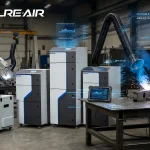
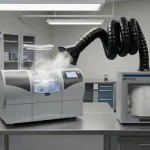
A high-efficiency industrial fume extractor captures smoke directly at the source before particles spread throughout the working environment.
- Preventing Dust Accumulation Inside Machine Components
Laser machines contain many precision mechanical and electronic components.
Fine particles generated during processing can enter:
- Linear guide rails
- Motors
- Cooling systems
- Control cabinets
- Electronic sensors
Over time, contamination may cause:
Mechanical Wear
Dust accumulation increases friction on moving components, reducing positioning accuracy.
Electrical Problems
Fine conductive particles may affect electronic components and increase the risk of system failures.
Increased Maintenance Frequency
Factories may experience:
- Unexpected downtime
- Higher repair costs
- Reduced production efficiency
By continuously removing airborne contaminants, a properly designed fume extraction system helps maintain a cleaner operating environment around precision equipment.
- Why Ordinary Ventilation Systems Cannot Protect Laser Machines
Some factories rely on general workshop ventilation or exhaust fans to remove smoke.
However, these solutions often cannot solve laser processing contamination problems.
Traditional Ventilation:
❌ Moves contaminated air around the workshop
❌ Cannot capture fine particles near the emission source
❌ Allows smoke to spread before removal
❌ Provides limited protection for sensitive equipment
Professional Laser Fume Extraction:
✅ Captures pollutants directly at the source
✅ Removes microscopic particles through multi-stage filtration
✅ Protects machines and operators simultaneously
✅ Maintains cleaner production environments
The key difference is source capture technology.
Instead of allowing contaminants to travel through the workshop, an industrial fume extractor removes them immediately when they are generated.
- Multi-Stage Filtration: The Technology Behind Equipment Protection
A professional laser fume extractor usually combines multiple filtration technologies.
Pre-Filter: Capturing Larger Particles
The first filtration stage removes larger dust particles and protects the main filter system.
Benefits:
- Extends HEPA filter life
- Reduces maintenance frequency
- Improves overall filtration efficiency
HEPA Filter: Removing Fine Particles
High-efficiency HEPA filtration is designed to capture microscopic particles generated during laser processing.
Typical applications include:
- Metal laser cutting
- Acrylic engraving
- Plastic processing
- Electronics manufacturing
By removing fine airborne contaminants, HEPA filtration helps prevent particle accumulation on sensitive equipment.
Activated Carbon Filter: Removing Odors and VOCs
Laser processing may release chemical vapors and unpleasant odors.
Activated carbon filtration helps adsorb:
- VOC gases
- Organic compounds
- Processing odors
This creates a cleaner and safer manufacturing environment.
- Reducing Maintenance Costs Through Cleaner Production
Equipment protection is not only about preventing failures — it also creates measurable economic benefits.
A suitable laser fume extraction system can help manufacturers:
Reduce Replacement Costs
Cleaner optical systems mean:
- Longer lens lifetime
- Fewer consumable replacements
- Lower maintenance expenses
Improve Machine Availability
Less contamination means:
- Fewer unexpected shutdowns
- More stable production schedules
- Higher equipment utilization
Protect High-Value Assets
Modern laser machines often represent significant investments.
Protecting them with effective air purification helps companies maximize return on investment. If don’t know how to choose a correct fume extractor model, don’t worry, our product
recommendation website with help you.
- Smart Fume Extraction for Modern Manufacturing
With the development of smart factories, air purification systems are becoming more intelligent.
Advanced industrial fume extractors can include:
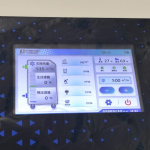
- Real-time airflow monitoring
- Filter condition detection
- Pressure difference alarms
- Intelligent control systems
These functions allow manufacturers to move from traditional maintenance:
“Repair after failure”
to:
“Predictive maintenance based on real-time data.”
For automated production lines and precision manufacturing facilities, intelligent air management has become an important part of factory efficiency.
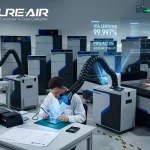
- PURE-AIR Solution: Protecting Laser Equipment with Professional Air Filtration
PURE-AIR develops industrial air purification solutions specifically for manufacturing applications, including:
- Laser cutting
- Laser engraving
- Laser welding
- Electronics manufacturing
- Precision processing industries
Through:
- High-efficiency filtration technology
- High negative pressure extraction systems
- Smart monitoring solutions
PURE-AIR helps factories reduce contamination risks, improve equipment reliability, and create cleaner production environments.
Conclusion: Clean Air Means Longer Equipment Life
Laser machine performance depends not only on mechanical precision and software control — but also on environmental cleanliness.
Invisible smoke and particles can gradually reduce equipment efficiency, increase maintenance costs, and shorten machine lifespan.
Installing a professional laser fume extractor provides continuous protection by capturing contaminants at the source and maintaining cleaner manufacturing conditions.
For companies operating high-value laser equipment, effective fume extraction is not simply an environmental investment — it is a long-term strategy to protect productivity, reliability, and operational efficiency. Protect your laser machines from invisible contamination. Follow PURE-AIR for more industrial air protection solutions.