

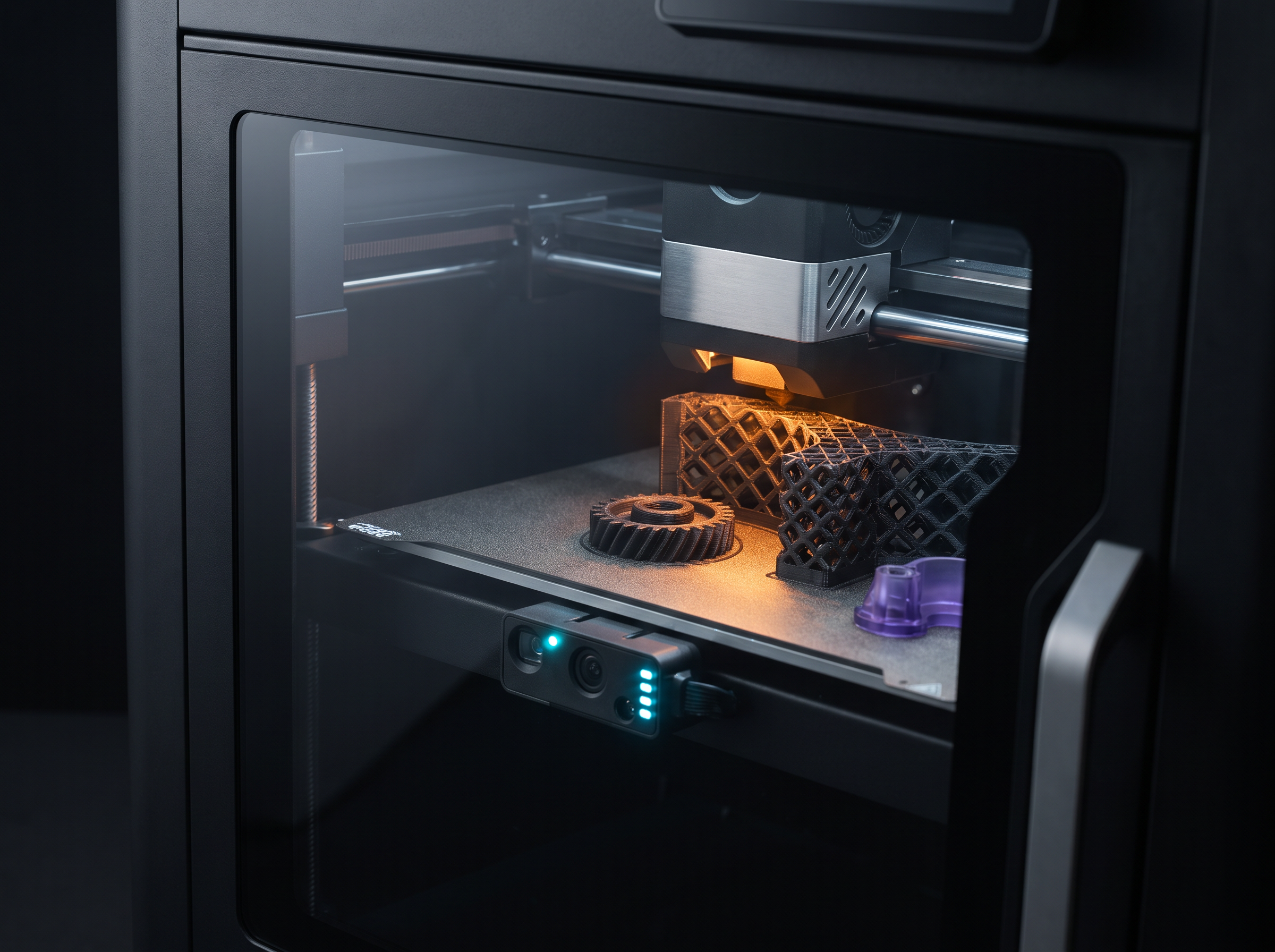
Liquid photopolymers release VOCs and photoinitiator fumes, and wash stations add alcohol vapor. Post-processing is often where odor complaints start.
Fine polymer, ceramic or metal powders become airborne during printing and depowdering. Metal processes may also involve inert gas by-products and combustible dust hazards.

Contaminants circulating in the print area can reach chambers, sensors and optics, affecting reliability and results.
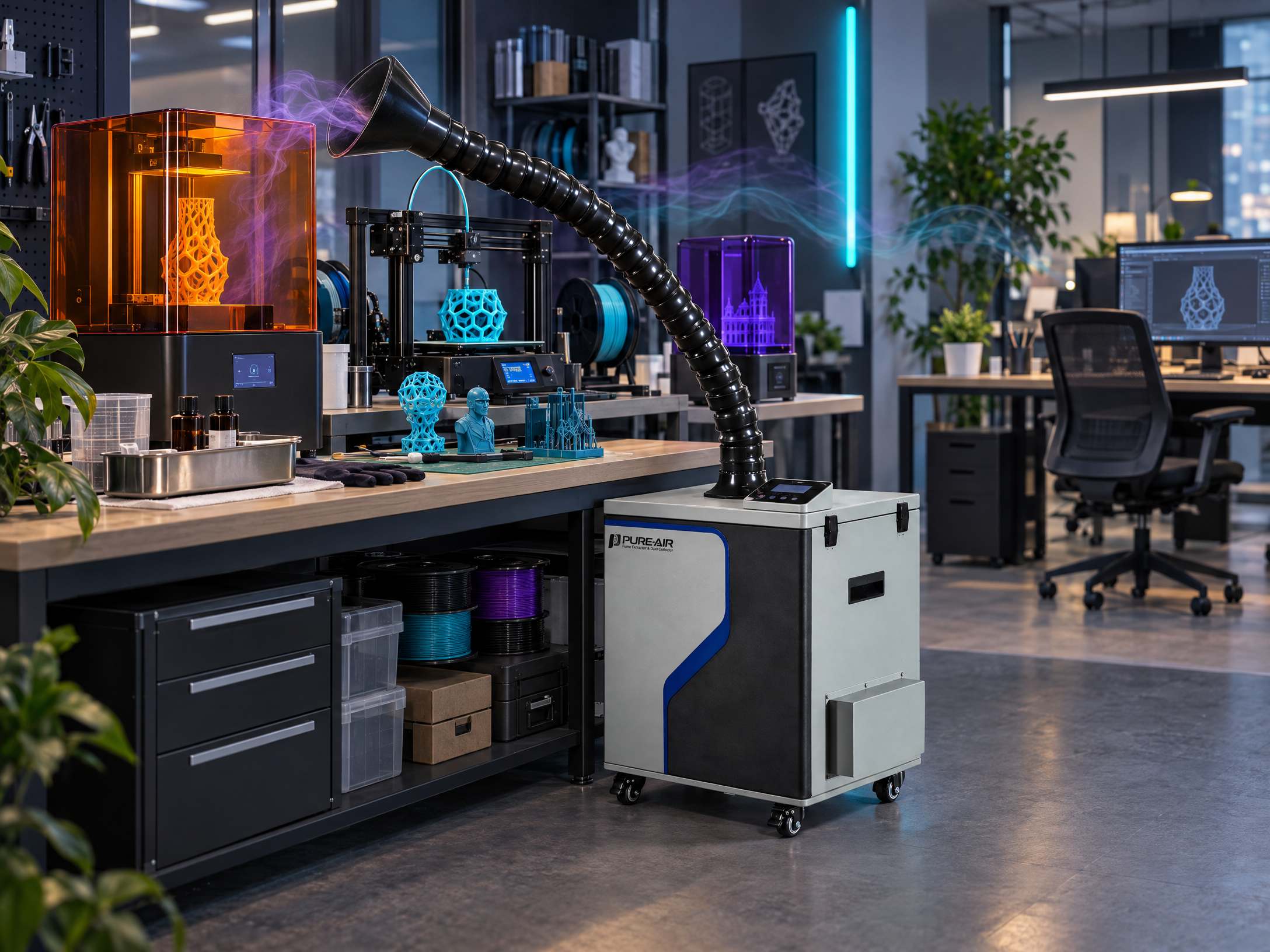
A few printers in an open room can spread resin and plastic odors to everyone nearby.
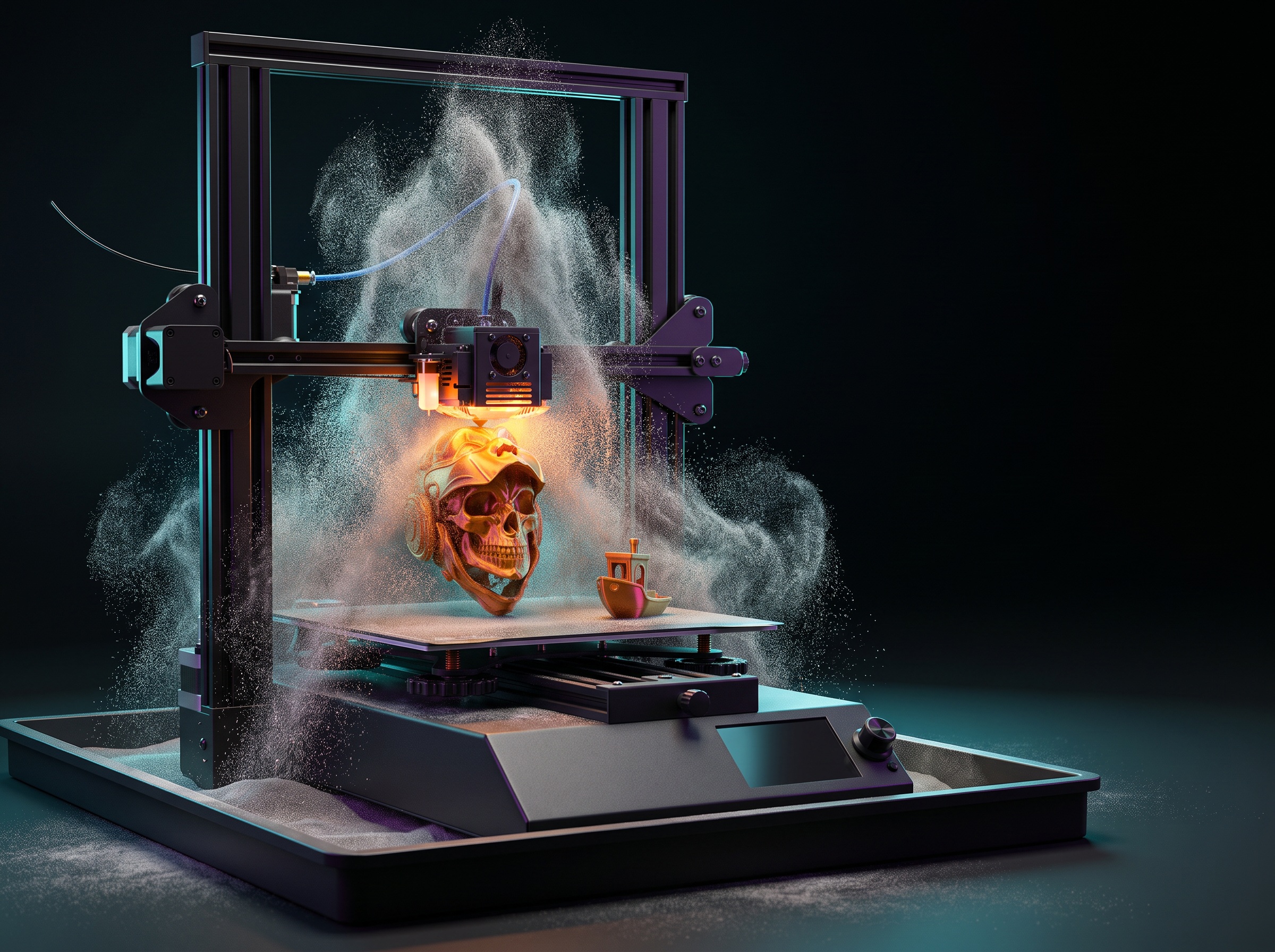
Fine metal and polymer powders raise fire and explosion considerations, so the extraction system must be designed for it.
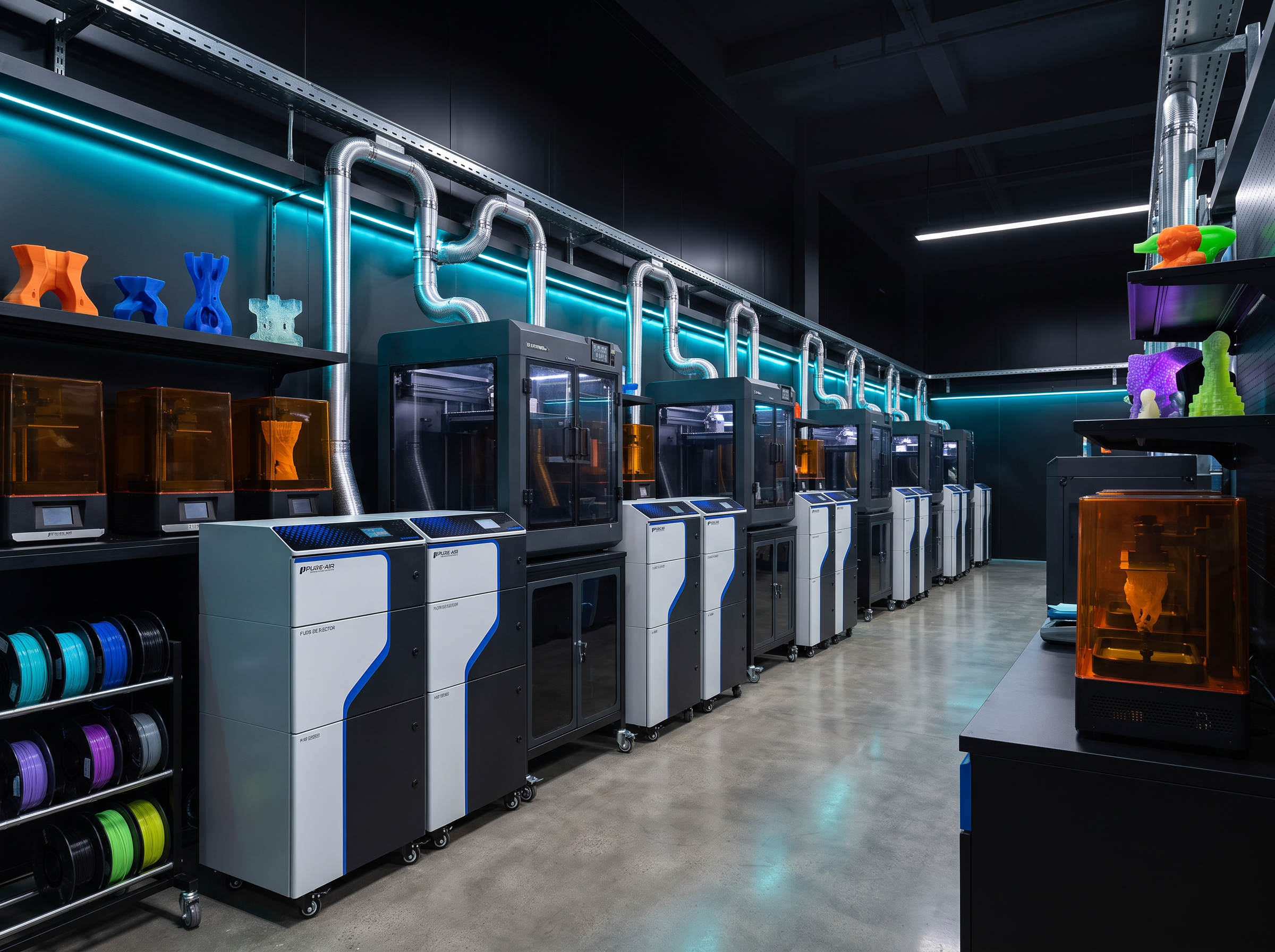
Extraction that works for a single desktop machine rarely scales to ten. Room-level or centralized systems change the economics.
Eliminte VOC plumes and photoinitiator fumes with multi-stage filtration: pre-filter, HEPA H14, then activated carbon. Extend the same capture to your wash and cure stations.
Capture nano-scale metal aerosols and inert gas by-products with explosion-proof extraction systems.
3D printers can emit ultrafine particles and volatile organic compounds, and resin processes add photoinitiators and solvent vapors. The exposure level depends on the material, printer, enclosure and ventilation. For that reason it is good practice to capture emissions at the source and filter them, rather than rely on general room ventilation.
It captures the fumes and particles from a 3D printer, passes them through particle filtration and activated carbon, and returns clean air to the room or discharges it.
ABS, nylon and polycarbonate are generally considered more concerning than PLA. Resin printing adds VOCs and solvent vapors from washing.
It depends on each printer’s airflow requirement and layout.Send us your printer models and quantity for a recommendation.

Breathe Pure Air with Our Ultra-efficient Fume & Dust Purifier.
Copyright © 2025 Dongguan Pure-Air Tech Co., Limited