
DigItal prinTing SolutiONS / ViSual maSter
Wide-format, UV and sublimation printing can release vapours, ink aerosols, odour and fine particles during printing, curing, cleaning and heat transfer. The right digital printing fume extractor captures emissions where they start, helping maintain a cleaner production area, consistent print quality and a more comfortable workplace. Choose the system around your ink chemistry, curing method, equipment layout and production volume.
01 / Pollutant composition
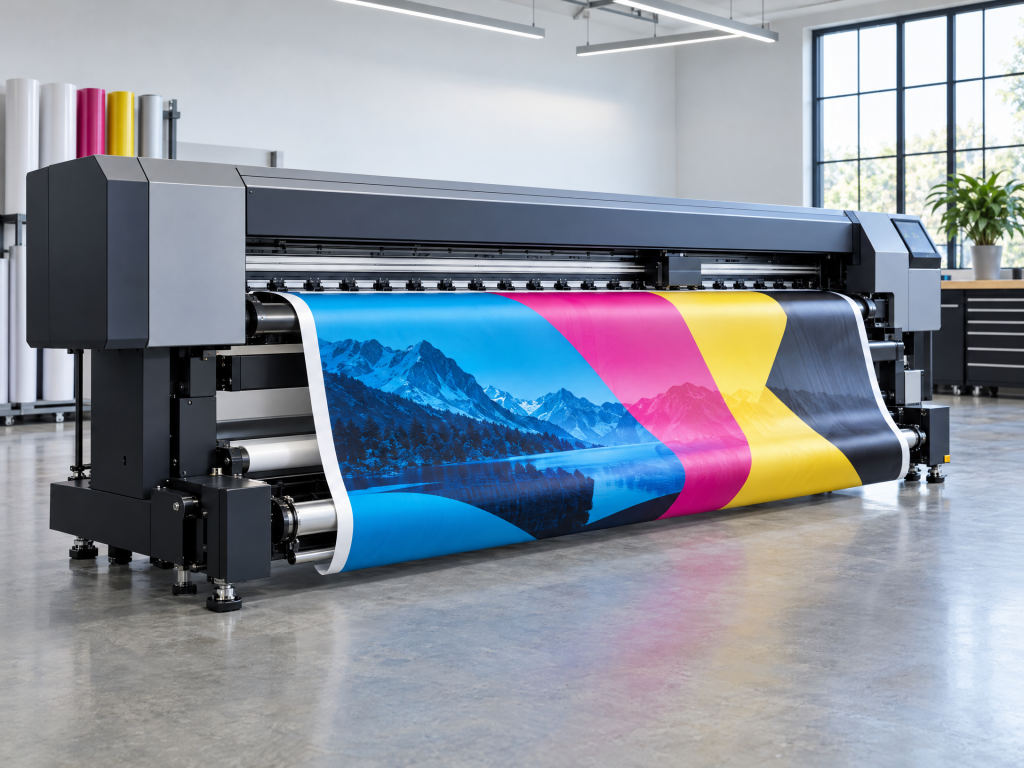
Solvent and eco-solvent inks can release vapours during printing, cleaning and maintenance, while UV inks may release volatile components. Airborne ink mist and pigment particles can build up around the print zone; some UV curing applications may also generate ozone, depending on the lamp and process configuration.
Heating transfer paper and textile substrates can create heat, moisture-laden vapour and process odour. Lint and fine fibres from garments or media can add to the particulate load.
02 / Industrial Pain Points
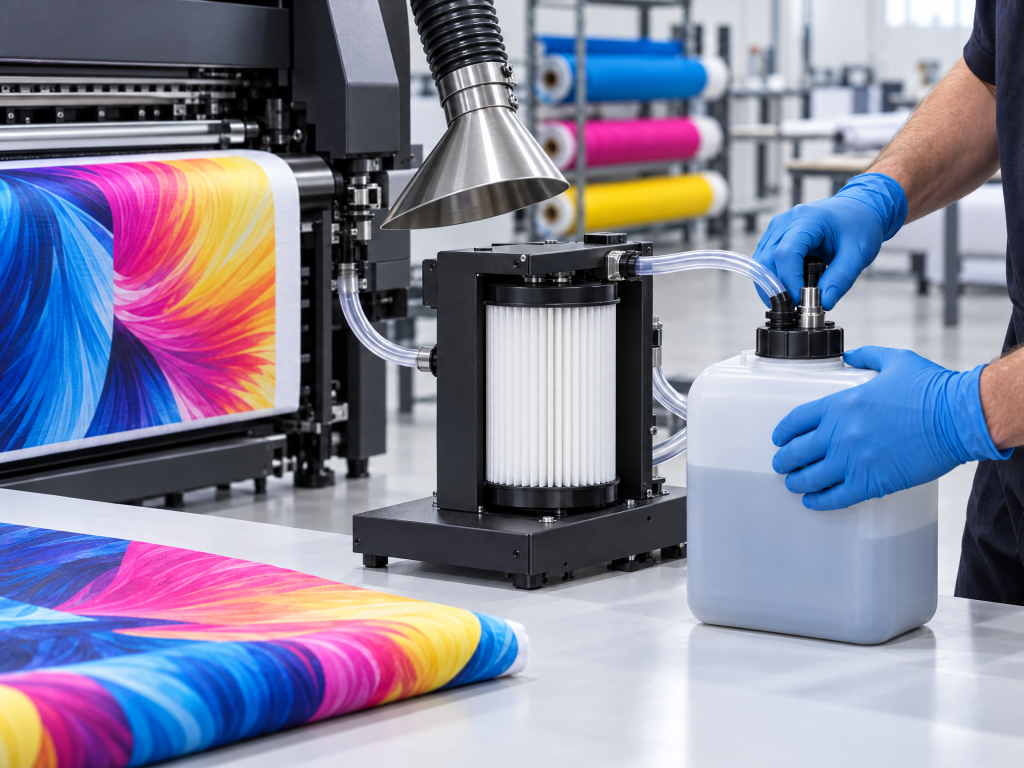
Airborne dust, lint and ink mist can settle on media or nearby components, increasing cleaning effort and the risk of rework.
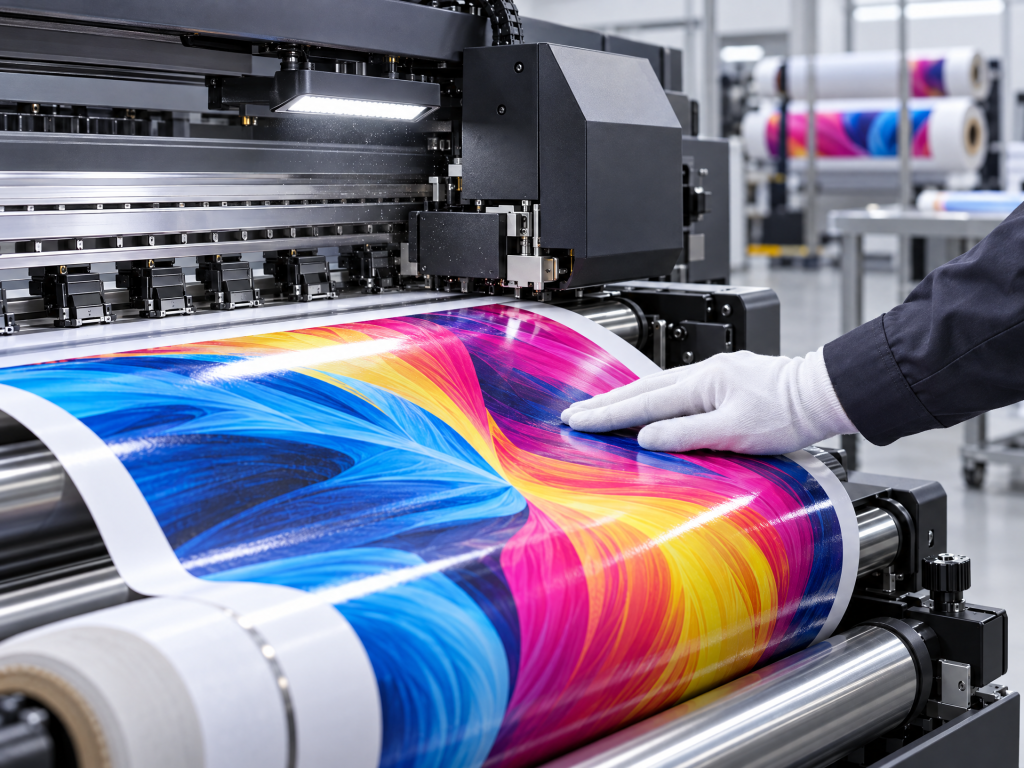
Continuous printing, curing and cleaning can allow odour to migrate through studios, print rooms and adjacent offices.
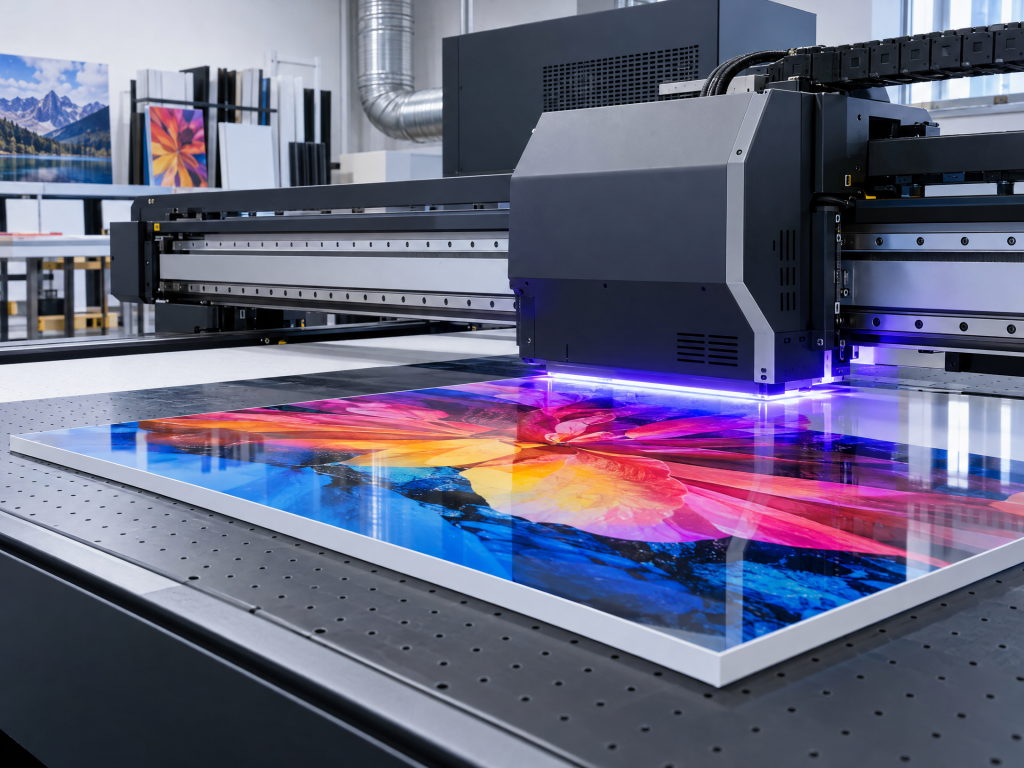
Emission control should follow the actual ink, cleaner and substrate in use. Safety data sheets and local requirements help define the right capture and filtration approach.
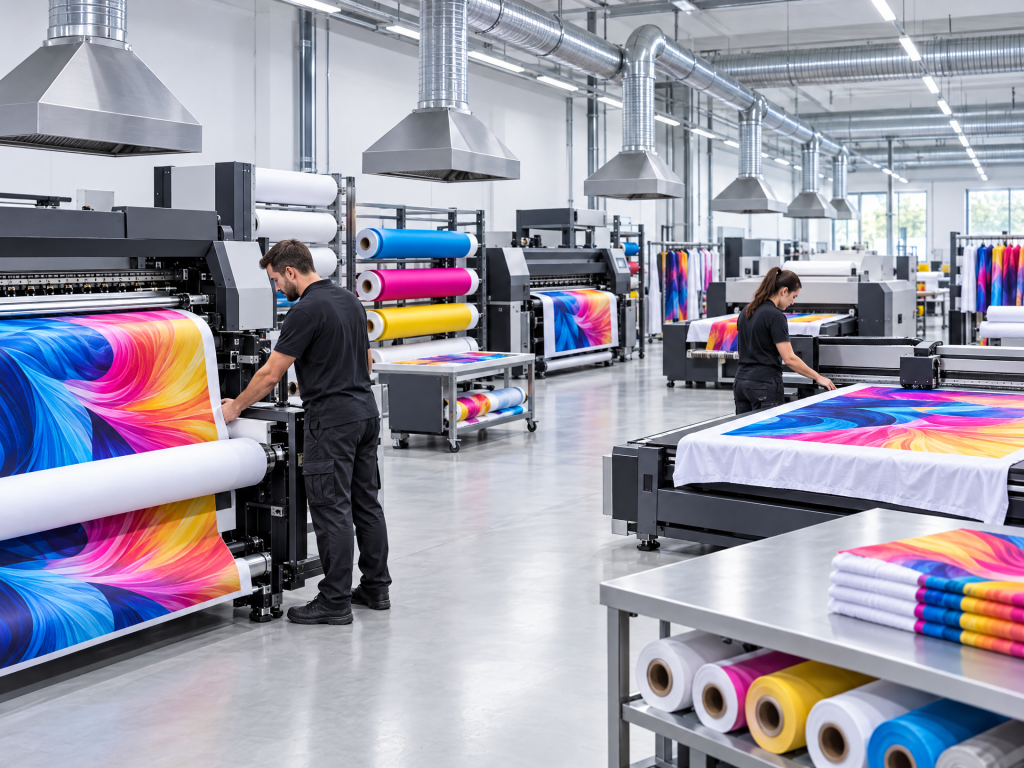
An extractor sized for one unit may not control emissions across several printers, curing lamps and heat presses. Capture location, hood design and airflow all change as production scales.
03 / Solution
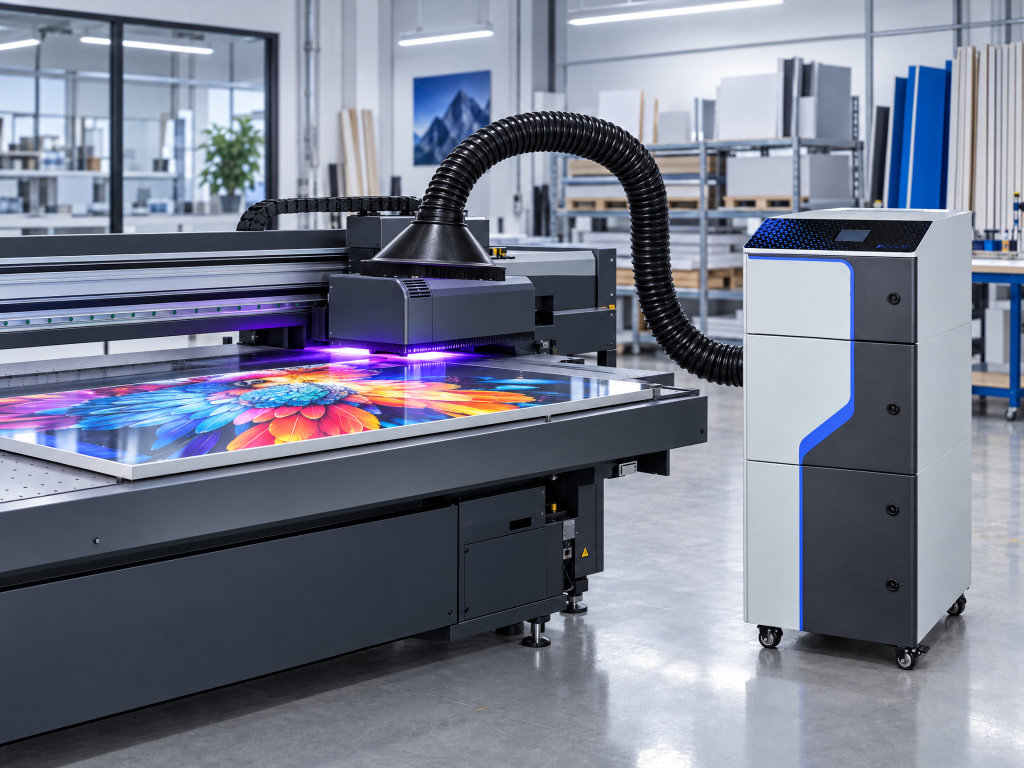
Solution 01
Capture vapours, ink mist and curing-related emissions close to the print zone or curing unit. A multi-stage configuration combines particle filtration with activated carbon selected around the inks and cleaning fluids in use.
Solution 02
Manage moisture-laden vapour, odour and fine textile lint around heat presses, calendars and garment printing lines. Select a moisture-tolerant pre-filtration stage and gas filtration that match the process and shift pattern.
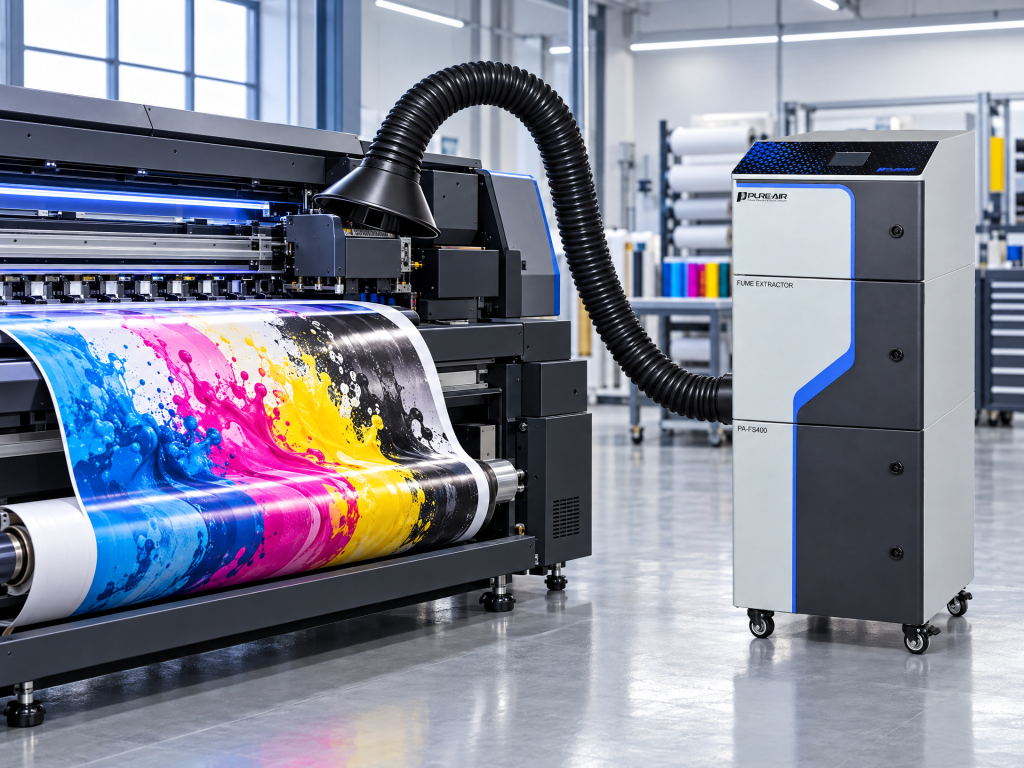
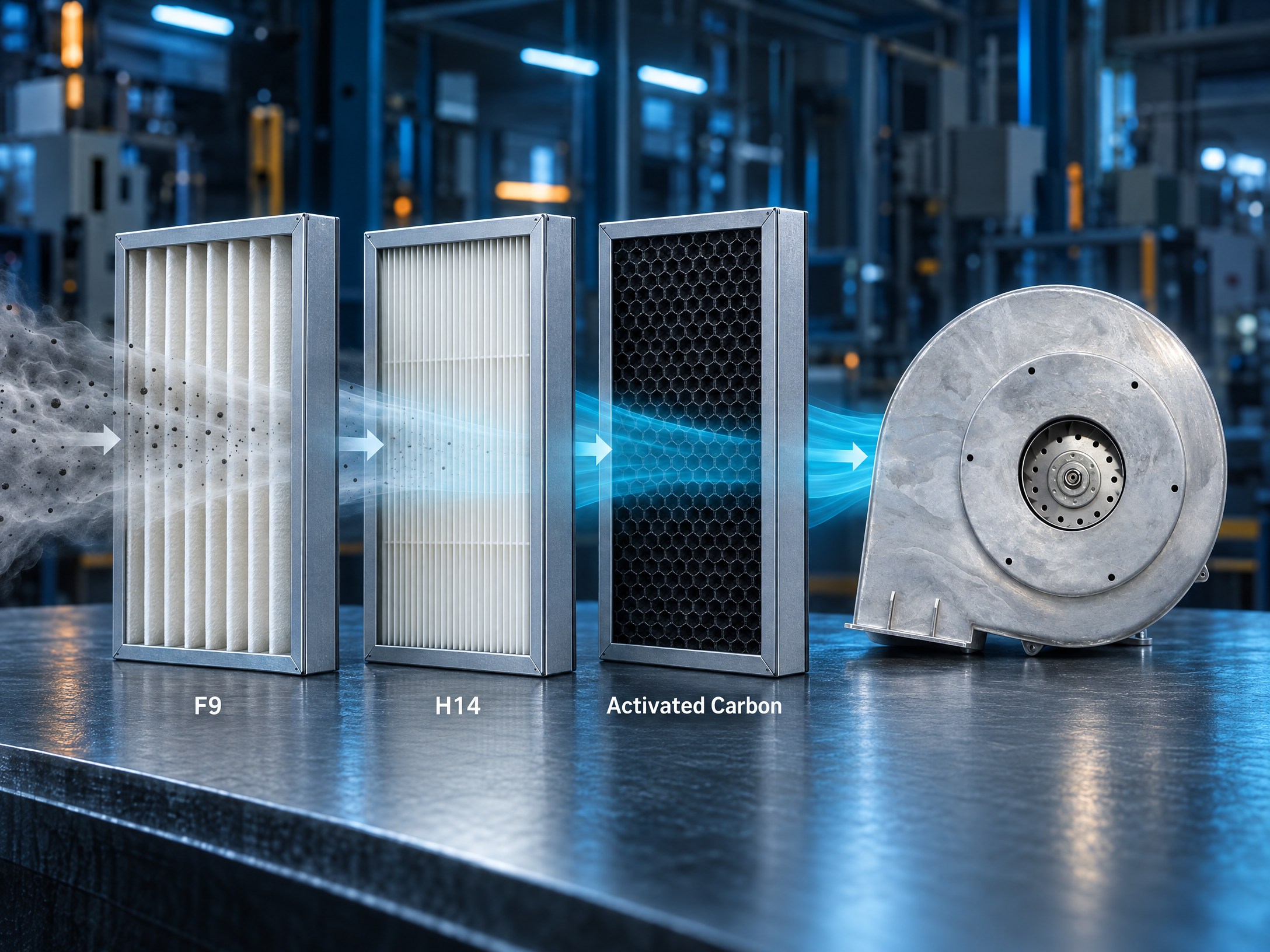
High-pressure brushless fans and multi-stage fitration designed for continuous production.
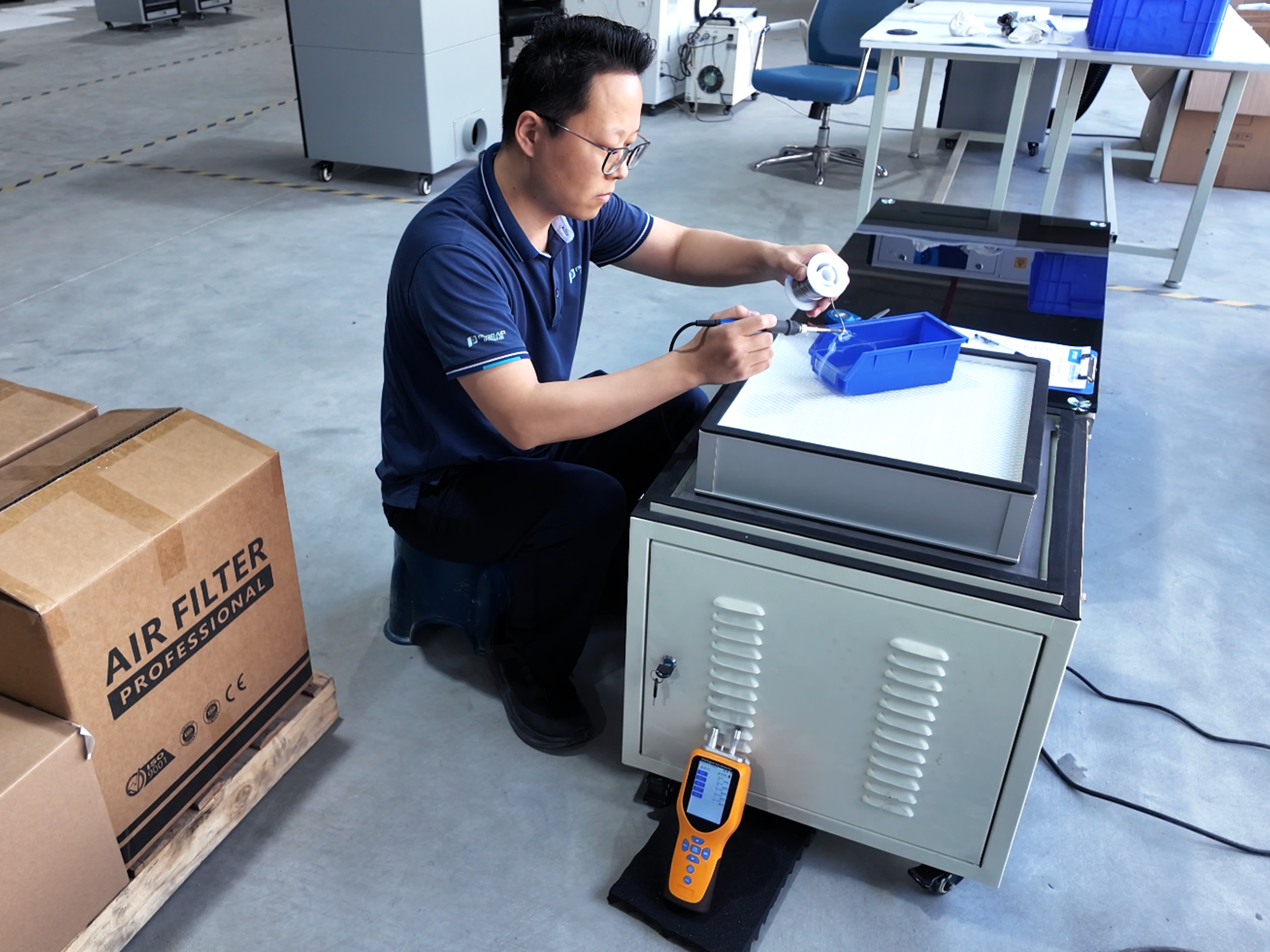
Filtration performance backed by test reports.
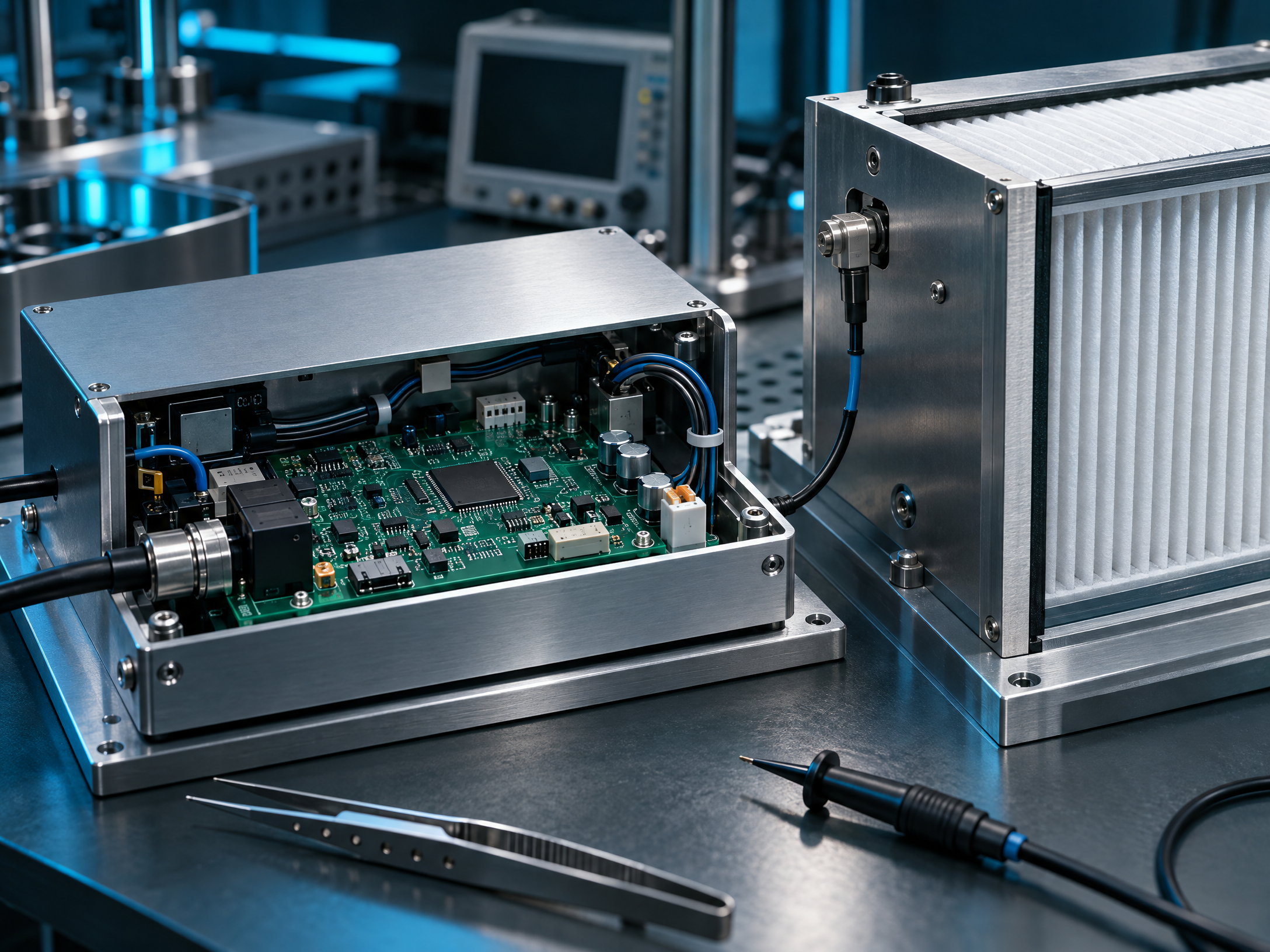
In-house filtration and control technology.
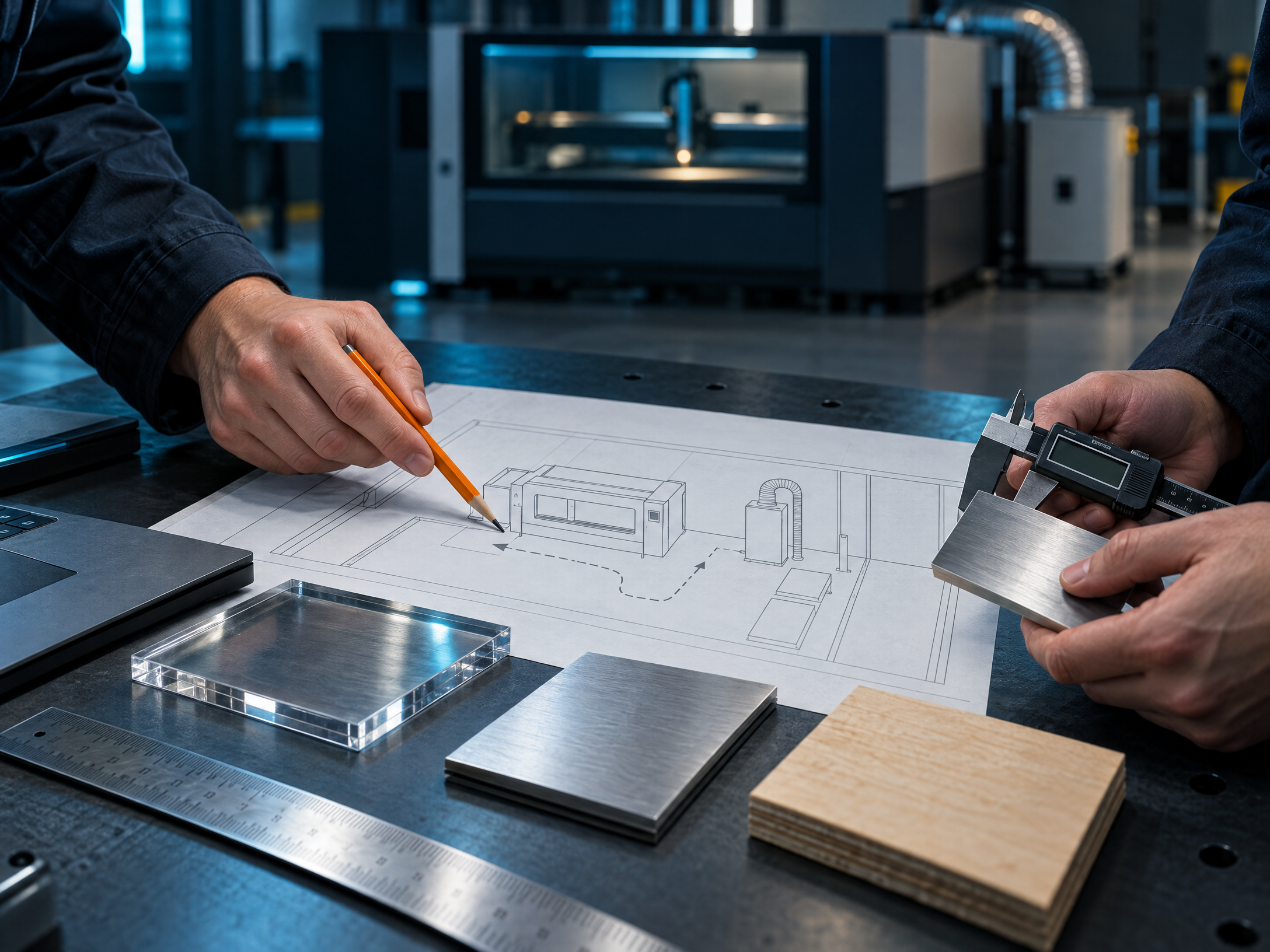
We help match the system to your laser, material and layout.

Air contaminants from digital printing depend on the ink, cleaning fluid, substrate and curing method. Some processes can release VOCs, fine droplets or particles, and UV curing may add ozone depending on the technology. Review the relevant safety data sheets and control emissions as close to the source as practical.
It depends on the ink, lamp and production environment. UV printing can create odour and may release volatile components; certain curing systems can also generate ozone. Source capture can complement general room ventilation by removing emissions close to the process.
A suitable system commonly combines a pre-filter to protect later stages, high-efficiency particle filtration for fine mist or dust, and activated carbon for gases and odour. The final specification should match the actual inks and cleaning chemicals used in the facility.
Possibly, but only after evaluating each printer’s exhaust requirement, the capture locations, hood geometry, duct routing and concurrent production. Send your printer models, ink type, number of workstations and layout to receive a recommendation.

Breathe Pure Air with Our Ultra-efficient Fume & Dust Purifier.
Copyright © 2025 Dongguan Pure-Air Tech Co., Limited
