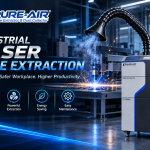
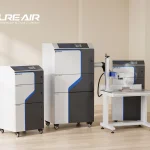
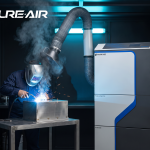
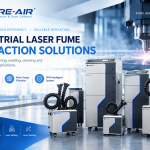
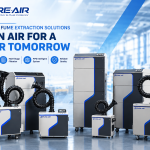
Integrating artificial intelligence into workshop ventilation represents a major leap forward for workplace health management. Sensor-driven fume extraction technology continuously analyzes chemical gas matrices and particulate density to create responsive, automated air handling circuits. Our engineering team at PURE-AIR develops intelligent control architectures that allow environmental management systems to react instantly to changing factory floor conditions.
Modern air control networks rely on multi-gas detector arrays to assess air cleanliness levels right after filtration. Combining optical sensors with chemical detectors provides continuous feedback on airborne pollutant concentrations throughout active manufacturing shifts. This multi-parameter tracking approach transforms traditional ventilation setups into highly automated air quality management hubs.
Intelligent Multi-Gas and Particulate Monitoring Architectures
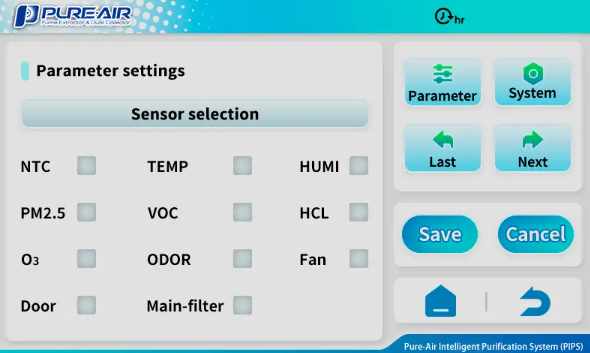
Comprehensive air purity monitoring requires tracking both physical particulates and volatile gases simultaneously. The PURE-AIR Intelligent Purification System integrates multiple air quality sensors, including PM1.0, VOC, O₃, HCL, and odor detectors, to maintain stable and precise purification performance. Measuring sub-micron dust along with volatile organic compounds gives plant managers clear visibility over active exhaust streams.
Continuous multi-gas detection minimizes toxic chemical bypass when processing reactive polymers or coated metals. When sensors detect minute traces of ozone or hydrogen chloride gas, the control system adjusts filtration parameters immediately. Multi-sensor verification protects personnel working near high-temperature laser or thermal cutting operations.
Predictive Analytics for Filter Service Life Forecasts
Traditional maintenance schedules rely on fixed operational hours, which often leads to premature filter replacement or sudden pressure drops. Predictive algorithms analyze differential pressure trends, operating temperatures, and gas concentration logs to forecast exact filter degradation curves. Data-driven forecasting allows maintenance crews to schedule media changes during planned factory shutdowns.
Evaluating real-time loading rates helps operators prevent sudden filter blinding before fan performance declines. Predictive maintenance protects internal fan motors from running against extreme static resistance for long periods. System designs like our Intelligent Purification System incorporate predictive telemetry to extend component longevity across demanding shifts.
Dynamic Air Volume Compensation for Operational Stability
Filter media accumulation naturally creates static pressure resistance, reducing face velocity at capture hoods during heavy processing operations. Smart control routines adjust fan motor speed dynamically to compensate for rising internal filter resistance. Automatic speed regulation keeps intake velocity constant at the workstation hood without manual operator adjustments.
Variable frequency drives increase fan motor frequency automatically as filter pores fill with dust particles. Maintaining steady suction speed helps prevent thermal fumes from escaping hood boundaries and floating into open shop air. Dynamic airflow compensation lowers overall energy consumption by running motors only at the required power level.
Cloud-Connected Remote Management for Distributed Plants
Connecting extraction units to cloud network dashboards enables centralized oversight across multiple manufacturing bays or global plant locations. Environmental health and safety officers inspect real-time air purity metrics, equipment status, and energy usage logs through unified web dashboards. Enterprise-wide visibility helps multi-site organizations enforce consistent workplace safety standards.
Cloud connectivity simplifies compliance reporting by automatically logging verified air quality readings into digital archives. Remote diagnostics allow technical specialists to evaluate system error logs and troubleshoot operational issues without visiting physical plant floors. Centralized remote oversight supports long-term operational efficiency across complex manufacturing sites.
Emerging Trends in Self-Optimizing Factory Ventilation
Future industrial ventilation designs will feature autonomous self-optimizing capabilities powered by machine learning algorithms. Next-generation systems will analyze historical production patterns to predict fume generation spikes before machine tools begin active cutting. Pre-adjusting suction velocities based on scheduled production tasks will maximize energy efficiency.
Interconnected extraction networks will coordinate airflow dynamically across adjacent machine cells to optimize overall factory power draw. Self-correcting algorithms will also refine filter pulse-cleaning cycles based on specific dust characteristics. Developing smart air handling technology remains a core engineering focus as manufacturing moves toward complete automation.
The transition to fully autonomous ventilation will likely proceed through incremental stages, beginning with predictive scheduling adjustments and progressively incorporating real-time adaptive control as sensor networks and machine learning models mature. Early adopters are already deploying semi-autonomous systems that learn from operator overrides, building the data foundation required for future closed-loop optimization.
Integrating Smart Extraction Hardware Across Automated Machine Cells
Deploying intelligent fume extraction systems across automated assembly bays requires standardized industrial communication protocols. Modular control interfaces exchange sensor telemetry with main programmable logic controllers to synchronize extraction fan operation with primary machine tool cycles. Interconnected hardware builds a safer, more responsive manufacturing environment.
Synchronizing air handling hardware with automated machinery reduces power consumption during tool idle times. Robust fume extraction systems protect sensitive optical lenses, electronic boards, and robot arms from settled dust accumulation. Systems like our D-i Series offer flexible digital interfaces tailored for effective integration into smart factory layouts.
Conclusion
Applying artificial intelligence to industrial air cleaning transforms static dust collectors into self-regulating, predictive environmental management platforms. Leveraging smart fume extraction technology with multi-gas sensors, predictive filter life analytics, and dynamic airflow compensation allows plants to maintain stable capture performance continuously. Through ongoing hardware innovation and data-driven designs at PURE-AIR, industrial facilities build cleaner, safer, and more efficient production spaces.