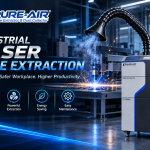
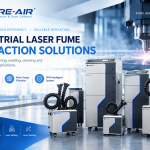
Industrial thermal cutting and joining processes generate significantly different airborne contaminants that require tailored extraction strategies. High-intensity laser beams vaporize metal substrates, creating sub-micron condensation aerosol particles and volatile organic compounds. At PURE-AIR, we assess particle behavior to design effective filtration layouts for modern production plants.
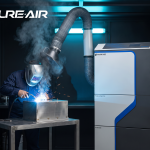
Arc joining generates heavier metallic smoke, oxide dust, hexavalent chromium, and zinc oxides that behave differently than laser particulates. In automotive manufacturing welding fume extraction, catching these larger particles requires high capture velocity before heavy elements settle. Mixing fine thermal cutting vapor with dense welding debris inside an uncalibrated unit leads to rapid surface loading.
Evaluating the Operational Feasibility of Shared Air Handling
Integrating thermal cutting and arc joining into a single purification circuit saves floor space and lowers equipment investments. Consolidating air handling lines operates efficiently when engineering teams account for distinct static pressure limits and particulate loads. Combining these processes reduces overall power consumption across centralized duct systems.
Thermal risks arise when hot sparks meet fine cutting dust within a single collector hopper. Unburnt volatile gases can contaminate filter media if pre-treatment steps are omitted. Deploying a versatile welding fume collector requires specialized inline safeguards to isolate thermal hazards before airstreams enter main filter chambers. Spark arrestors and pre-filtration stages positioned upstream of the main collector can reduce both fire risk and filter media contamination in shared systems.
Air Velocity and Static Pressure Differentiation
Laser cutting cells rely on high negative static pressure to pull dense smoke through narrow gaps and enclosed hoods. High static pressure maintains adequate transport velocity inside small ducts, preventing sub-micron dust from settling along internal pipe walls. If static pressure drops below the required threshold, particulate accumulation accelerates, restricting airflow and gradually diminishing capture efficiency at the cutting head.
Manual welding stations demand higher volumetric airflow across wide capture hoods at lower static pressures. Connecting both thermal processes to one centralized exhaust blower requires adaptive airflow regulation. At PURE-AIR, we adopt smart airflow control to automatically regulate suction power according to real-time workstation operational demand. The control system monitors pressure readings at each pickup point and adjusts fan speed accordingly, maintaining appropriate capture conditions for both process types without manual intervention.
Multi-Stage Filter Architecture for Cross-Process Air Purification
Handling diverse thermal emissions requires a structured multi-stage filtration sequence inside the collection cabinet. Heavy particles and glowing embers first enter an inline spark trap where thermal energy dissipates safely. The air then flows through flame-retardant cartridge filters that collect surface dust during automated pulse-jet cleaning cycles.
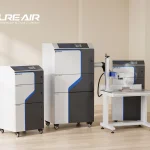
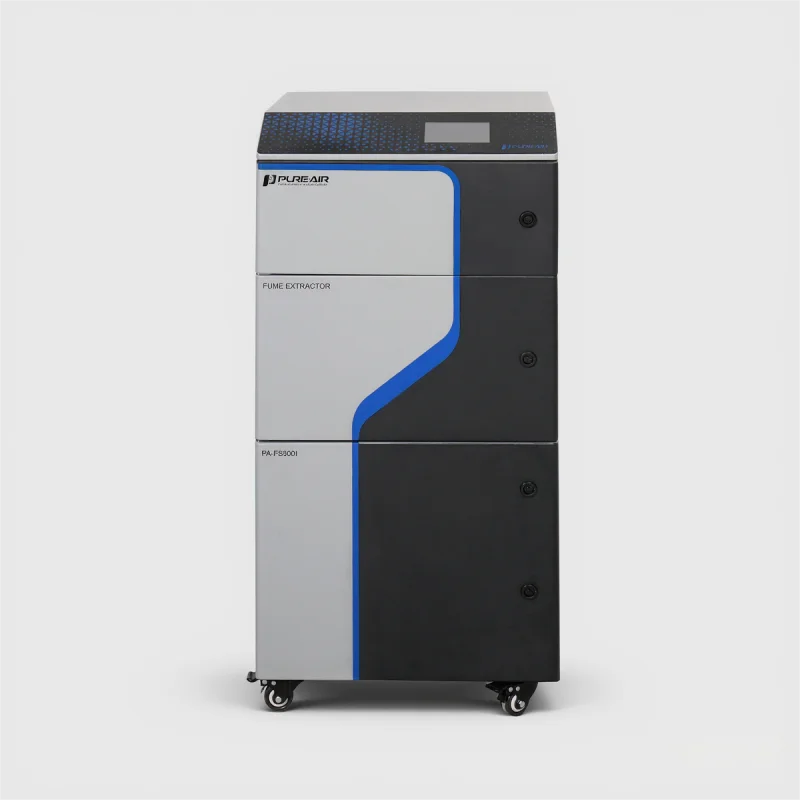
Air subsequently passes through high-efficiency HEPA H14 media, capturing sub-micron smoke particles down to 0.3 microns with 99.99% efficiency. Final activated carbon beds absorb residual volatile organic compounds and shielding gas odors before clean air recirculates. Model series like our PA-D1600 use this multi-stage setup to handle heavy particulate loads and fine chemical smoke.
Balancing Ductwork and Airflow in Multi-Station Layouts
Automated vehicle assembly lines route multiple joining cells into centralized ventilation networks. Operating effective automotive manufacturing welding fume extraction systems across multi-station layouts requires dynamic balancing dampers to maintain constant suction as individual stations cycle on or off.
Unbalanced ductwork causes airflow drops at active cutting tables whenever manual welding hoods open. Smart pressure sensors detect pressure shifts and signal motorized dampers to adjust branch resistance. Proper airflow distribution prevents heavy particulate settling inside overhead headers during long production runs.
Thermal Hazard Prevention and Spark Isolation Protocols
Combining high-energy thermal cutting with arc joining requires stringent fire safety controls. Process zones involved in EV battery assembly utilize EX-certified welding fume collector configurations to neutralize flammable lithium particles and solvent vapors from electrode coating areas.
Inline thermal sensors and automated isolation dampers protect clean air chambers from accidental ignition. Synthetic filter cartridges receive pre-coat treatments to shield porous membranes from sticky organic deposits. At PURE-AIR, we engineer robust spark arrestors into intake plenums to protect downstream filters from thermal damage.
Integrated Performance Monitoring and Maintenance Schedules
Sustaining high capture efficiency across multi-process lines requires continuous filter monitoring. Self-cleaning pulse-jet mechanisms blast compressed air through cartridge pleats whenever differential pressure reaches preset limits. Regular dust removal helps prevents filter blinding and keeps static pressure stable during continuous operation.
Sensors track pressure drops across pre-filters, HEPA elements, and carbon beds to predict replacement timing. Connecting extraction machinery to our PIPS monitoring platform allows plant operators to view real-time PM2.5 levels and system diagnostics. Automated alerts allow maintenance teams to address filter loading before airflow drops below design specifications.
Conclusion
Combining laser cutting and arc joining into one air handling line requires multi-stage filtration, active airflow balancing, and robust spark isolation. Utilizing a multi-stage welding fume collector equipped with HEPA H14 filters and activated carbon allows facilities to manage mixed emissions safely. Implementing these engineering controls supports compliant automotive manufacturing welding fume extraction while keeping production facilities clean and safe.