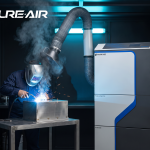
When sheet metal undergoes laser thermal vaporization, concentrated smoke plumes gather right above cutting kerfs. These dense aerosols refract laser beams and dissipate energy before the beam hits the metal surface.
Tiny condensed metal particles floating along the optical path scatter laser energy, forcing operators to boost laser power or slow cutting speed to guarantee penetration. Source-side fume extraction eliminates smoke interference, locks stable focal energy, narrows the heat-affected zone and delivers uniform cutting edge quality.
Unmanaged laser cutting smoke is a major hidden cause of unstable dimensional accuracy, rough workpiece edges and frequent laser lens failure, which directly raises scrap loss, rework workload and component replacement costs. Targeted airflow and laser cutter fume extractor reduce these quality defects from the source, stabilizing the overall machining output of laser metal processing.
Mitigating Surface Re-Contamination and Secondary Oxidation
Hot metallic droplets and particulate condensates rising from cut seams settle back onto adjacent sheet metal surfaces if left uncollected. Settled slag creates surface burrs and rough edge finishes that require labor-intensive secondary deburring cycles. Deploying an effective fume extractor for laser cutter units captures airborne slag droplets before particles solidify on raw stock.
Re-contamination damages protective oil coatings on stainless steel and aluminum sheets, inviting rapid edge oxidation. Preventing redeposition keeps cut edges clean and prepped for immediate welding or painting processes. At PURE-AIR, we study particulate trajectory mechanics to pull molten condensates away from active cutting zones.
Thermal Equilibrium and Machine Bed Stability
Continuous high-power laser processing generates substantial localized heat that spreads across machine tables and motion rails. Trapped hot smoke elevates ambient temperatures inside cutting enclosures, driving thermal expansion along linear guides and drive racks. Over time, thermal drift alters positioning accuracy and introduces dimensional tolerances across multi-layer cutting patterns.
Forced extraction continuously removes heated air and airborne contaminants from processing areas while drawing in cooler replacement air. This controlled airflow helps maintain stable operating temperatures, reducing localized heat accumulation around equipment and supporting reliable system performance during extended production cycles.
Properly sized extraction systems provide the airflow and static pressure required to maintain consistent ventilation, even under demanding operating conditions, helping ensure effective contaminant removal throughout continuous operation.
Protective Isolation of Precision Optical Optics
Cutting heads house delicate mirror arrays and protective glass covers that suffer rapid degradation when exposed to rising smoke. Vaporized resin and iron oxide particles coat optics, absorbing beam energy and causing thermal lensing defects. Damaged optics distort laser focus, resulting in incomplete kerf cuts and high scrap rates.
Creating strong negative pressure inside processing cabinets pulls smoke downward into collection ducts before fumes reach optical heads. Protecting optical assemblies extends lens lifespan and reduces replacement overhead costs. Integrating a reliable laser cutter fume extractor maintains clear optical paths throughout long production runs.
Airflow Capacity Requirements for High-Duty Sheet Metal Cutting
High-power fiber lasers cutting thick stainless steel require massive airflow capacity to pull heavy smoke through long duct runs. Inadequate volumetric airflow allows thermal plumes to pool inside cabinets, blinding optical monitoring systems and machine vision cameras. Matching extraction volume to cutting power prevents smoke saturation inside working enclosures.
Systems like our PA-D12000 model delivers airflow capacities up to 12000 m³/h to manage heavy smoke volumes. High volumetric airflow sweeps large cutting tables cleanly without leaving stagnant smoke pockets. Our engineering team at PURE-AIR calibrates airflow parameters to match specific sheet metal processing workloads.
Multi-Stage Filtration Architecture for Heavy Metal Particulate
Laser metal processing yields diverse particle size ranges from heavy slag chunks down to sub-micron metal oxides. Loading all dust sizes directly onto fine filters causes rapid surface blinding and sudden static pressure spikes. Sequential multi-stage filtration isolates heavy debris in pre-filters before fine particles hit primary cartridge media.
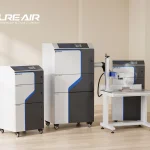
Sequencing spark traps, synthetic pre-filters, and cartridge filters extends primary element service life and preserves capture velocity. Modular equipment series like our D-i Series and PA-DE3000 models utilize multi-tier chambers to process heavy particulate streams efficiently. Structured filtration keeps internal airflow pathways open, supporting continuous shift operation.
Advanced Environmental Control for Robotic and Enclosed Work Cells
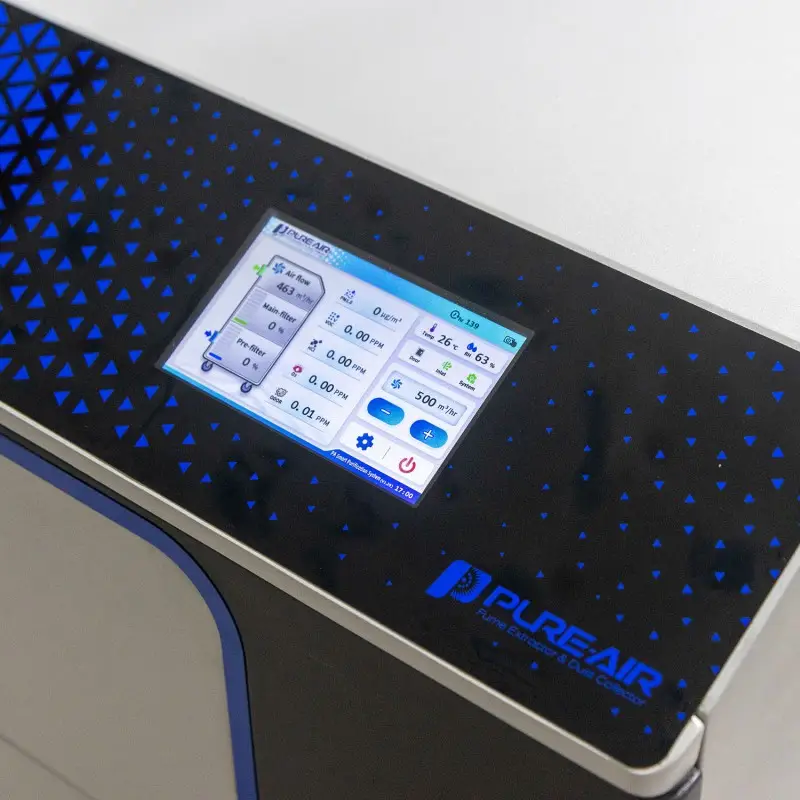
Automated laser cutting cells demand continuous air extraction that adapts dynamically to changing cutting programs. Smart control interfaces adjust blower speeds based on active cutting cycles, preserving suction efficiency during high-feed moves. Deploying a specialized fume extractor for laser cutter hardware supports continuous workplace safety compliance across automated factories.
Centralized telemetry modules track internal filter pressure differentials, notifying operators before airflow drops impact cut quality. Real-time diagnostic data prevents sudden suction loss during critical manufacturing steps. Utilizing advanced fume extractor for laser cutter systems keeps shop floor environments clean and machinery operating smoothly.
Precision-Oriented Airflow Control for Laser Machining
Stable laser machining quality hinges on reducing beam obstruction from smoke, stopping molten slag redeposition on workpieces, and helping shield core optical components from particulate contamination. Customized extraction equipment with ample airflow pressure and graded multi-stage filtration stabilizes laser focus, improves edge finish consistency and cuts long-term equipment maintenance expenses for metal fabrication workshops.
If you are troubled by unstable cutting precision, frequent lens replacement or post-cut surface rework, reach out to PURE-AIR for professional laser fume extraction calculation and tailored equipment configuration solutions for your production line.