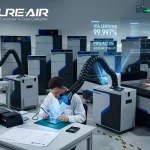
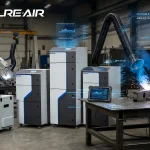
Industrial environments that involve laser processing, metalworking, or similar operations generate hazardous fumes, dust, and smoke. The release of these particles can be dangerous to both workers and machinery, making a dust and fume extraction system critical. The right equipment captures and neutralizes these harmful substances, ensuring a safer workplace. At PURE-AIR, we specialize in providing industrial dust collectors and fume extractors designed for optimal performance and safety in demanding environments. But how do these fume extractors actually work to keep your workspace clean and safe?

The Process Behind Industrial Smoke Filtration
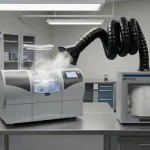
The dust and fume extraction system is designed to capture and filter hazardous smoke and dust particles generated during various industrial processes. In the case of laser processing, for example, a lot of smoke is produced as materials like metal, plastic, and wood are cut or altered by high-powered lasers. The fume extractor works by creating a suction effect that draws these harmful particles into the system.
Once the smoke is sucked into the dust collectors and fume extractors, it travels through a series of filters. The first layer of filtration often includes a spark arrester, especially when dealing with metal materials like aluminum or titanium, which may contain flammable particles. From there, the air passes through advanced filtration systems that remove harmful chemicals, gases, and particulate matter, leaving behind purified air. PURE-AIR designs these systems with multiple stages of filtration, ensuring that even the finest particles are captured efficiently.
Customization for Specific Materials and Conditions
The specific materials being processed significantly impact the type of dust and fume extraction system needed. For instance, laser cutting metal produces sparks, which require special features like a flame retardant filter element and a spark arrester. This is particularly important for industries where the risk of fire or explosion is high, such as those processing aluminum, magnesium, or titanium alloys.
On the other hand, if your operation involves cutting or shaping wood or plastic, the dust collectors and fume extractors should include a multi-stage filtration system. These materials release a variety of harmful chemicals, making it essential to use systems that provide effective filtration. PURE-AIR’s equipment is highly adaptable, ensuring each system is tailored to meet the unique needs of your industrial processes, whether it’s high humidity, intense heat, or volatile fumes.
Explosion-Proof Models for High-Risk Environments
Certain industrial settings demand additional safety features, such as explosion-proof dust and fume extraction systems. If your workshop deals with materials that could potentially ignite—such as flammable metals or gases—it is crucial to invest in an explosion-proof fume extractor. At PURE-AIR, we offer customized models designed specifically for high-risk environments. These units come equipped with robust features that prevent sparks and flames from reaching the surrounding air, minimizing the risk of an explosion.
Using standard dust collectors and fume extractors is safe for many applications, but when processing highly combustible materials, safety should always be a priority. PURE-AIR ensures that every customer receives the best-fit equipment to meet these safety standards.
Conclusion
When it comes to ensuring a safe industrial environment, the dust and fume extraction system plays a pivotal role in capturing and filtering harmful particles and gases. PURE-AIR’s dust collectors and fume extractors are designed with advanced technology to adapt to various materials and processing conditions, from laser cutting metal to woodworking. With tailored solutions for explosion-proof designs and multi-stage filtration, our team at PURE-AIR works to ensure that your equipment operates at peak performance. Whether you need a standard fume extractor or a highly specialized one, our products provide the durability and efficiency your industrial environment demands.