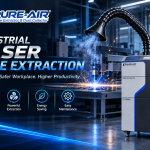
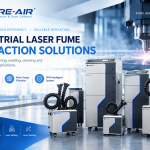
Many metal fabrication workshops encounter a confusing issue: the fume extraction system runs normally, yet sharp chemical odors linger throughout the workshop. This phenomenon proves that simply turning on purification equipment cannot guarantee complete treatment of gaseous pollutants.
Metal joining processes generate two distinct airborne emissions: solid aerosol particles and volatile gaseous compounds. Standard mechanical filter media isolate solid oxide dust but allow gaseous molecules to pass through unhindered. Effective welding fume extraction requires recognizing that physical filtration alone cannot stop gas-phase chemical odors.
Shielding gas breakdown, burnt anti-spatter sprays, and protective oil coatings evaporate into sub-micron volatile organic compounds during high-heat operations. Because these chemical vapors are thousands of times smaller than solid particulate matter, workers detect lingering smells despite clear workplace air.
Critical Role of Capture Velocity at Emission Sources
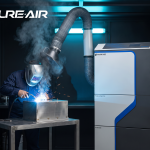
Inadequate suction velocity allows thermal plumes to escape localized capture hoods before entering duct channels. Thermal buoyancy drives hot gas upward faster than weak airflow vectors can draw fumes sideways. Effective automotive manufacturing welding fume extraction depends on maintaining precise face velocity at designated capture boundaries.
Cross-drafts from factory cooling fans or passing machinery disrupt low-velocity suction fields. When capture speed falls below thermal plume rise velocity, escaping gases diffuse rapidly throughout surrounding work areas. At PURE-AIR, we measure capture velocity fields to position extraction hoods accurately.
Following field measurements, hood positioning and face velocities can be adjusted to accommodate actual thermal plume behavior at each specific workstation. In many cases, lowering the hood slightly or adding flexible side curtains significantly improves capture efficiency without requiring major ductwork modifications.
Impact of Ductwork Layout and Internal Static Losses
Poorly designed ventilation ductwork creates static pressure drops, choking total airflow before reaching collection chambers. Excessive sharp elbows, flexible hoses, and unsealed joints reduce transport velocity along internal pipe runs. Unfavorable duct designs allow volatile gases to linger and leak through unsealed seams.
Transporting heavy metallic particles requires maintaining minimum duct air speeds to prevent particulate settling along horizontal runs. Sudden diameter shifts alter internal pressure balances, lowering suction efficiency across active collection arms. At PURE-AIR, engineered duct systems prevent static pressure losses across complex vehicle assembly halls.
Chemical Adsorption Mechanisms of Activated Carbon Filters
Removing volatile gas molecules requires specialized chemical filtration beyond standard particulate filters. Activated carbon beds utilize millions of microscopic pores to trap organic vapor molecules through physical adsorption. Without adequate carbon mass, gas-phase odor compounds pass directly through mechanical filter elements.
Carbon saturation occurs over continuous operating cycles as volatile compounds fill internal pore structures. Unmaintained filter beds lose adsorption capacity, allowing fumes to bypass media untreated. Replacing depleted carbon elements restores effective chemical abatement across high-volume production lines.
Thermal Vapor Mitigation in High-Temperature Applications
Corrosion-resistant stainless steel housings handle high-temperature exhaust and coolant mists produced during heavy metal joining. High thermal conditions vaporize cutting fluids and anti-corrosion oils, releasing dense chemical smoke into shop air. Specialized stainless construction prevents cabinet degradation when handling hot, corrosive vapors.
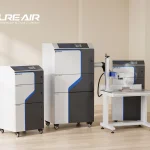
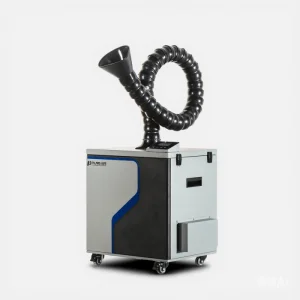
Specialized setups equipped with oil-mist filters and AGV-compatible bases accommodate flexible automated manufacturing layouts. Integrating robust automotive manufacturing welding fume extraction units protects sensitive vehicle assembly stations from thermal vapor buildup. Systems like our PA-FS800 series incorporate multi-stage filtration to manage intense thermal emissions.
The multi-stage sequence typically combines inertial separation for larger oil droplets, coalescing elements for fine mist capture, and activated carbon stages for volatile organic compound removal. Regular monitoring of differential pressure across each stage helps operators determine when individual filter layers require replacement without interrupting production.
Balancing Air Exchange Rates for Enclosed Assembly Bays
Incomplete room air turnover allows gaseous contaminants to accumulate over extended operating shifts. High-volume welding fume extraction systems must balance intake velocity with proper replacement air to maintain neutral building pressure. Negative pressure zones pull residual smells from adjacent manufacturing bays into clean work areas.
Dilution ventilation supports localized extraction hoods by continually refreshing background plant air. Proper air distribution prevents stagnant odor pockets from settling near overhead cranes or worker assembly stations. Our technical team evaluates complete room turnover dynamics to maintain consistent air purity.
System Maintenance and Performance Verification Standards
Neglecting filter replacement schedules directly impacts system airflow and gas removal efficiency. Differential pressure gauges signal when primary cartridges become loaded with particulate matter, restricting overall suction. Modern monitoring platforms like our PIPS platform help operators track filter health before odor problems arise.
Regular inspection of seals, spark arrestors, and blower impellers keeps operational performance aligned with safety guidelines. CE and EX-certified extraction equipment maintains high reliability across continuous 24/7 industrial shifts. Comprehensive compliance checks verify that both particulate and gas abatement mechanisms function properly.
Maintaining detailed service logs enables trend analysis over time, helping maintenance teams predict filter replacement intervals and identify gradual performance degradation before it leads to unplanned downtime. When combined with automated monitoring data, these records also simplify documentation for regulatory audits and internal quality reviews.
Integrated Engineering Solutions for Permanent Odor Reduction
Addressing persistent smells in metal fabrication requires combining high capture velocity, optimized ductwork, and specialized gas adsorption media. Utilizing multi-stage welding fume extraction equipped with activated carbon supports thorough removal of both particulates and volatile vapors. Through engineered systems and continuous monitoring at PURE-AIR, industrial facilities maintain safe, clean work environments across complex automotive manufacturing welding fume extraction operations.