Introduction: Smart Factories Need More Than Automation
Manufacturing is entering a new era. Automation has transformed production by improving speed, precision, and consistency, but modern factories now face a new challenge—managing the working environment as intelligently as the production process itself.
Processes such as laser cutting, laser welding, soldering, grinding, and additive manufacturing continuously generate smoke, fine particles, and volatile organic compounds (VOCs). If these contaminants are not effectively managed, they can reduce equipment performance, increase maintenance costs, and interrupt production.
This is why leading manufacturers are moving beyond traditional air purification and adopting smart fume extractors equipped with Industrial Internet of Things (IoT) technologies.
Rather than simply removing contaminants, these systems continuously monitor operating conditions, optimize performance, and provide actionable maintenance insights.
- The Evolution from Air Purification to Intelligent Air Management
For many years, industrial air purification systems focused on a single objective: removing smoke and dust from the workplace.
Today’s smart factories require much more.
An intelligent air management system must be able to:
- Monitor system performance continuously
- Detect operating abnormalities automatically
- Optimize filtration efficiency
- Support predictive maintenance
- Integrate with digital manufacturing environments
Instead of functioning as an isolated piece of equipment, a smart fume extractor becomes an active component of the factory’s intelligent management system.
- Real-Time Airflow Monitoring
Stable airflow is one of the most important factors affecting fume extraction performance.
Traditional systems often rely on periodic manual inspections, which may not identify problems until extraction efficiency has already declined.
A smart fume extractor continuously monitors key operating parameters, including:
- Airflow volume
- Air velocity
- Filter condition
- System pressure
- Operating status
Real-time monitoring allows operators to identify changes immediately and maintain consistent extraction performance throughout production.
This helps ensure contaminants are captured efficiently while protecting both production equipment and personnel.
- Smart Alarm System
One of the biggest advantages of IoT-enabled equipment is its ability to detect problems before they become production issues.
Instead of waiting for suction performance to decline significantly, intelligent monitoring systems automatically issue alerts when abnormal operating conditions are detected.
Typical notifications include:
Filter Replacement Reminder
As filters gradually collect dust and particles, airflow resistance increases.
Rather than replacing filters according to fixed schedules, intelligent systems recommend replacement based on actual operating conditions.
This approach helps maximize filter utilization while avoiding unnecessary maintenance.
Abnormal Airflow Detection
Changes in airflow may indicate:
- Blocked filters
- Damaged ductwork
- Air leakage
- Fan performance issues
Early detection allows maintenance teams to resolve problems before they affect production efficiency.
- From Reactive Maintenance to Predictive Maintenance
Traditional maintenance often follows a simple rule:
Repair equipment after problems occur.
Unfortunately, this approach can lead to:
- Unexpected downtime
- Emergency repairs
- Higher maintenance costs
- Production interruptions
IoT-enabled monitoring transforms this process into predictive maintenance.
By continuously collecting operating data, the system identifies trends that indicate potential issues before failures occur.
Manufacturers can then schedule maintenance during planned production breaks, minimizing disruption and improving equipment reliability.
This proactive approach reduces maintenance costs while increasing production stability.
- Why Intelligent Air Management Improves Manufacturing Efficiency
A smart fume extraction system provides value far beyond cleaner air.
Reduced Downtime
Continuous monitoring helps identify developing issues before they lead to equipment failure, reducing unexpected production interruptions.
Improved Production Stability
Consistent airflow ensures stable smoke capture throughout the manufacturing process, helping maintain reliable operating conditions for precision equipment.
Lower Operating Costs
Predictive maintenance reduces emergency repairs, extends filter life, and improves overall system efficiency.
Supporting Smart Manufacturing Upgrades
As manufacturers continue their digital transformation, environmental control systems must evolve alongside production equipment.
Smart air purification becomes another connected component within the factory’s intelligent ecosystem, supporting data-driven decision-making and long-term operational optimization.
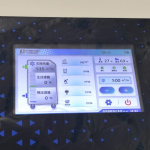
- PURE-AIR PIPS Intelligent System
To meet the needs of modern manufacturing, PURE-AIR has developed the PIPS Intelligent System, designed specifically for industrial air purification applications.
PIPS combines advanced monitoring technologies with intelligent control functions to deliver reliable, data-driven air management.
Key capabilities include:
Real-Time Performance Monitoring
Continuously monitors:
- Airflow
- Filter condition
- Pressure changes
- Operating status
Intelligent Maintenance Alerts
Automatically reminds operators when maintenance is required based on actual equipment conditions.
Stable System Performance
Maintains efficient extraction performance while helping reduce unnecessary maintenance and operating costs.
By transforming operating data into actionable insights, PIPS helps manufacturers maintain cleaner production environments with greater confidence.
To learn more about our intelligent solutions, explore our: Smart Fume Extraction Solutions
Best Practices for Building a Smart Air Management System
Manufacturers can maximize the benefits of intelligent air purification by following these recommendations:
- Capture contaminants as close to the source as possible.
- Monitor airflow continuously.
- Replace filters based on operating data rather than fixed schedules.
- Review pressure changes regularly.
- Integrate air management into factory maintenance planning.
- Choose IoT-enabled equipment designed for industrial applications.
These practices help improve equipment reliability, maintain stable production, and support long-term digital transformation.
Conclusion
As manufacturing continues to embrace Industry 4.0, intelligent environmental management has become just as important as production automation.
A modern smart fume extractor does far more than remove smoke—it monitors system performance, provides real-time operational insights, supports predictive maintenance, and helps manufacturers improve efficiency across the entire production process.
With intelligent monitoring technologies such as the PURE-AIR PIPS Intelligent System, companies can reduce downtime, optimize maintenance, protect valuable equipment, and create cleaner, more reliable manufacturing environments.
For manufacturers investing in smart factories, intelligent air management is no longer an option—it is a critical component of sustainable and efficient industrial production. Contact our technical support team via the PURE-AIR Facebook Page to get certified air filtration solutions for your facility!