The U.S. Chemical Safety and Hazard Investigation Board (CSB) has investigated numerous industrial dust explosion incidents, identifying combustible dust accumulation, inadequate housekeeping, and insufficient explosion protection as recurring contributing factors.
Ongoing industry databases, including Dust Safety Science, continue to document dust fires and explosions across manufacturing sectors, demonstrating that combustible dust hazards remain an active industrial safety challenge.
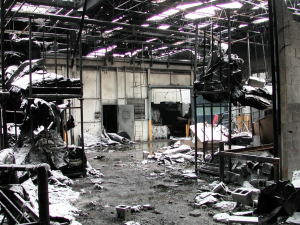
Unlike ordinary nuisance dust, combustible particulates can create an explosive atmosphere when dispersed within enclosed collection systems. As a result, facilities handling combustible dust typically require an explosion proof dust collector engineered to control ignition sources, relieve or suppress explosion pressure, and reduce the consequences of a deflagration.
If an ignition source—such as a stray ember, friction-generated spark, or electrostatic discharge—is present inside the collector housing, rapid combustion can occur. This process, known as a deflagration, generates a sharp rise in internal pressure within milliseconds. Without appropriate explosion protection, the pressure may exceed the enclosure’s structural limits, potentially rupturing the housing and dispersing secondary dust clouds throughout the facility.
A dust collection system naturally concentrates several conditions required for a combustible dust deflagration. Continuous airflow supplies oxygen, suspended dust particles provide fuel, and the enclosed housing allows pressure to build rapidly if ignition occurs.
By integrating ignition-source control, explosion venting or suppression, and other pressure-management measures, an explosion proof dust collector helps limit the consequences of a deflagration while supporting safer industrial operations.
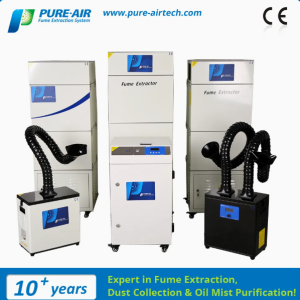
What Are the Essential Design Features of an Explosion Proof Dust Collector?
Selecting an explosion proof dust collector involves implementing a multi-layered design strategy focused on isolating ignition sources, regulating pressure build-up, and restricting flame movement. Rather than relying on a single protective component, engineering teams incorporate distinct mechanical barriers throughout the system layout.
Ignition Source Suppression: Spark Arrestors & Conductive Anti-Static Filters
Initial risk mitigation takes place upstream before contaminated air enters the main filter chamber. In-line spark arrestors placed within the intake ducting interrupt incandescent particles and hot embers.
By forcing incoming air through a series of tortuous baffles and high-surface-area channels, these mechanical devices cool glowing metal fragments through thermal mass transfer before they can contact combustible dust on the filter media.
Within the filter chamber itself, electrostatic accumulation is controlled through specialized filter media. Standard synthetic filters act as electrical insulators, allowing charges to gather on the media surface during continuous operation.
In contrast, conductive anti-static filters integrate stainless-steel fiber grids or aluminized conductive coatings directly into the filter structure. These conductive elements create a continuous pathway that routes static charges directly to the collector’s earthing system, reducing the potential for electrostatic sparks near concentrated dust clouds.
Overpressure Protection: Explosion Venting & Structural Integrity
When a deflagration takes place inside a collection vessel, internal pressure rises rapidly. To control this rapid pressure increase, explosion-protected collectors rely on engineered pressure relief systems, explosion isolation measures, and enclosures designed to withstand the expected reduced explosion pressure.
Explosion relief vents utilize calibrated rupture panels designed to activate at a predetermined static activation pressure (Pstat). Installed on the collector housing or connected to approved venting systems, these devices redirect combustion gases, flame, and pressure away from personnel and critical equipment.
Simultaneously, the collector enclosure need to possess sufficient mechanical strength to withstand internal pressure surges during a venting event. Fabricated from heavy-gauge welded steel plate with internal structural ribbing and heavy-duty door latches.
Also, structural components, access doors, and connection points are designed to maintain mechanical integrity under these conditions, ensuring that pressure is controlled through the intended protection pathway rather than uncontrolled equipment failure.
Explosion Isolation: Restricting Flame Propagation in Ductwork
Venting the main collection housing releases pressure from the primary vessel, but an expanding flame front can still travel backward against incoming airflow through the intake ductwork. This back-propagation risks directing flame and pressure back into the factory workspace, where it can disturb settled dust on overhead beams and initiate secondary explosions.
To restrict flame movement along the duct network, mechanical isolation devices are installed in the incoming line. Passive flap valves remain open during normal suction operation, but instantly close when hit by the reverse pressure wave of an internal deflagration, forming a physical barrier between the collector and the facility interior.
Additionally, heavy-duty rotary airlocks positioned at the hopper discharge utilize thick, flexible vanes to maintain a physical seal while continuously dropping collected dust into disposal bins.
What Safety Standards and Design Principles Apply to Combustible Dust Control?
Implementing effective combustible dust control requires aligning collector specifications with established technical standards and empirical engineering metrics. Design frameworks provide guidelines for evaluating material reactivity and selecting suitable mechanical safeguards.
Understanding Dust Hazard Analysis (DHA) in Manufacturing
Before specifying extraction hardware, manufacturing facilities conduct a Dust Hazard Analysis (DHA) to size the explosive properties of their specific particulate matter. Two key metrics define material reactivity:
- Kst Value: The deflagration index of the dust cloud, measuring the maximum rate of pressure rise. Dusts are categorized into classes ranging from St 0 (non-explosive) to St 3 (highly reactive).
- Pmax: The maximum pressure generated during an unvented deflagration within a closed testing vessel.
Engineers use Kst and Pmax parameters to calculate required explosion vent surface areas and determine housing shell thickness. Some finely divided aluminum powders may fall within the St 2 or St 3 classification, depending on particle size and composition.
Electrical & Mechanical Safeguards for High-Risk Environments
Electrical components mounted on or adjacent to a dust collector operating in hazardous dust environments need to be designed to eliminate potential electrical arcs or surface heating ignition risks. Fan motors, pulse-jet solenoid valves, and local control enclosures are selected to match the specific hazardous zone classification of the operating environment.
Mechanical safeguards complement electrical protection. Fan impellers constructed from non-sparking materials, such as aluminum or brass, reduce the risk of friction sparks should an impeller blade contact the fan housing.
Continuous electrical bonding across all duct connections—using flexible copper grounding straps across flanged joints connected to a verified earth ground—maintains consistent charge dissipation across the entire ventilation network.
PURE AIR Engineering Solutions for High-Risk Manufacturing
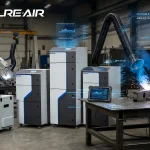
At PURE AIR, we design and manufacture industrial extraction platforms engineered specifically for demanding production environments where combustible dust and process fumes represent operational concerns.
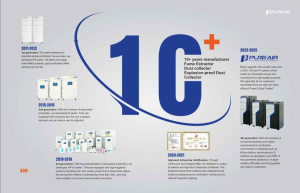
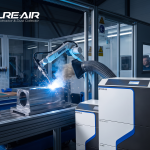
Our new energy manufacturing fume and dust collector series addresses the clean-air and risk-management requirements of lithium battery manufacturing, laser material processing, precision metal fabrication, and additive manufacturing operations.
| Conductive Filter Media | High-efficiency cartridge filters with conductive media continuously dissipate static electricity through a grounded collector structure, reducing the risk of electrostatic discharge during operation. |
| Integrated Spark Management | Spark detection or arrestor systems identify, cool, or intercept ignition sources before they enter the primary filtration chamber. |
| Explosion Venting Options | Configurations support conventional explosion vent panels for outdoor installations or flameless venting devices where outdoor vent ducts are impractical. |
| Explosion Isolation | Integrated isolation devices, including fast-acting valves and backdraft prevention mechanisms, block flame propagation and pressure transmission through connected ductwork, helping prevent secondary explosions in upstream and downstream process areas. |
Whether expanding a battery electrode production line or retrofitting an automated laser welding station, our engineering team assists in selecting equipment matched to your operational profile.
What Are the Next Steps for Upgrading Your Dust Collection System?
Managing combustible dust risks in manufacturing facilities requires a methodical strategy combining detailed risk assessment with appropriate mechanical safeguards. Relying on basic ventilation units when handling reactive metal, chemical, or organic dusts introduces significant operational exposure. By incorporating spark suppression, anti-static filtration, structural pressure relief, and duct isolation, plant operators create an effective particulate extraction system while maintaining a safer working environment.
Evaluating extraction equipment begins with reviewing material Kst data, auditing facility grounding continuity, and selecting collector configurations designed around verified engineering safety principles. Contact us to review dust characteristics, discuss application parameters, or request detailed technical specifications for our high-efficiency dust collection systems.